Blog / Montgomery Lincoln Dealer

Blog

All Montgomery Lincoln Dealer Lincoln dealership Lincoln Nautilus Lincoln Aviator Lincoln Navigator Lincoln Corsair Local Lincoln Service Driver Safety Montgomery Lincoln Service Lincoln Certified Pre-Owned Stivers Lincoln Alabama Service Lincoln Model L100 Concept
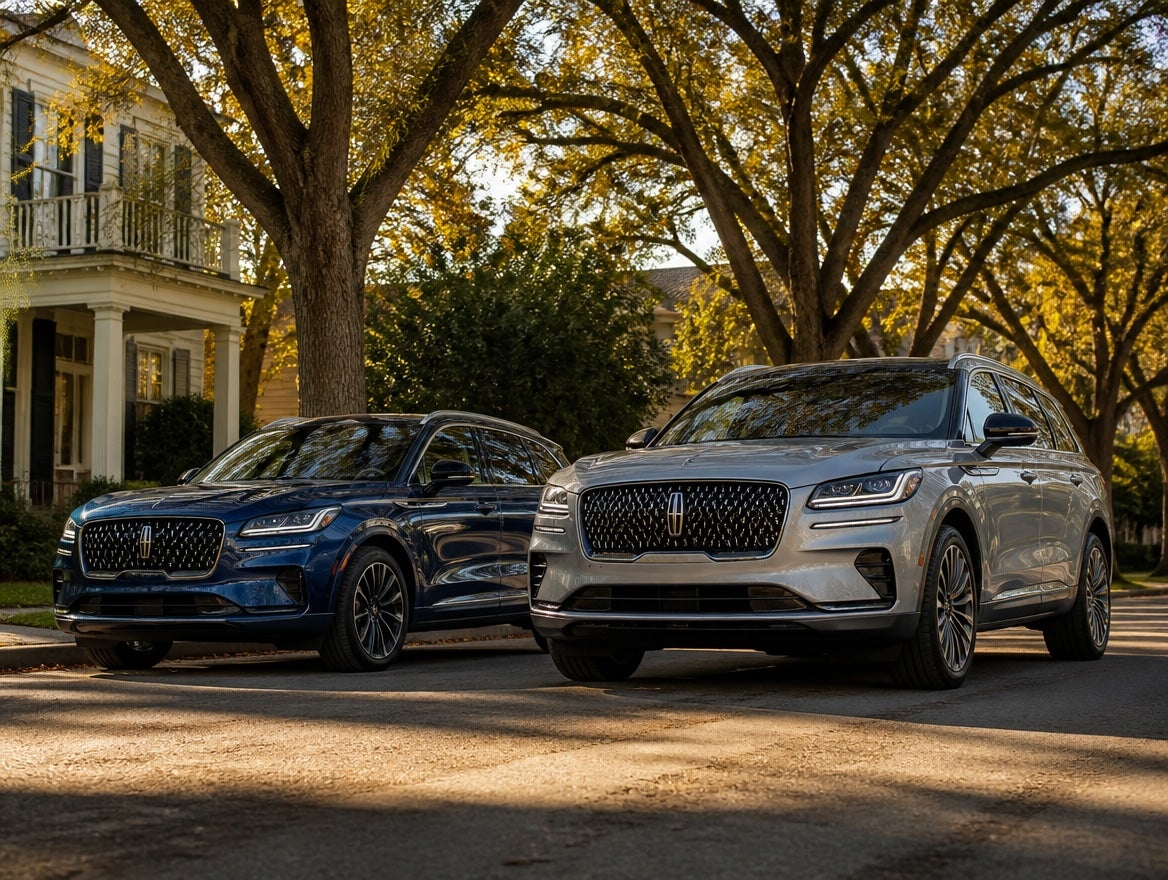
2027 Lincoln Corsair Hybrid and 2027 Lincoln Nautilus parked side by side on a shaded east Montgomery street

Lincoln Corsair vs. Nautilus: Which SUV Fits Your Routine?

These two Lincolns share a family resemblance and a philosophy. Past that, they're built for different routines, and the wrong choice is a real possibility if you let the exterior styling make the call for you. The 2027 Lincoln Nautilus is the midsize member of the lineup, and the 2027 Lincoln Corsair Hybrid is the compact one. Eleven and a half inches of length, nearly nine inches of rear legroom, and a fundamentally different powertrain story separate them. Work through the checklist below and the right answer surfaces before you ever sit behind a wheel. Our honest take upfront: the Corsair Hybrid is the better vehicle for the driver who wants a nimble, efficient single-occupant daily companion that happens to carry one or two passengers in comfort. The Nautilus suits the couple or the small household that uses both seats all the time, hauls gear with regularity, or just wants to settle in for a longer drive and feel no constraints. Neither is a compromise once you're in the right one. The mistake is choosing on looks and discovering the tradeoff at mile 300 on I-65. What Goes on the Checklist? Work through each item below and note where you land, because the pattern that emerges at the bottom points to one Lincoln more clearly than any brochure spread could, long before you adjust a mirror or a seat. There's no trick to it. Answer for the week you actually live, the ordinary one, and the SUV picks itself. Rear-Seat Passengers Do you regularly carry adults in the back seat? The 2027 Nautilus offers 43.1 inches of rear legroom, while the 2027 Corsair Hybrid carries 36.7 inches in the Grand Touring configuration. That six-plus-inch span separates a six-foot passenger who's riding in comfort from one who's making do. The gap is not subtle. [ ] I regularly seat adults in the back (two or more times per week): mark Nautilus [ ] I carry rear passengers occasionally or mostly children: mark Corsair Hybrid Cargo Volume Does your routine include regular cargo: groceries for a household, luggage for two on a weekend at Lake Martin, golf bags after a round at Wynlakes? Lincoln lists the 2027 Nautilus at 36.4 cubic feet behind the rear seats and 71.3 cubic feet with the seats folded. The 2027 Corsair Hybrid checks in at approximately 27.6 cubic feet behind the rear seats and 57.6 cubic feet fully loaded. That's nearly nine cubic feet of everyday difference. [ ] I load the cargo area at least weekly with bulky items: mark Nautilus [ ] I primarily move light cargo or travel light: mark Corsair Hybrid Garage and Parking Footprint Is your garage, parking structure, or driveway width a real-world constraint? At 193.2 inches long and 79.8 inches wide without mirrors, the 2027 Nautilus asks for room. The 2027 Corsair Hybrid measures 181.4 inches long and 74.3 inches wide, and you feel the difference in a tight garage, or when you're parallel-parking in Old Cloverdale on a Saturday afternoon. [ ] I navigate a tight garage or a narrow driveway daily: mark Corsair Hybrid [ ] Parking space is not a constraint for me: mark Nautilus Powertrain Priorities Do you have access to home charging, and does daily efficiency matter to you? The 2027 Corsair Hybrid runs a 2.0-liter turbocharged full hybrid producing 305 combined horsepower, EPA-estimated at 32 city / 32 highway / 32 combined MPG. It doesn't need a plug. The 2027 Nautilus standard gas engine, a 2.0-liter turbocharged four making 250 horsepower, is EPA-estimated at 21 city / 29 highway / 24 combined MPG; the available Nautilus hybrid reaches 29 city / 31 highway / 30 combined MPG according to the EPA. Both are meaningful numbers. The Corsair Hybrid's efficiency edge is consistent. [ ] Daily fuel economy is a priority and I want the most efficient option: mark Corsair Hybrid [ ] I want the Nautilus's available hybrid for the right balance of space and efficiency: mark Nautilus Hybrid The Display and Technology Experience How much does the in-cabin technology environment matter to your enjoyment of the vehicle? No category surprises people more than this one once they sit in both. The 2027 Nautilus features a 48-inch panoramic technology experience that spans from the driver's instrument cluster across the center stack, with a customizable right-side panel. The 2027 Corsair Hybrid carries a 13.2-inch center touchscreen paired with a 12.3-inch digital instrument cluster. Both are capable, polished systems. The Nautilus sits in a different visual category, and buyers who spend real time in the seat notice it. [ ] The technology environment is a primary enjoyment factor for me: mark Nautilus [ ] I want a clean, capable interface without a wall of screen: mark Corsair Hybrid Explore Financing Options Why Each Item on This Checklist Actually Matters The five items above aren't arbitrary picks, and each one maps to a specific engineering decision Lincoln made when it positioned these two vehicles, so a number that looks small on the page can still reshape how the SUV feels on every drive you take through Montgomery. Legroom Is an Engineering Commitment, Not a Comfort Upgrade Wheelbase tells the story. The Nautilus rides on 114 inches, the Corsair Hybrid on 106.7. The Corsair Hybrid's 7.3-inch shorter wheelbase flows straight into the rear cabin, and no seat adjustment buys it back. We often ask customers to sit in the back of both before they commit, because a compact SUV that fits your life is a joy, while one that can't seat your occasional passenger turns into a daily frustration. The seat can't give it back. Cargo Volume Is Not Just About Road Trips Thirty-six cubic feet of usable cargo in the Nautilus against roughly twenty-seven in the Corsair Hybrid reads like a road-trip stat. In practice it decides the Costco run, the kayak equipment headed up to Lake Martin, and the oversized box from a furniture store. The Powertrain Decision Is About Your Actual Route The EPA rates the 2027 Corsair Hybrid at 32 combined MPG, and that number rewards mixed-use driving, the errands and suburban stop-and-go and moderate commutes that fill an ordinary week. At 30 combined MPG, the Nautilus hybrid is impressive for its size class. The gap narrows a good deal once your miles are mostly highway, say Eastern Boulevard out to I-85 and back. Think about your actual week, not an imagined road trip. A note on the technology environment: The Nautilus's 48-inch display is a genuine differentiator (the kind of thing you clock in the first thirty seconds), and it changes the feel of the cabin. If you spend significant time in the driver's seat, that difference is worth experiencing in person before you decide. It's more than extra screen. The architecture of the interface itself works differently. Decision Factor 2027 Corsair Hybrid 2027 Nautilus Rear legroom 36.7 in. 43.1 in. Cargo behind rear seats ~27.6 cu ft 36.4 cu ft Max cargo volume ~57.6 cu ft 71.3 cu ft Overall length 181.4 in. 193.2 in. Width (ex. mirrors) 74.3 in. 79.8 in. Horsepower 305 hp (hybrid) 250 hp / 285 hp (hybrid) EPA combined MPG 32 MPG (hybrid standard) 24 MPG gas / 30 MPG hybrid Wheelbase 106.7 in. 114 in. Infotainment display 13.2-in. touchscreen 48-in. panoramic band Browse our current Lincoln inventory Your Print-and-Go Recap Tally your answers from the checklist above, and the column with more marks is your Lincoln, though it helps to remember that one lopsided category, legroom or the display, say, can outweigh three close ones depending on how you actually use the SUV. Choose the 2027 Lincoln Corsair Hybrid if you checked more Corsair boxes: [ ] You sit alone or with one passenger most days [ ] Your cargo is light and occasional [ ] Your garage or parking situation rewards a shorter, narrower footprint [ ] You want the segment's most efficient powertrain without a plug [ ] You prefer a cleaner cabin aesthetic over an expansive display Choose the 2027 Lincoln Nautilus if you checked more Nautilus boxes: [ ] You regularly seat adults in the back seat [ ] Cargo volume is a weekly, not occasional, consideration [ ] Parking space is not a constraint for you [ ] The panoramic technology environment matters to how you enjoy the vehicle [ ] You want a midsize SUV that gives both occupants equal room and comfort The honest tradeoff in a single sentence: the Corsair Hybrid is more efficient and easier to place in tight spaces; the Nautilus is more spacious in every measured dimension and more immersive in its technology presentation, at the cost of a larger footprint and lower base fuel economy. Both vehicles are in our showroom right now. Our team's preference is to let you sit in both before you decide, because the numbers above tell part of the story. The way the Nautilus's rear seat opens up, or the way the Corsair Hybrid's cabin wraps around one driver, tells the rest. Explore financing options for your next Lincoln Frequently Asked Questions Does the Lincoln Corsair Hybrid require a plug to charge? No. The 2027 Lincoln Corsair Hybrid is a full hybrid, not a plug-in hybrid. It charges its battery through regenerative braking and the engine while you drive, so there's no external charging required. Earlier Corsair Grand Touring trims carried a plug-in hybrid system, but the 2027 Corsair Hybrid uses a full hybrid powertrain producing 305 combined horsepower and EPA-estimated 32 combined MPG without any home charging setup. Which Lincoln SUV is better for long highway drives between Montgomery and other Alabama cities? Both are genuinely comfortable on sustained highway routes. The 2027 Nautilus carries more rear legroom (43.1 inches) and a larger passenger volume, which matters on longer stretches when two adults are in the vehicle. The 2027 Corsair Hybrid's 32 combined MPG rating means fewer fuel stops on a run up to Birmingham or across to the Gulf Coast. If you travel solo or as a couple and efficiency is the priority, the Corsair Hybrid earns its efficiency advantage on the highway too. If you carry two adults regularly and want the rear seat to feel unhurried, the Nautilus is the better choice for those drives. Value Your Current Vehicle Stivers Lincoln of Montgomery 4000 Eastern Blvd, Montgomery, AL 36116 (334) 647-6905
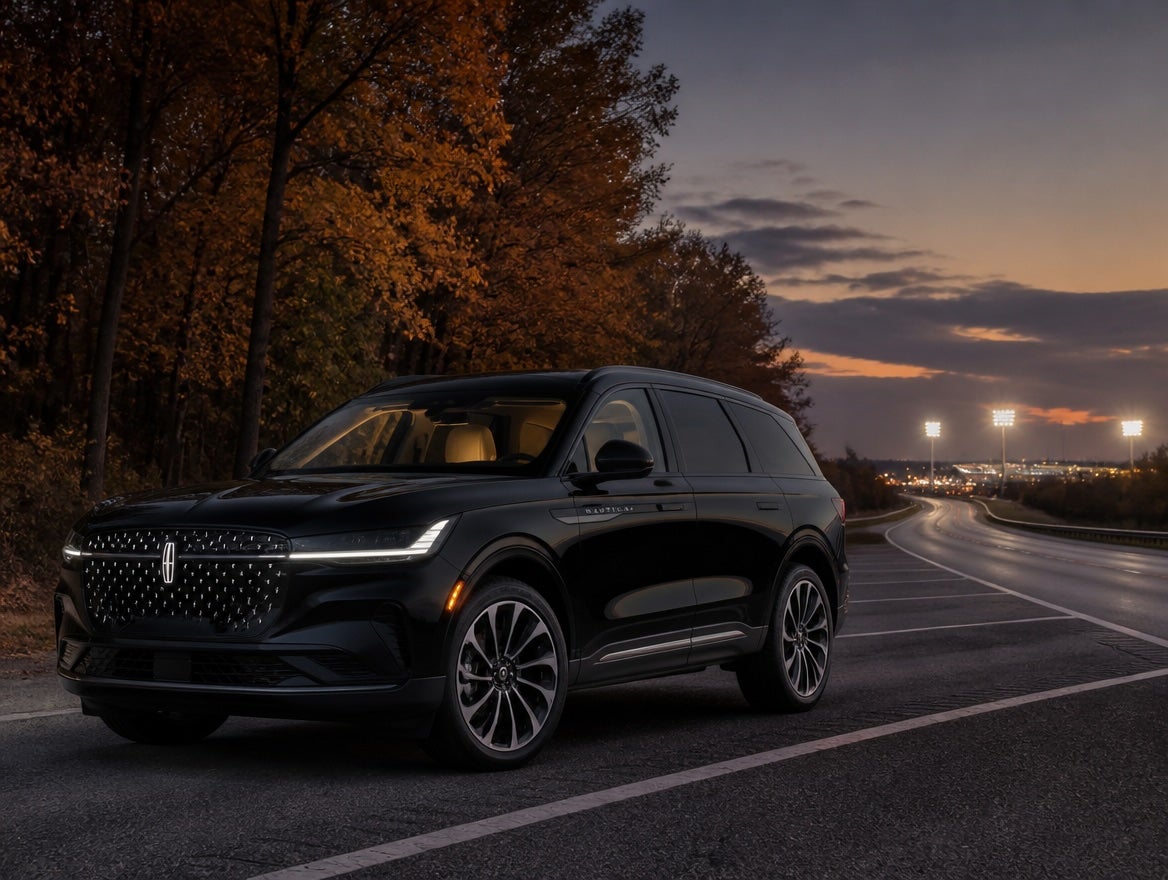
2026 Lincoln Nautilus on an Alabama highway at dusk heading to a football game

Lincoln Nautilus Weekend Football-Trip Guide

Game day in Alabama is a road trip. Whether you're pointing up I-85 toward Auburn or making the longer run toward Tuscaloosa, the September question on our lot isn't "which Lincoln do you prefer?" It's "which Lincoln will actually be comfortable three hours from now, with four adults and a cooler and everyone's opinions about the route?" We've watched that question sort itself out in a pattern our team recognizes. Your answer rides almost entirely on headcount, on cargo reality, and on whether you're doing this twice a month or twice a season. Here is how the 2026 Nautilus, Aviator, and Navigator each handle it. The 2026 Lincoln Nautilus earns the pick for two couples traveling together. It's a specific fit, not a universal win. The short version Two adults or two couples, no towing: the Nautilus is the quietest, most fuel-efficient option and the easiest to park near the stadium Family of five or six who wants real third-row seating: the Aviator carries the people, but its third row is a genuine limitation for adults on a three-hour run Six or more adults, or a trailer for the tailgate: the Navigator handles it; choose the Navigator L when you need maximum luggage space behind all three occupied rows Highway fuel economy: Nautilus Hybrid leads at an EPA-estimated 31 MPG; standard Nautilus follows at 29 MPG; Aviator returns 25 MPG (RWD); Navigator is rated at 22 MPG BlueCruise hands-free highway driving: standard on all three, which earns its keep on a long, straight I-85 run How Do the Three Compare for a Game-Day Run? The differences here are real and measurable, and they sort less by trim than by trip profile, so the honest starting point is your group and your cargo rather than a badge or an options list, which is where these three separate cleanly. We'd rather talk about the trip than the badge. Nautilus Aviator Navigator Seating 5 (two rows) 7 (three rows) 8 (three rows) Cargo behind 3rd row No third row 19.2 cu ft 22.9 cu ft Cargo behind 2nd row 36.4 cu ft 78.6 cu ft (max) 69.9 cu ft Highway MPG 29 MPG (std) / 31 MPG (hybrid) 25 MPG (RWD) 22 MPG Engine output 250 hp, 2.0L turbo 400 hp, 3.0L twin-turbo V6 440 hp, 3.5L twin-turbo V6 Max towing (when properly equipped) Not rated 5,000 lbs 8,700 lbs (with HD Tow Package) BlueCruise standard Yes Yes Yes Best for Two couples, efficiency, easy parking Families of 5-6, balanced space and drive feel Large groups, tailgate trailers, full-group comfort EPA fuel economy figures are estimates; actual mileage varies with conditions and load. Towing figures are maximums when properly equipped; actual capacity varies with configuration and passenger load. The 2026 Lincoln Aviator and the 2026 Lincoln Navigator both carry seven or eight passengers, while the Nautilus carries five. The first cut is clean. Everything else follows from that. What Does Your Trip Actually Look Like? Where most comparisons stall is the assumption that describing the vehicles answers the question, when what actually decides it is the shape of your trip, so we'd rather start with the drive itself and let the three Lincolns fall where the miles and the seats put them. The two-couple scenario. Four adults, four bags, a cooler, and the Nautilus takes it without strain. Lincoln lists cargo volume at 36.4 cubic feet behind the second row with seats up, which is enough for four overnight bags with room to spare. Acoustic laminated glass and Active Noise Control keep the highway stretch quiet, the kind of quiet you'll notice around hour two. At an EPA-estimated 29 MPG highway on the standard powertrain, a Montgomery-to-Tuscaloosa round trip of roughly 220 miles asks less of the fuel gauge than anything else in this lineup. The Hybrid pushes that to an EPA-estimated 31 MPG highway. The tradeoff is plain. Five passengers and it gets tight, because the Nautilus has no third row, and you cannot force it into a six-person role. Don't try. The family-of-six scenario. The Aviator is the natural reach here, and reasonably so. Lincoln publishes 400 horsepower and 415 lb-ft of torque from the 3.0L twin-turbo V6, which makes the highway pull feel effortless even fully loaded. Cargo behind the third row comes in at 19.2 cubic feet. That fits four bags for a weekend. It does not fit six adults' luggage. You'll make a choice between people and gear, and that's worth knowing before you pack the driveway. The third row is where we'd level with you. On a three-hour drive, adults back there won't be comfortable for the whole run. A workable row for shorter distances, and a proper row for younger passengers on longer ones. We'd call it a genuine limitation, and we'd tell you the same thing on the showroom floor. The 2026 Aviator's 3.0L twin-turbo V6 produces 400 horsepower and 415 lb-ft of torque per Lincoln's published specifications, meaning the highway pull never feels like work even with a full cabin. The large-group or tailgate-trailer scenario. For a large group or a tailgate trailer, the Navigator is the one that fits, and we won't pretend otherwise. It seats eight, returns an EPA-estimated 22 MPG highway (Lincoln's published figure for the 4WD configuration), and tows up to 6,200 pounds in base configuration or 8,700 pounds with the available Heavy-Duty Trailer Tow Package when properly equipped. It covers a loaded utility trailer, a pop-up camper, or a pontoon on a short hitch. Max towing varies with configuration and passenger load. A note on the road: BlueCruise hands-free highway driving comes standard on all three 2026 Lincoln models. On a familiar, long stretch of I-85 with light traffic, it moves from a line on a spec sheet to something you actually lean on. Lincoln describes it as a driver-assist system that requires an attentive driver at all times, which is the correct framing. It earns its keep on exactly this kind of trip. Match the Vehicle to Your Group The matrix hands you the numbers, and translating them into a pick comes down to who is riding along and what you're hauling, so read each recommendation below against your own driveway rather than against a spec you liked in isolation. Choose the Nautilus when you're traveling as a couple or with one other couple, you value cabin quiet and highway efficiency over headcount, and you want a vehicle that parks like a midsize SUV in a full stadium lot. Call it the right instrument for that particular job, not a consolation prize. The available 48-inch panoramic display, available massage seats, and Lincoln Rejuvenate sensory coordination make a three-hour drive feel shorter than it is. Choose the Aviator when your group includes children or younger adults in a third row, you need real cargo volume behind the second row (78.6 cubic feet is a meaningful number when you're loading sporting gear), and the occasional tow of up to 5,000 pounds when properly equipped fits your lifestyle. It's also the most athletic of the three on a winding road. The distinction matters to some buyers and not at all to others. Choose the Navigator when your group is six or more adults who all expect to be comfortable for the full trip, or when you're pulling a trailer regularly. The Navigator L is the specific answer when you need those three rows occupied and usable luggage space behind them. Lincoln lists 22.9 cubic feet behind the standard Navigator's third row and 36.1 cubic feet behind the Navigator L's, and that difference shows when you're loading up. The Navigator L earns its keep on exactly this kind of full-group trip, when the standard wheelbase's 22.9 cubic feet behind the third row simply isn't enough. Schedule a Pre-Trip Service Check There's no substitute for sitting in all three rows before a four-hour commitment. Come in when it suits you, and we'll set the right one alongside your group and let the geometry settle the question. By the Stivers Lincoln of Montgomery Team | November 2026 Frequently Asked Questions Which Lincoln SUV is most fuel-efficient for a long highway drive? The 2026 Lincoln Nautilus Hybrid leads the lineup for highway fuel economy, with an EPA-estimated 31 MPG highway. The standard Nautilus follows at an EPA-estimated 29 MPG highway. The 2026 Aviator returns 25 MPG highway on rear-wheel-drive models per Lincoln's published figures. The 2026 Navigator is EPA-estimated at 22 MPG highway in its standard 4WD configuration. All figures are estimates; actual mileage varies with load, driving conditions, and style. Can the Lincoln Aviator's third row comfortably seat adults on a long road trip? The Aviator's third row seats adults on shorter drives without much complaint. On a three-hour-plus highway trip, most adults find it workable but not the most comfortable place to spend an afternoon. If your group regularly travels with adults occupying all three rows, the Navigator's third row is meaningfully more spacious, and the Navigator L adds over 13 cubic feet of additional luggage room behind those seats compared to the standard Navigator. Explore Your Financing Options Stivers Lincoln of Montgomery 4000 Eastern Blvd, Montgomery, AL 36116 (334) 647-6905

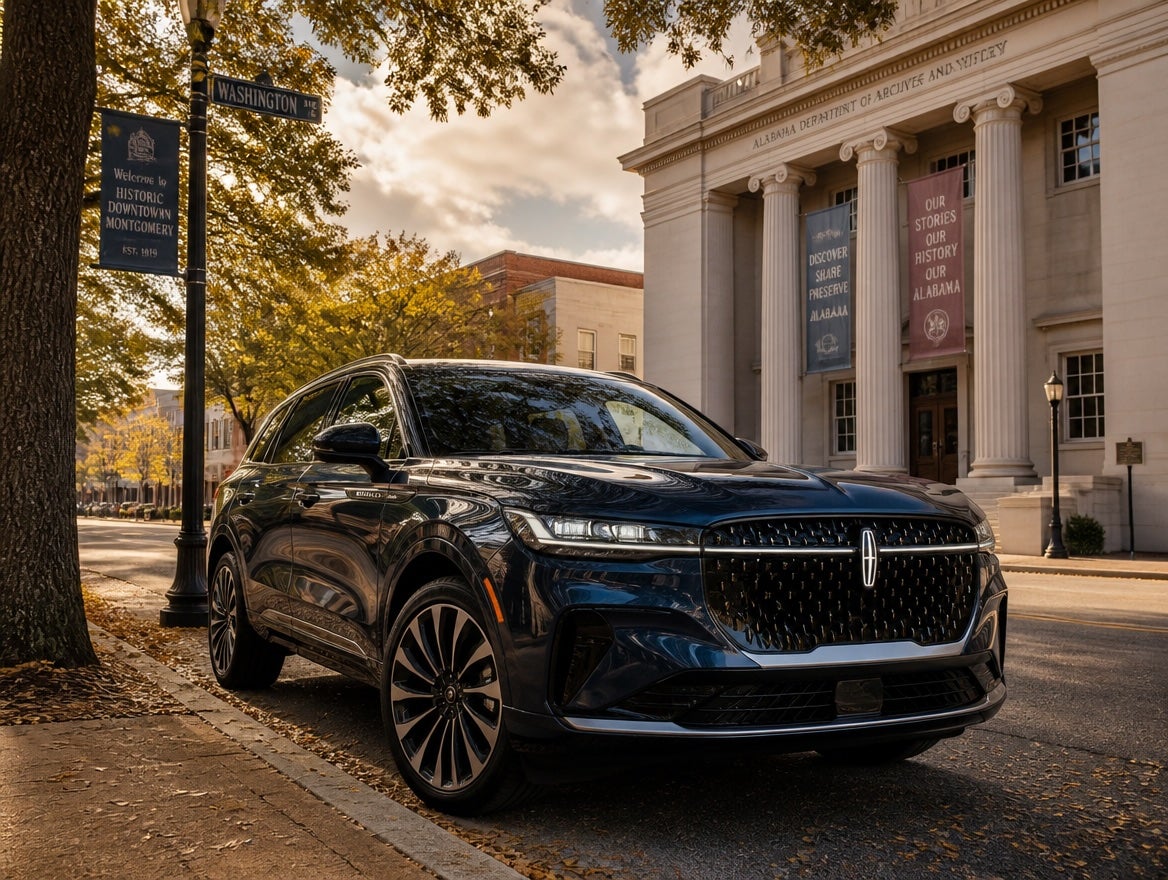
2026 Lincoln Nautilus on Washington Avenue near the Alabama Department of Archives and History in downtown Montgomery

Visiting the Alabama Department of Archives and History in a Lincoln

Admission is free, the building is open Monday through Saturday, and the research collections run until 4:30 p.m. The Alabama Department of Archives and History asks nothing of you but time. What it asks of your vehicle is simpler, a smooth, unhurried drive into downtown Montgomery and a comfortable place to come back to when you're done. Both are worth prepping for. The Lincoln Nautilus handles this kind of day well. So does the Lincoln Aviator for larger households. Preparation matters either way, though, and the checklist below covers both the drive and the visit itself. What Goes on the Checklist? Plan the vehicle, the route, and the visit in that order and the day falls into place without much fuss, though you'll want everything squared away before you leave Eastern Boulevard, because the Capitol district doesn't leave much room to improvise once you're circling for a space. The list below splits into two halves. Vehicle Preparation Confirm your fuel level. The drive from east Montgomery into the Capitol district is short, but it's worth arriving with a full tank if you plan to add other downtown stops after. Check tire pressure before you go. November temperatures in Alabama are still warm enough that a tire starting the day underinflated will shed air as it heats up on downtown pavement. Enable BlueCruise for the I-85 stretch (2026 Navigator owners, it's standard on your vehicle and covers the relevant divided highway corridor). BlueCruise is a driver-assist system that requires an attentive driver at all times. Verify your navigation is updated. Washington Avenue in the Capitol district has one-way sections, and arriving from I-85 southbound via Union Street is the cleanest approach. Confirm your preferred parking plan before you leave. See the parking section below. If guests are riding in the third row (Aviator or Navigator families), set the rear climate controls before the drive so the cabin is balanced by arrival. Pack any research materials digitally. The Research Room has its own protocols for what you may bring inside. Note the Research Room hours separately: Tuesday through Saturday, 8:30 a.m. to 4:30 p.m. If you're coming on a Monday for the Museum of Alabama only, the Research Room won't be open. Visit Logistics Plan to arrive no later than 3:00 p.m. if you want Research Room access. The last box retrieval from the collections is at 4:00 p.m. Budget a minimum of 90 minutes. The Museum of Alabama alone justifies it, and that's before the research collections. Note the south entrance. The Adams Avenue side of the building bears the inscription "ALABAMA WORLD WAR MEMORIAL" above the doors, and that's the entrance closest to the free parking lot. Groups of 15 or more should arrange a guided tour in advance by contacting the ADAH at 334-242-4364. Bring a valid photo ID for Research Room registration. Download or screenshot the collections database ahead of time if you have a specific record in mind. It reduces time spent orienting once you're inside. Why These Items Matter The checklist traces back to geography, since the Alabama Department of Archives and History sits at 624 Washington Avenue, directly across the street from the Alabama State Capitol, on a block that ranks among the most logistically dense in Montgomery, and the parking is the part that's easy to underestimate from the east side. A limited free lot sits right behind the building on Adams Avenue, and it fills. Arriving before 10:00 a.m. on a weekday gives you the best shot at that lot without circling the block. On-street metered parking is available on Washington Avenue, Bainbridge Street, and Adams Avenue. Saturday meters are free. The I-85 corridor between Eastern Boulevard and Exit 1 at Union Street is designated as a Hands-Free Blue Zone. Lincoln lists over 130,000 miles of prequalified divided highway in the BlueCruise network, and this segment qualifies. For Navigator clients, BlueCruise is standard on the 2026 model and includes a four-year subscription, covering automatic lane centering, Lane Change Assist, and In-Lane Repositioning. It requires your eyes on the road at all times. Still, it makes the short highway leg genuinely relaxed rather than merely short. The cabin is the other reason the prep pays off. November in Montgomery still carries humidity, worst in the early afternoon when downtown pavement radiates heat, and that afternoon load is a condition our team plans around before leaving the lot. The 2026 Nautilus and Aviator both include climate-controlled front seats, and the Navigator's rear climate system operates independently of the front cabin. Setting those before you leave means nobody's adjusting vents in the Capitol district parking lot. One limitation worth naming honestly, the 2026 Nautilus is a two-row vehicle, and its cargo area is built around luggage and errands rather than a research day with a family of five. If you're bringing materials, laptops, and a full passenger complement, the Aviator's additional row and 77.7 cubic feet of total cargo space give you more breathing room. The Nautilus wins on efficiency (the EPA rates it at 21 city and 29 highway miles per gallon for the standard gas powertrain) and on ease of navigation in tight downtown blocks. Neither's wrong. They suit different configurations of the same afternoon. Before your trip: The Research Room is closed on Mondays and on all Alabama state holidays. The Museum of Alabama is open Monday through Saturday. If your goal is genealogical research or original document access, confirm the day of your visit against the Research Room calendar on the ADAH website before you leave home. Item Why It Matters Tire pressure check November downtown pavement can cause underinflated tires to shed pressure as they warm; caught at home, it's a two-minute fix Fuel before you go Short drive, but Capitol-district stations require a detour; the trip is calmer without that errand Navigate to Adams Avenue entrance Free parking lot is behind the building; Washington Avenue front entrance has no dedicated lot Arrive by 3:00 p.m. for Research Room Last collections retrieval is 4:00 p.m.; arriving at 4:15 closes that option entirely Rear climate on before departure November Alabama humidity makes the cabin uncomfortable by arrival if you wait; 2026 models allow pre-departure climate control through the app Digital copy of target records Reduces search time inside and lets you confirm holdings before the drive Note Monday Research Room closure Museum stays open Mondays; Research Room does not Print-and-Go Recap The ADAH charges no admission and closes at 4:30 p.m., Monday through Saturday, while the Research Room keeps a tighter window, closing Mondays and halting record retrieval at 4:00 p.m., with free parking tucked behind the building on Adams Avenue. From I-85, take Exit 1 at Union Street southbound and turn left onto Washington Avenue. On the vehicle side, check tire pressure, confirm fuel, and switch your navigation on before you reach downtown. Navigator owners have BlueCruise available on the I-85 segment as a driver-assist feature. Set rear climate controls before departure on days above 75 degrees. If you're bringing a larger group or research materials, the Aviator's third row and added cargo volume earn their consideration. Browse the Aviator lineup or stop by our showroom on Eastern Boulevard to talk through which configuration fits how you move. Worth flagging before this trip, the visit's easy to underestimate and the parking easy to overestimate. Both are easy to fix in advance. The drive itself takes care of itself. FAQ: Is the Alabama Department of Archives and History free to visit? Yes. Admission to the Alabama Department of Archives and History, including the Museum of Alabama, is free and open to the public. The building is located at 624 Washington Avenue in downtown Montgomery, directly across the street from the Alabama State Capitol. A limited free parking lot is available behind the building on Adams Avenue. Which Lincoln works best for a day-trip into downtown Montgomery? The right answer depends on who's going. The 2026 Nautilus, with its 193-inch length and standard all-wheel drive, is the easier vehicle to maneuver and park in the Capitol district. The 2026 Aviator gives you a third row and more cargo volume for larger parties. The 2026 Navigator is the flagship choice for the longest drives and the largest groups, with BlueCruise standard on divided highways including the I-85 approach to downtown. Our team at Stivers Lincoln of Montgomery is on Eastern Boulevard, and we're happy to walk you through any of them in person. Prepare Your Lincoln Before the Drive Stivers Lincoln of Montgomery 4000 Eastern Blvd, Montgomery, AL 36116 (334) 647-6905

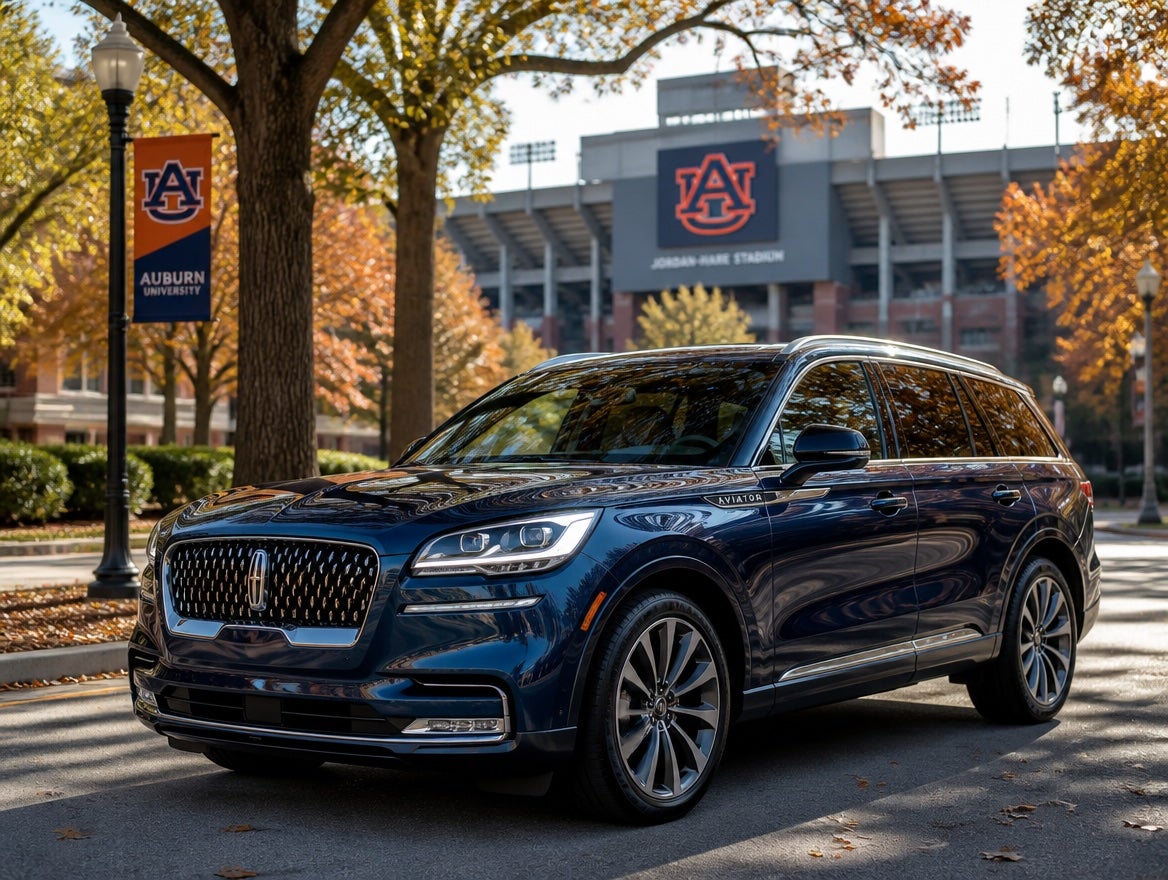
2026 Lincoln Aviator parked at an Auburn game-day tailgate area near I-85, Alabama, warm September afternoon light

Preparing Your Lincoln for Game-Day Traffic on I-85

The drive from Montgomery on an Auburn game day runs only about 54 miles. Fifty-four miles that can swell into a two-hour slog if you leave at the wrong time and wing the return with no plan. We've watched it play out from the lot on Eastern Boulevard, since folks stop in the day after a night game looking more worn down than when they left. So here's the plan we'd give a friend, a time-anchored four-stop itinerary that leans on what your 2026 Lincoln Aviator or Navigator does well on a divided-highway run in early-November Alabama. The route is I-85 North the whole way. No shortcuts, no back roads on game day. The plan lives in the timing. What Does the Route Actually Look Like? The route below is the skeleton of the day, and it holds up because every stop is real and every drive time is a normal-traffic baseline, with the game-day minutes folded into the timing notes rather than the raw figures. Read it once before you load, and you'll leave nothing to chance. Stop Depart Drive Time What You're Doing What to Have Ready Eastern Blvd, Montgomery 9:00 AM Start here Load up, climate set Cooler, stadium bag, BlueCruise on Eastchase area (fuel/coffee) 9:15 AM ~15 min Last fuel stop before Auburn Top off the tank Auburn tailgate zone 10:00 AM ~45 min Arrive pre-crowd, park early Parking pass, chairs, cooler Post-game hold (Auburn) ~4:30 PM After final whistle Wait out the Exit 51 backup Snacks, chargers, rear climate Montgomery (home) ~6:00 PM ~55 min I-85 clears fast once it moves Nothing left to do That 9:00 AM departure is not arbitrary. I-85 sees a major spike in traffic before and after kickoff, with fans traveling from Montgomery and beyond flooding the exits and creating backups at key interchanges. Getting into Auburn by 10:00 AM means you're settled before that wave builds. The post-game hold (Stop 4) is the move most people refuse to make and then regret. The Four Stops, In Order Stop 1: Eastern Boulevard, Montgomery - Load and Leave by 9:00 AM Start cold, because Alabama in November is starting to turn cool. Your Lincoln knows it. Before anyone climbs in, set the cabin temperature and run the ventilated or heated seats so the leather sits at the right temperature by the time you reach the ramp. Call it a detail rather than a luxury quirk, the thing that makes a 7:00 PM kickoff trip feel different from the same drive in a lesser cabin. A team observation is worth sharing here. The I-85 on-ramp from the east side of Montgomery behaves differently than it looks on a map. Give yourself the full 9:00 AM departure window, not 9:15. The 2026 Navigator seats up to eight. If your crew fills it, the rear-zone climate control matters as much as the front settings on a November morning. Schedule a Pre-Trip Service Check Stop 2: Eastchase Area - Fuel and Coffee, Around 9:15 AM We build this stop in rather than leaving it to chance, because fuel stations near Exit 51 in Auburn get genuinely congested on game day, and you don't want to be circling for a pump with a full load of passengers and a parking clock ticking. Fuel stations are abundant near the I-85 exits around Opelika, but Eastchase on the Montgomery end is faster and calmer at 9:15 AM than anything east of Shorter. Top off here even if you don't strictly need to. Those 15 minutes you're glad you spent. Stop 3: Auburn Tailgate Zone - Target Arrival by 10:00 AM Exit 51 onto South College Street is the main interchange for downtown Auburn and the university, and the first place game-day traffic backs up. Arriving before 10:00 AM puts you ahead of the main wave. Each game-day parking pass issued through Auburn University now includes a QR code with a map and prescribed route from each parking area to either Interstate 85 or Highway 280. Download that route before you leave Montgomery. Entering it into the Lincoln's navigation system before you pull off I-85 means you're not fumbling with directions on South College Street when traffic is dense and the pavement is narrow. The 2026 Aviator's twin-turbocharged 3.0-liter V6 produces 383 horsepower according to Lincoln, but the spec that matters here is not the horsepower number. What matters is that the powertrain runs quietly enough that passengers in the third row can hold a conversation at highway speed without raising their voices. The 2026 Lincoln Aviator carries NHTSA 5-Star Crash Safety Ratings (for the 2025 model), and the structural build that earns those ratings is the same mass that gives the cabin its low road noise. Timing note: November Auburn home games often kick off in late afternoon or evening. The crowd arriving from Atlanta peaks I-85 at Exit 51 roughly 90 minutes before kickoff. Being parked and set up before that window is the whole game. Stop 4: The Post-Game Hold - 4:30 PM Until the Road Clears Stop 4 is where the itinerary earns its keep, so do not leave immediately after the final whistle. Sit tight. A home game brings tens of thousands to a college town, and the city runs an involved post-game one-way scheme to clear them. That scheme takes time. The I-85 on-ramp backs up from Exit 51 down into the interchange for 30 to 45 minutes after a sold-out game. Sitting in that queue with a full cabin in November can costs you more time than simply waiting it out in a parking area. The Lincoln is built for exactly this kind of wait, so rear passengers stay comfortable, the panoramic display keeps everyone connected, and no one is climbing over each other. Unhurried by design, it's a fair test the parking lot happens to provide. For families with children, the Aviator's third row carries its own climate zone. Call it more than a footnote. What it does is make the hold tolerable. [ ] Set rear climate to a lower temperature 10 minutes before departure [ ] Confirm fuel level (you topped off at Stop 2, so you're fine) [ ] Check ALGO Traffic or Waze for real-time Exit 51 conditions before pulling out [ ] Navigate to I-85 South using the saved route rather than recalculating in traffic [ ] Distribute any remaining snacks or drinks before the on-ramp Tweak It to Your Crew Not every crew runs four people and a cooler, so the plan flexes with your configuration, whether you're hauling a full family with stadium gear or making the run two-up with fuel economy on your mind. The vehicle you pick changes which part of the itinerary gets easier. If you're bringing the full family (seven or eight passengers), the Navigator L is the vehicle that makes the itinerary work without compromise. The Navigator can seat eight people and, in extended wheelbase form, has a cargo capacity of 121.6 cubic feet behind the first row. That means the stadium gear, the cooler, and the folding chairs fit without a cargo carrier on the roof. If it's two of you and fuel economy is on your mind, the Nautilus hybrid is worth knowing about. Lincoln's official figures put the Nautilus hybrid at an EPA-estimated 30 combined MPG with 285 combined horsepower. A 110-mile round trip in September heat is a perfectly reasonable use case for that powertrain. For any vehicle in the lineup, BlueCruise is the feature that changes what the I-85 run feels like. Lincoln BlueCruise operates on 97% of controlled-access highways across the U.S. and Canada. I-85 between Montgomery and Auburn is a divided controlled-access interstate. On qualifying sections, BlueCruise manages acceleration, braking, and lane centering while a driver-facing camera confirms your attention stays on the road. It's a driver-assistance aid, not an autonomous system. Your hands come off the wheel; your eyes and judgment do not. But on a 54-mile freeway run with steady traffic, that distinction matters less than the drop in fatigue it delivers on the return trip. One honest tradeoff is worth naming. A sold-out Auburn home game draws a crowd that can blow this schedule apart. The itinerary above is built on normal-traffic baselines. A night game, a rivalry matchup, or a major ESPN broadcast can push all of those times 20 to 30 minutes in either direction. The Lincoln holds its composure in stopped traffic better than most. The itinerary is the plan. Composure is the fallback. Value Your Current Vehicle Stivers Lincoln of Montgomery 4000 Eastern Blvd, Montgomery, AL 36116 (334) 647-6905
2026 Lincoln Corsair parked on Felder Avenue in Old Cloverdale, Montgomery, Alabama, near the F. Scott and Zelda Fitzgerald Museum

Visiting the F. Scott and Zelda Fitzgerald Museum in a Lincoln Corsair

In this article What Do the Specs Actually Mean for a Drive Like This? The Cabin Engineering That Actually Changes the Experience Before You Go: What to Know About the Museum and the Neighborhood Who This Vehicle (and This Drive) Actually Fits Lincoln ended Corsair production in December 2025, so every 2026 model on our lot counts as one of the last ones built. If you're weighing a cultural day out in Montgomery, that's worth knowing. The Corsair was always built around a single idea, that a vehicle's interior should feel like a room you chose rather than a machine you're tolerating. And that idea suits exactly one kind of afternoon in this city. The 2026 Lincoln Corsair is the final model year of this nameplate. Its 250-horsepower turbocharged engine, acoustic laminated windshield glass, and standard Active Noise Control make it the right vehicle for a composed drive into Old Cloverdale and an afternoon at the world's only museum dedicated to F. Scott and Zelda Fitzgerald. See available 2026 Corsair models on our lot What Do the Specs Actually Mean for a Drive Like This? The figures below are Lincoln's own published numbers for the 2026 Corsair Premiere and Reserve, and they matter because a day trip into a walkable historic neighborhood asks different things of a vehicle than a highway run does. A few questions come up naturally. Will I fit on these streets? Is the drive quiet enough that the day already feels like it's begun? How much room is there if you pick someone up along the way? Specification 2026 Corsair (Premiere/Reserve) Why It Matters for Old Cloverdale Engine 2.0L turbocharged I4, 250 hp / 275 lb-ft torque Composed, immediate pull from residential stops Transmission 8-speed SelectShift automatic Smooth, unhurried shifts in low-speed traffic EPA Fuel Economy (FWD) 22 city / 30 highway (EPA-estimated) Efficient in the stop-and-go of a neighborhood drive Overall Length 181.4 inches Compact enough for tight residential streets Turning Radius 18.5 feet Manages narrow Cloverdale corners without stress Front Legroom 43.2 inches Room to step out without folding yourself in half Rear Legroom 38.6 inches Comfortable for a second passenger on longer legs Cargo (behind 2nd row) 27.6 cubic feet Enough for a weekend bag or a stack of used books Max Cargo (seats folded) 57.6 cubic feet Versatile if the drive extends further Active Noise Control Standard, all trims Quiet cabin even on broken pavement Acoustic Laminated Windshield Standard, all trims Cuts wind and ambient neighborhood noise Lincoln's published dimensional specifications confirm the exterior length of 181.4 inches and the front legroom of 43.2 inches. The EPA rates the front-wheel-drive Corsair at 22 city and 30 highway. The Cabin Engineering That Actually Changes the Experience The 2026 Corsair carries standard acoustic laminated windshield glass and Active Noise Control on every trim level, so the hush you'll notice isn't a Reserve-only upgrade you have to ask about. That quiet is simply part of what the vehicle does. On a residential street like Felder Avenue, where the pavement is uneven and the trees crowd close, that combination soaks up the ambient noise that would otherwise fill the cabin. Tire roar, wind through the canopy, the low rumble of old pavement, all of it drops back. Lincoln's dual-wall dashboard construction works with that active noise control to shut out highway roar, and the benefit carries down into lower-speed neighborhood driving as well. The point is simple. You arrive at the museum composed rather than slightly frayed, which is more than a cabin ordinarily gives you. Sizing for the drive: A fair caveat belongs here. The Corsair is a compact SUV on a C-segment platform, which makes it smaller than an Aviator or a Navigator. Load up four adults with luggage and that sizing shows. For one or two people making an afternoon of Old Cloverdale, though, the footprint reads as a feature rather than a compromise. Its 74.3-inch width (narrow enough to matter on these side streets) keeps it manageable near the museum, where parking on Dunbar Street means pulling close to the curb without second-guessing yourself. Check the center stack before you pull away. A 13.2-inch SYNC 4 infotainment system with wireless Apple CarPlay and a 12.3-inch driver information cluster come standard, and the technology earns its place here. Navigating into an unfamiliar historic neighborhood without fumbling for a phone mount is a quiet, practical luxury on the approach. Explore the Lincoln Nautilus if you want a larger two-row option Or see the Lincoln Aviator for three-row capability on longer group trips Explore Financing Options for the 2026 Corsair Team observation: On Felder Avenue, street parking runs parallel along a narrow curb, and the trees overhead make the lane feel tighter than it measures. The Corsair's 18.5-foot turning radius handles that without the three-point drama a full-size vehicle demands. When your destination is a historic residential block instead of a surface lot, that's what separates a compact luxury crossover from something larger. Before You Go: What to Know About the Museum and the Neighborhood The Scott and Zelda Fitzgerald Museum sits in Montgomery's Old Cloverdale historic neighborhood, and it's the world's only museum dedicated to the couple. F. Scott Fitzgerald and Zelda Sayre Fitzgerald lived in this house from October 1931 until February 1932, the period during which Scott worked on *Tender Is the Night* and Zelda began writing *Save Me the Waltz*. A few practical details that change how you plan the visit: The museum is open Thursday through Sunday, 10 a.m. to 3 p.m., and Wednesdays by appointment only. The address is 919 Felder Ave., Montgomery, AL 36106. Street parking is available on Dunbar Street on the side of the house. The museum holds photographs, letters, newspaper clippings, and books that document the Fitzgeralds' lives, and features a number of Zelda's paintings alongside the literary collection. The museum is financed solely through public contributions, so a donation at the door is the right move. Old Cloverdale became an official historic district on December 17, 1996. The streets are residential, quiet, and slow by nature. The Corsair's composed ride matches the neighborhood's pace. Who This Vehicle (and This Drive) Actually Fits Visit our showroom on Eastern Boulevard to see the 2026 Corsair in person The 2026 Corsair suits someone who wants a vehicle that finishes its job before you park it. A quiet cabin, a compact but not cramped footprint, a standard driver-assist suite that works without demanding your attention, all of it exists to take friction out of the day rather than to announce itself. The Corsair isn't the vehicle for someone who needs a third row or who tows a trailer on the regular. Towing capacity reaches 3,000 pounds when the Corsair is properly equipped with the available Towing Package, which is useful but not why anyone buys one. The Grand Touring trim gives the electrified crowd a real reason to look. Its plug-in hybrid system delivers a 27-mile electric range and returns 33 mpg combined (EPA-estimated) once the gasoline engine engages. A round trip from our lot on Eastern Boulevard to Old Cloverdale and back runs roughly 12 to 15 miles of city driving. In a Grand Touring, that's a trip you can finish on electricity alone. For the established professional in east Montgomery who wants a vehicle that suits the day without making the day about itself, the 2026 Corsair is exactly that. This final model year brings refined quiet-cabin technology, available heated rear seats, and available Digital Scent as a personalized atmosphere feature. As send-offs go, it's a composed and considered one. Frequently Asked Questions Is the 2026 Lincoln Corsair the last model year? Yes. Production of the Corsair ended in December 2025 at the Louisville Assembly Plant. The 2026 model year is the final one, and units currently available represent the last Corsairs built. If you've been considering one, the time to act is now, while selection is still meaningful. How quiet is the Corsair cabin, and does it matter in city driving? It matters in exactly the ways that count for a drive through a residential neighborhood like Old Cloverdale. Every trim of the 2026 Corsair includes standard acoustic laminated windshield glass and Active Noise Control. The dual-wall dashboard construction further reduces road and ambient noise from the cabin. At low city speeds on older pavement, these features work together to keep the interior noticeably quieter than the street outside it, which is the whole point of the Lincoln sanctuary philosophy applied to a real local drive. Value Your Current Vehicle Toward a 2026 Corsair Stivers Lincoln of Montgomery 4000 Eastern Blvd, Montgomery, AL 36116 (334) 647-6905

2026 Lincoln Aviator parked near Jordan-Hare Stadium on Auburn University campus on a September game day

Driving From Montgomery to Auburn for Game Day in a Lincoln

In this article What's the Plan at a Glance? Toomer's Corner and the Approach to The Plains The I-85 Stretch: Where the Lincoln Does Its Thing How the Vehicle Fits the Day Take I-85 North for 54 miles, arrive in roughly 55 minutes on a clear morning, and you've got one of the more satisfying short drives in the state. That's the plan. What makes it work is deciding, before you leave, whether you need the Aviator's composed three-row cabin for the family or the Navigator's full-flagship presence for a larger crew, then treating the parking reality at Jordan-Hare as part of the strategy from the start. Central Alabama means heat. Real heat. The kind that turns an unprepared cabin into a sauna the moment you crack the tailgate at a parking lot on Donahue Drive. We see clients load up for Auburn games, and the ones who arrive settled, cool, and ready to enjoy themselves are almost always in a vehicle that was managing the environment before they even left Montgomery. For most groups, The Lincoln Aviator fits that description. Three rows, a cabin that genuinely quiets road noise on I-85, and enough room behind the third row to carry coolers, chairs, and gear without asking anyone to hold something on a lap. What's the Plan at a Glance? Stop What to Do Best Time Parking Note Stivers Lincoln, Eastern Blvd, Montgomery Confirm vehicle is prepped; fuel, tire pressure, cabin cool Morning of game Your own lot I-85 North to Exit 51 (Auburn) 54-mile drive; BlueCruise active on qualifying stretch Allow 60-75 min game day N/A Toomer's Corner, Auburn Coffee, a walk through town, the pre-game atmosphere 3-4 hours before kickoff Street and garage parking within walking distance Jordan-Hare Stadium area Tailgate (free lots at Hayfields and Community Gardens) or ticketed lot Lots open before kickoff Large SUVs: pre-purchase a reserved spot; free lots are first-come Jordan-Hare Stadium Kickoff (88,043-seat capacity) Per your ticket Walk from parking area Toomer's Corner and the Approach to The Plains Auburn's downtown on game day is worth arriving early for, because the walk into the pregame crowd with coffee in hand is half the reason you make the drive, and getting there with two hours to spare beats the frantic parking-lot sprint every time. Toomer's Corner sits at the intersection of College Street and Magnolia Avenue. Fans gather there well before kickoff, and the energy at that hour has almost nothing in common with the scramble that comes later. The Lincoln Navigator earns its keep on a longer group trip to Auburn or a longer SEC road game later in the season. For Toomer's Corner and the immediate campus area, though, the Aviator's narrower footprint is easier to place in a downtown garage or along a tree-lined residential street. We'll say the tradeoff plainly. The Navigator is the right call when you're hosting six adults in real rear-seat comfort, or when the trip includes luggage for an overnight, and it's a larger vehicle to park, so you plan for it. Local note: Free tailgate lots at Hayfields and along Community Gardens open on a first-come basis on Saturdays. They fill up. Arriving three to four hours before kickoff is not excessive. It is standard practice at Jordan-Hare, and it turns parking from a problem into part of the day. The I-85 Stretch: Where the Lincoln Does Its Thing Fifty-four miles on I-85 North isn't a stress-inducing drive in any vehicle, but in an Aviator or Navigator it turns into something closer to restful, largely because Lincoln lists BlueCruise 1.5 as standard on all 2026 Aviator trims (not available on upper trims only, across the whole lineup). The system operates on prequalified hands-free Blue Zones across qualifying sections of I-85, which means a meaningful portion of the Montgomery-to-Auburn run qualifies. The driver still needs to be attentive and ready to resume control at any moment (BlueCruise is a driver-assist feature, not an autonomous system). Even so, the reduction in sustained physical input on a 55-minute interstate leg is noticeable. A Navigator L raises that comfort level further with its long-wheelbase body, an additional 11 inches of length and 14.5 cubic feet of extra cargo capacity behind the third row (relevant if you're packing a serious tailgate setup with chairs, a canopy, and a cooler). The 2026 Navigator's twin-turbo 3.5L V6 produces 440 horsepower and 510 lb-ft of torque per Lincoln's published specs, and all of that is managed through a 10-speed automatic with standard 4WD. You're not working the engine hard on I-85; it's simply there when the merge demands it. The honest note on the Navigator for this particular trip has to do with thirst. The EPA rates the 2026 Navigator at 15 city / 22 highway / 17 combined MPG (4WD, all trims). On a 54-mile primarily highway run, you're in the more favorable end of that range. It is not an efficient vehicle in any objective sense, and that's a real cost worth saying out loud. For a group of five or more who want the full flagship experience on the way to The Plains, it's also a deliberate choice. Next step: If you haven't driven an Aviator or Navigator on the interstate yet, we'd suggest doing it before game day. A quick run down Eastern Boulevard onto I-85 gives you a real sense of how BlueCruise settles the cabin on a highway stretch. Schedule a Pre-Trip Service Check How the Vehicle Fits the Day The 2026 Aviator's twin-turbo 3.0L V6 produces 400 horsepower and 415 lb-ft of torque per Lincoln's published specifications, and that figure barely registers at a steady I-85 pace, though it does show up in the merge off the Eastern Boulevard on-ramp and in the way the cabin manages noise and isolation at interstate speeds. Lincoln rates the Aviator at 17 city / 25 highway / 21 combined MPG (EPA estimates, front-wheel drive; AWD figures differ slightly). On a 54-mile highway run, the math is comfortable. Which one actually makes the trip? For most families it's the Aviator, so Browse our current Aviator and Navigator inventory at Stivers Lincoln before you commit and let the tailgate decide. Cargo volume with all three rows folded flat is 77.7 cubic feet in the Aviator per Lincoln's listed specs (enough for chairs, a soft cooler, and the gear that makes a two-hour tailgate genuinely comfortable). The 30-way Perfect Position front seats with available ventilation take September heat seriously. That last detail matters more than it sounds when you've just walked across a sun-baked parking lot and need to cool down before you even reach your seat. It matters. The drive home after a game (night, tired, likely a slower pace) is where the cabin's quiet pays its second dividend. Sixty minutes on I-85 South goes by differently when the road noise is managed and the seats haven't worn you out. The Plains will do the rest. Our job is making sure you arrive at Toomer's Corner composed enough to enjoy it. See What Your Current Vehicle Is Worth Stivers Lincoln of Montgomery 4000 Eastern Blvd, Montgomery, AL 36116 (334) 647-6905

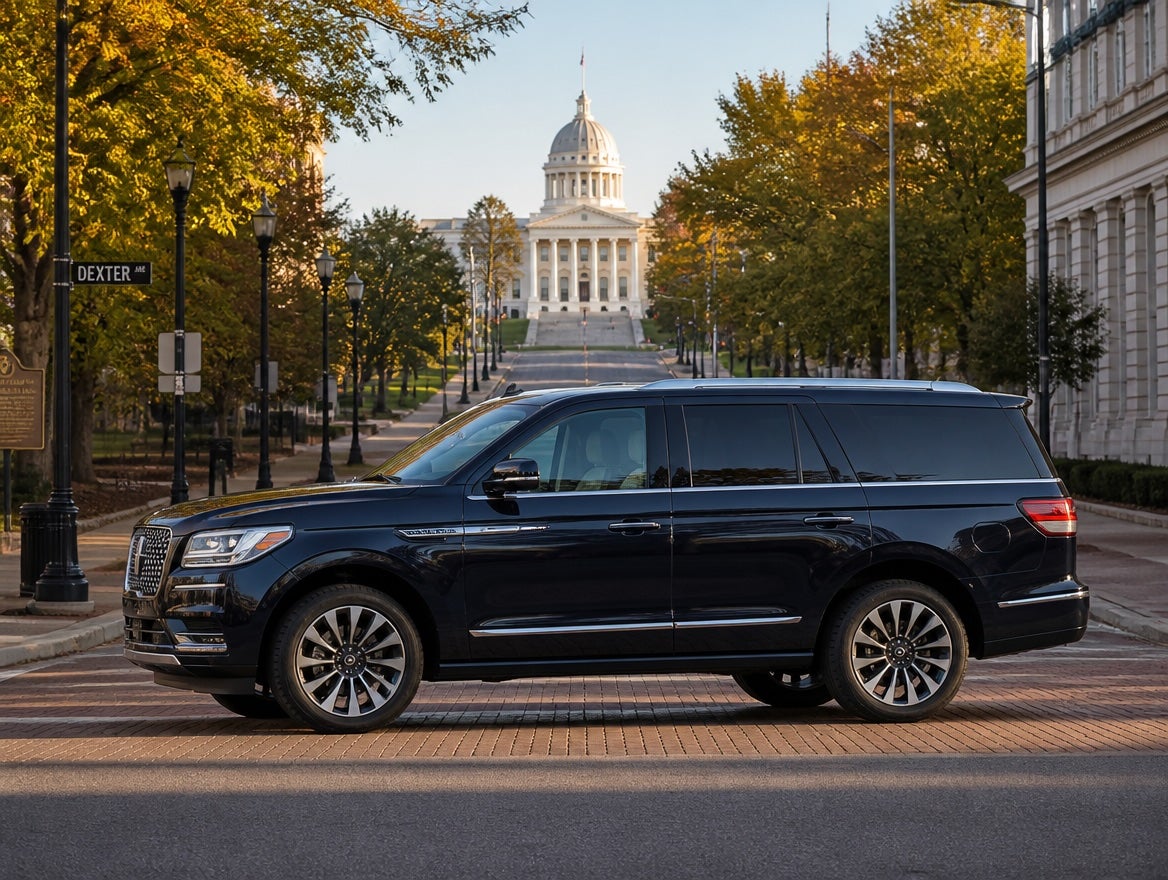
2023 Lincoln Navigator parked on Dexter Avenue in Montgomery Alabama with the Alabama State Capitol in the background

Lincoln Navigator by Model Year: Which Used Years Are Worth It in Montgomery

Dexter Avenue runs just half a mile. From Court Square at the bottom to the steps of the Alabama State Capitol at the top, it packs in as much history as any half-mile in the country. People who know Montgomery understand you don't rush it. You park with some thought, you give it time, and the vehicle you arrive in ought to feel as composed as the morning around it. Which makes a used Lincoln Navigator a quiet fit. Not because it's showy. Because it isn't. If you're shopping a used fourth-generation Navigator (2018-present), the year you choose matters more than most luxury buyers realize. Our team has watched buyers walk in set on a specific year, and we'll level with you. Some of those years are fine. Some carry a recall history that deserves a real conversation before any money changes hands. We'd tell a friend the same thing. The short version The fourth-generation Navigator launched in 2018 with a full redesign. First-year "teething" problems make 2018 the year to approach most carefully. NHTSA data shows 2019 drew the most owner complaints of any fourth-generation year (68 complaints). Verify any 2019 VIN before buying. A June 2026 NHTSA recall (26V344) covers seat belt pretensioners on all 2018-2022 Navigators. Check whether the recall has been completed on any vehicle you're considering. The 2021-2024 model years represent the sweet spot: the 10-speed transmission issues were sorted, complaint volume dropped sharply, and the cabin refinements landed intact. Every fourth-generation Navigator shares the same twin-turbo 3.5-liter V6 (440 horsepower, 510 lb-ft of torque), so the powertrain itself isn't what changes year to year. The reliability record is. Browse our pre-owned Lincoln inventory to see what's currently available, then come back to this guide for the year-by-year context that makes a used purchase a confident one. Which Navigator Years Are the Sweet Spot? The honest answer is 2021 through 2024, because those four years carry meaningfully fewer NHTSA owner complaints than the first two years of the fourth generation, the 10-speed SelectShift automatic had found its stride, and none of them carry the recall exposure that defines 2018-2022 as a group. The rest of the field needs more homework. The fourth generation breaks down year by year below. Model Year Generation Status NHTSA Complaint Profile Sweet Spot? Key Notes 2018 First year of 4th gen redesign 48 complaints; 141 Technical Service Bulletins Watch closely First-year issues typical of a full redesign; seat belt pretensioner recall (26V344) applies 2019 Early 4th gen 68 complaints (highest in generation) Approach carefully Most owner complaints of any 4th-gen year per NHTSA; recall 26V344 applies 2020 Mid 4th gen 28 complaints Acceptable with VIN check Recall 26V344 applies; windshield wiper arm recall also involved this year 2021 Refined 4th gen 29 complaints Sweet spot begins Sorted powertrain; recall 26V344 applies through this year 2022 Refined 4th gen 20 complaints Strong choice Highest recall count by campaign number (14), but complaint volume fell to 20; recall 26V344 covers through Oct. 2022 production 2023 Refined 4th gen Low complaint volume Top pick Outside the seat belt pretensioner recall window; fifth gen architecture 2024 Refined 4th gen Low complaint volume Top pick Clearest reliability record of recent used inventory A few things to hold in mind as you read this table. NHTSA complaint counts reflect what owners chose to report; they're a directional signal, not a perfect grade. And recall coverage is the more important variable in 2026, for reasons we're about to explain. Does much change inside across these years? Not dramatically. Lincoln's EPA-estimated 15 city / 22 highway fuel economy is consistent across the fourth generation, and the twin-turbo 3.5-liter V6 makes 440 horsepower and 510 lb-ft of torque, the same numbers whether you're looking at a 2021 or a 2024. What you're choosing when you pick a year is reliability history. Pick 2021 or later and you're in much cleaner water. See new Navigator inventory at Stivers Lincoln of Montgomery if a current 2026 is on the table alongside your used search. Which Years Should You Watch Out For? Start with the June 2026 recall, since it shapes how you should read every 2018 through 2022 Navigator on the market; NHTSA campaign 26V344 covers approximately 77,684 Lincoln Navigator SUVs from the 2018 through 2022 model years. The problem is the front seat belt retractor pretensioner, which may inadvertently deploy and lock in place, preventing the belt from retracting or extending normally. Per NHTSA, the propellant inside the pretensioner can degrade when exposed to high-heat environments. Alabama summers run long and hot, and vehicles parked outdoors here see sustained heat that makes this degradation mechanism relevant to the cars we actually see in Montgomery, not a line on a spec sheet. The remedy is free under federal law. But whether the work has been completed on any specific used vehicle is something you verify against the VIN at nhtsa.gov before you agree to anything. Beyond the recall, here is what our team would flag year by year. 2018 had 141 Technical Service Bulletins in its first year on sale, a typical but genuine cost of buying the first model year of any full redesign. TSBs aren't recalls; they're documented fix procedures issued to dealerships. Still, 141 of them in one year tells you something. The seat belt pretensioner recall applies. We'd want a thorough pre-purchase inspection on any 2018. 2019 is the year NHTSA data flags most clearly. Among fourth-generation Navigators from 2017 through 2026, 2019 drew 68 owner complaints, more than any other year in that span per NHTSA records. Powertrain was the most commonly flagged area. The recall applies here too. A 2019 with a clean VIN history and documented recall completion can still make sense, though it asks more due diligence of you than a 2022 or 2023. 2020 is a middle case. Complaint volume dropped to 28. A windshield wiper arm recall (separate from the pretensioner campaign) was associated with this year. The seat belt recall still applies. Verify both. Explore the Navigator L if maximum cargo volume behind the third row is part of what you're solving for. The long-wheelbase body adds 37.4 cubic feet behind the third row compared to the standard model's 22.9, and the same year-by-year framework in this guide applies to the L as well. Before you make an offer: Pull the VIN on any 2018-2022 Navigator at nhtsa.gov and confirm that recall 26V344 (seat belt pretensioner) shows "remedy available" or "completed." Parts and the full remedy under this expanded recall were expected to be available by late 2026. Our service team can complete open recalls; that's worth factoring into any used negotiation. Get a Trade-In Value on Your Current Vehicle Which Year Fits Which Buyer? We like to be direct here, because the right year depends on what you're optimizing for, and the choices split fairly cleanly between a value-minded buy in the 2021 to 2022 range and the cleanest records sitting on the 2023 and 2024 cars. Let's take them in order. If value relative to condition is the priority, a 2021 or 2022 hits a reasonable middle ground. Complaint volume is low, the powertrain runs smoothly, and you'll still find examples with the full suite of refinements Lincoln brought to the interior. Confirm recall 26V344 status on any 2022 built before October 2022. A 2022 built after that date falls outside the pretensioner recall window entirely. If you want the cleanest used option available, a 2023 or 2024 is the straightforward answer. These years sit outside the seat belt pretensioner recall campaign, NHTSA complaint data is thin (which partly reflects newer cars with fewer miles, but also reflects a genuinely more sorted vehicle), and the cabin is the most current expression of the fourth generation before the 2026 redesign. The 2023 and 2024 deliver the same 440-horsepower twin-turbo V6, the same adaptive air suspension, and second-row seats that slide to offer up to 42 inches of legroom. The third row, at 43.5 inches of legroom, is usable by adults rather than a nominal gesture. If you're considering the Navigator L specifically, the same year-by-year logic applies. The L's advantage is rear cargo. At 37.4 cubic feet behind the third row versus 22.9 on the standard wheelbase, the L is for buyers who need the space the family fills on long drives down I-65 to Gulf Shores, or who want the rear comfort for a group making the Dexter Avenue circuit before lunch. One honest tradeoff is worth naming. A used Navigator is not a small vehicle, and its EPA-estimated fuel economy reflects that (15 city, 22 highway). If most of your driving is short city loops, a 2023 or 2024 Nautilus might serve your daily rhythm better, and we'd say so plainly. The Navigator earns its footprint when you're moving people or towing, or when cabin comfort over a long interstate stretch is the reason you're in a Lincoln. Dexter Avenue runs half a mile from Court Square to the Alabama State Capitol, and its 25-mile-per-hour pace is one of the better settings this SUV ever finds. Explore financing options at Stivers Lincoln of Montgomery when you're ready to talk numbers on a used purchase. Frequently Asked Questions What is the best used Lincoln Navigator year to buy? Based on NHTSA complaint data and recall history, the 2021 through 2024 model years are the strongest used options from the fourth generation. The 2023 and 2024 sit outside the seat belt pretensioner recall (NHTSA 26V344) that covers 2018-2022 models, and they carry the lowest complaint volume in the generation. If a 2021 or 2022 fits your budget better, they're solid choices once you've verified recall status on the specific VIN. What is NHTSA recall 26V344, and does it affect all used Navigators? NHTSA recall 26V344, issued in June 2026, covers approximately 77,684 Lincoln Navigator SUVs from the 2018 through 2022 model years. The issue involves the front seat belt retractor pretensioner, which may inadvertently lock in place and prevent the belt from retracting or extending normally. You can verify whether the recall has been completed on a specific vehicle by entering its VIN at nhtsa.gov. Is the Lincoln Navigator L worth buying used over the standard wheelbase? The Navigator L adds cargo space behind the third row from 22.9 cubic feet to 37.4 cubic feet. If you regularly need that additional cargo room or want the extended rear passenger space for a larger household or long highway trips, the L justifies its footprint. The same year-by-year reliability framework applies to both body styles. Have Our Service Team Check Open Recalls Before You Buy Stivers Lincoln of Montgomery 4000 Eastern Blvd, Montgomery, AL 36116 (334) 647-6905

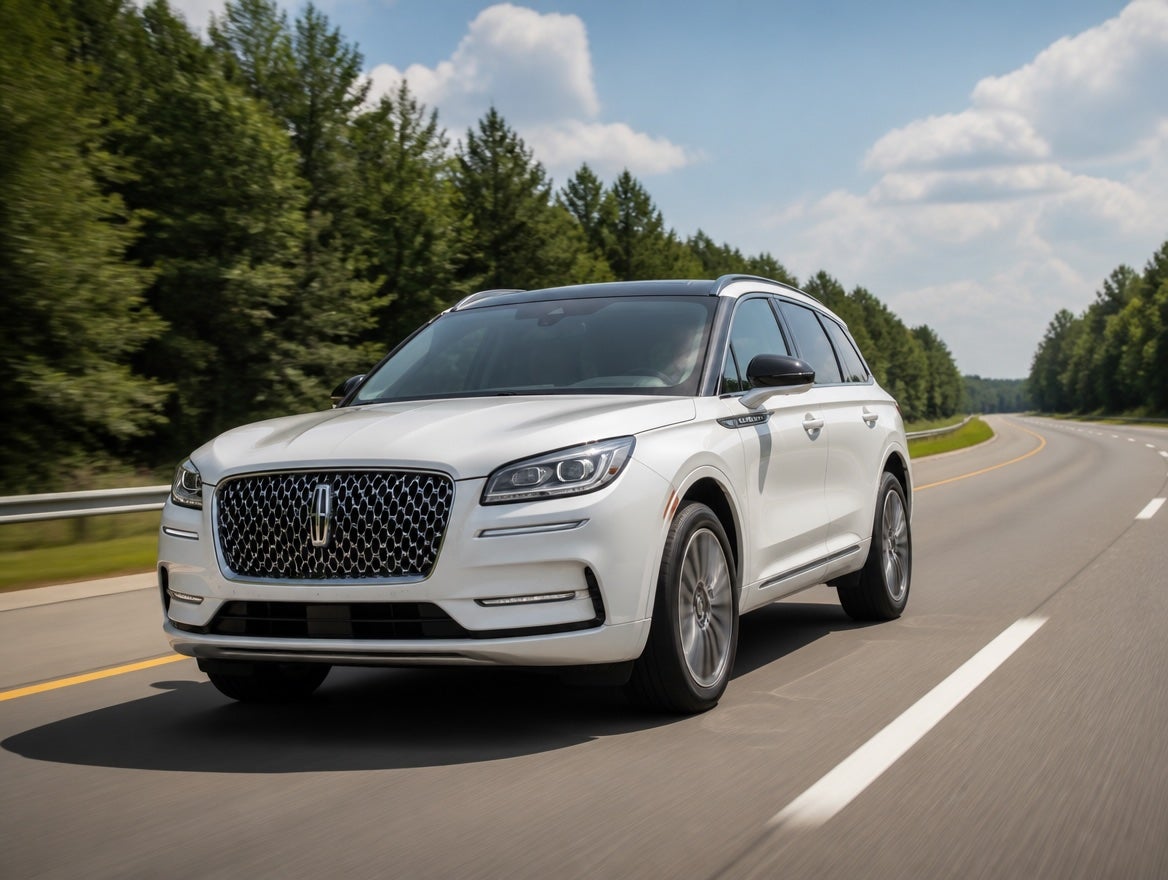
2026 Lincoln Corsair on I-85 in Alabama heading toward Auburn on game day

Lincoln Corsair Game-Day Travel Guide

The 54 miles from Montgomery to Auburn along I-85 North take under an hour on a normal Saturday. On a game day, and before a noon kickoff in particular, that corridor behaves like a completely different road. We'll walk you through how to approach it so the Corsair does what it was built to do, which is make the trip feel composed. The short version is simple. The 2026 Lincoln Corsair is well-suited for this run, but a few deliberate calls before you leave Eastern Boulevard are what separate arriving relaxed from arriving late. They're worth making. In our Montgomery service bays, summer and early fall is the stretch when the A/C works hardest, and a Corsair left buttoned up in direct sun on Eastern Boulevard can take a few minutes to pull the cabin down before it feels right. Get the fans going before you load up. The Game-Day I-85 Corridor: What to Do and What to Skip November in Alabama brings football weather that starts warm and could stay there, and the 2026 Corsair handles it well, but only if you set the cabin up before you leave the driveway instead of fighting the heat later on the highway. Work with the vehicle and the run stays easy. Situation Do This Skip This Cabin before departure Run the A/C 3-5 minutes before you load the vehicle Starting cold with doors open in direct sun; the cabin takes longer to stabilize Ventilated seats Switch them on in the driveway, before you get warm Waiting until you're already uncomfortable on the highway Adaptive cruise on I-85 Use Intelligent Adaptive Cruise Control in stop-and-go traffic for steady spacing Riding the brake manually through construction slowdowns near Tuskegee Cargo packing Load flat, below the rear headrests; 27.6 cubic feet behind the rear seats handles a full cooler and tailgate chairs comfortably Stacking above sight line; rearward visibility matters when you're threading into packed parking areas Grand Touring PHEV charge Charge fully the night before; on a 54-mile round trip the EPA-estimated 27-mile electric range covers a meaningful portion in EV mode Departing with a half-depleted battery and expecting the same efficiency Departure time for a noon kickoff Leave no later than 9:00 a.m.; I-85 congestion compounds quickly after 9:30 Leaving at 10:30 and expecting the normal 51-55 minute run Parking at Jordan-Hare Arrive with a confirmed, pre-purchased pass; campus reserved spots fill before walk-up windows open Counting on day-of availability in the lots closest to the stadium Adaptive Cruise and Lane Assist Are the Technique That Actually Matters The tech that matters most on this run is Lincoln's Co-Pilot360 suite, because game-day I-85 between Shorter and the Auburn exits is long stretches of compressed, accordion-style traffic where a plain cruise-control plan works fine right up until about mile 30. After that, the driver aids start doing quiet work. Past that point, the Co-Pilot360 suite earns its place. Lincoln's Co-Pilot360 2.0 comes standard on every 2026 Corsair trim. It includes Intelligent Adaptive Cruise Control, which reads the vehicle ahead and modulates speed automatically. There's also Pre-Collision Assist with Automatic Emergency Braking, plus a Lane-Keeping System that keeps the Corsair centered in a lane. It matters during the slow, distracted merging you get when 80,000 people are all routing to the same exit. These are driver aids that require your full attention at the wheel. They don't drive the car for you. What they'll do is reduce the cumulative fatigue of a stop-and-go run so you arrive at Jordan-Hare in the same condition you left home. Our team at Stivers Lincoln watches how the Co-Pilot360 suite performs in Alabama driving conditions. You'll find the I-85 corridor to Auburn is the kind of sustained moderate-speed traffic where adaptive cruise earns its keep. Lincoln's Co-Pilot360 2.0, standard on all 2026 Corsair trims, includes Intelligent Adaptive Cruise Control, Automatic Emergency Braking, and a Lane-Keeping System that require an attentive driver at all times. Before you leave: Check that your 13.2-inch SYNC 4 screen has the navigation set to Jordan-Hare Stadium with traffic enabled. Game-day routing suggestions from the live map can save 15-20 minutes versus running the same exit everyone else takes on autopilot. The Return Trip Deserves the Same Preparation The return trip earns the same preparation as the outbound leg, because after a win (and occasionally after a long one) you'll find I-85 South back to Montgomery fills quickly, and the EPA rates the 2026 Corsair FWD at 22 city / 30 highway for the standard 2.0L engine. Plan the drive home the way you planned the drive out. The Grand Touring's 76 MPGe combined rating means the return leg, run on residual charge and highway gasoline mode, stays efficient regardless of how long you idled in post-game traffic. By the time you point south the battery is spent, so you're on gasoline for most of the way home. Fuel up before you leave the east side of Montgomery, not after you're on the approach ramp. Is the plug-in worth it for a run like this? For a predictable, sub-60-mile round trip, the 27-mile EV range genuinely earns its keep, so browse our current Corsair inventory if you've been considering the move to the Grand Touring's plug-in powertrain. And if your trade is sitting in the driveway while you think it over, a trade appraisal takes three minutes online. Value Your Current Vehicle The game-day run to Auburn and back tells you a lot about a vehicle, and the Corsair handles I-85 with the composure the drive deserves. Prepare the cabin, use the tech the way Lincoln designed it, and give yourself plenty of time. Do that, and you'll make an easy morning of it. Schedule a Pre-Trip Service Check Stivers Lincoln of Montgomery 4000 Eastern Blvd, Montgomery, AL 36116 (334) 647-6905

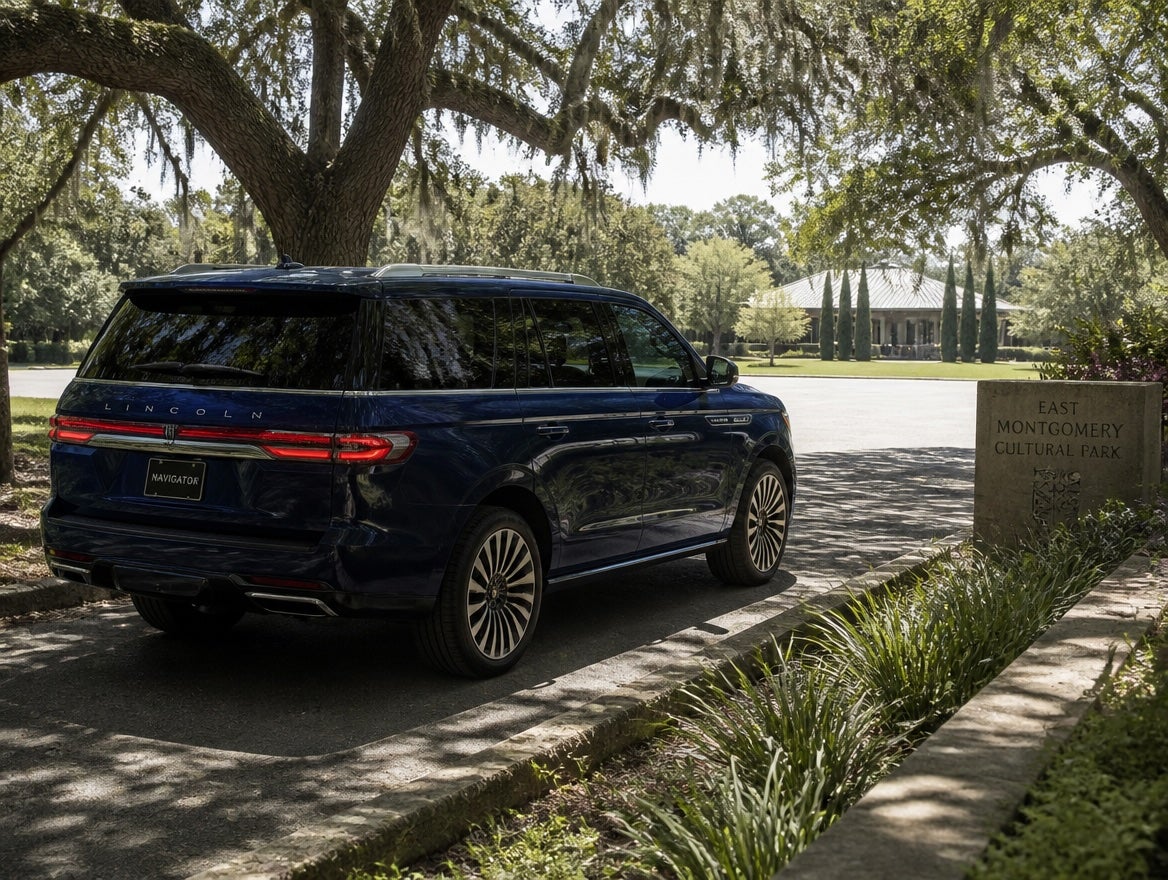
2026 Lincoln Navigator parked at Blount Cultural Park in Montgomery, Alabama, shaded by mature live oaks on a late-afternoon visit

Taking a Lincoln Navigator to Blount Cultural Park

An evening at the Alabama Shakespeare Festival sounds effortless right up until GPS drops you at a locked gate on Eastern Boulevard with curtain twenty minutes out. The 2026 Lincoln Navigator stays composed on any road, but Blount Cultural Park rewards the driver who's settled the route before backing out of the driveway. The play below runs from arrival time to curtain call. Where Do You Park, and When? Arrive early and the park makes sense; arrive late and a full-size SUV turns the interior lanes into a chore. For an evening ASF show, plan to be in the large adjacent lot off Festival Drive about 45 minutes before curtain, enter from Woodmere Boulevard, and the 210-inch Navigator slots into an open pull-through row without drama. The table sorts out the timing and where to put all of it. Arrive by Lot to use Fit / space note Practical tip 45 min before curtain (evening ASF) ASF's large adjacent lot off Festival Drive Open rows, full-size-friendly, free Enter via Woodmere Boulevard, not Eastern Blvd GPS shortcut 30 min before curtain Same lot, but rows begin filling from the theatre end Navigator's 210-inch length fits; pull-through spaces preferred Vaughn Road entrance is an alternate if Woodmere backs up Under 20 min before curtain Overflow along internal park drive Narrower lanes; more maneuvering at 80 inches wide Consider the Vaughn Road entrance, which feeds the interior lot directly MMFA daytime visit MMFA's own lot off Festival Drive Relaxed, rarely congested outside weekend events Admission and parking are free; arrive any time the museum is open Tip (insider parking): The ASF website is blunt about something our team passes along to anyone headed this way. GPS sometimes routes drivers to a gated service road off Eastern Boulevard near the Arbor Station apartments, and that gate doesn't open for patrons. The only working entrances to Wynton M. Blount Cultural Park sit on Woodmere Boulevard and Vaughn Road. Set your destination as "1 Festival Drive" and confirm your directions actually show one of those two street names before you leave east Montgomery. Tip (lot etiquette): The Navigator's standard hands-free power liftgate earns its keep in a shared lot. You can pull a wrap, a program, or a dog leash from the cargo area without swinging a door into the space next to you. Use it. The folks parked beside you will notice. The Maneuvering and Fit Play At 210 inches bumper to bumper, the Navigator is a full-size body, and it fits the park's main lot comfortably when you use pull-through rows or end spaces. What it won't forgive is a hasty turn into a tight interior lane while the park runs concurrent events at both ASF and the MMFA. Under twenty minutes out, you'll be in the overflow lanes along the internal drive, and those are tight for an 80-inch-wide body. There's no graceful way to thread it. The practical move is straightforward enough. For an ASF evening, enter at Woodmere Boulevard, bear right toward the theatre following the brown wooden signs, and aim for the far end of the large adjacent lot where pull-through rows hand you a clean exit after the show. If you're visiting the museum on a weekend afternoon while ASF has something running at the same time, the Vaughn Road entrance feeds a separate section of the park and keeps you clear of the theatre-lot crush. They're different parts of the same 175-acre grounds, not the same parking field. The 2026 Navigator's adaptive suspension and standard 4WD take the park's internal drives and any soft shoulder in stride. Length is what you manage here, not clearance. The Navigator's standard hands-free liftgate and three-zone climate control make event-day loading and cabin comfort genuinely effortless, but the Woodmere Boulevard entrance is the logistical detail that decides whether the evening starts well. Schedule a Pre-Event Service Check A Go-Enjoy-It Checklist Check the route one more time before you leave the driveway. Five minutes now saves twenty minutes of aggravation in the lot. Navigation Set destination to "1 Festival Drive, Montgomery, AL 36117" Confirm your route shows Woodmere Boulevard or Vaughn Road, not Eastern Boulevard as a final turn Note your intended entrance: Woodmere for ASF evening; either for MMFA daytime Cabin comfort (the Navigator handles this itself, but confirm it) Ventilated front seats on for Alabama's fall humidity, which lingers into early evening Three-zone climate set before you park so the cabin is settled when you return Rear climate confirmed for any passengers in rows two or three Cargo and loading Hands-free liftgate working (wave under the rear bumper to test it in the garage) If you're carrying anything for an outdoor portion of the visit, coats or blankets in the cargo area rather than on seats 21.6 cubic feet behind the third row handles a small cooler, stadium seats, and jackets without touching the passenger rows Timing ASF evening curtains: plan to be in the lot 40 to 45 minutes before showtime MMFA: open Tuesday through Saturday, 10 AM to 5 PM, and Sunday noon to 5 PM, closed Mondays The park itself closes at sundown; evening ASF events are the exception, not the standard After the show The main ASF lot exits toward Festival Drive; give it five minutes before joining the queue The Navigator's 5G Wi-Fi hotspot, standard on all 2026 trims, means passengers can settle in while you wait for the lot to clear The Navigator L carries 36 cubic feet behind the third row if you're bringing a larger group with luggage or gear for a full afternoon in the park. Worth noting if you're weighing body styles for this kind of regular east-side use. See What Your Current Vehicle Is Worth Stivers Lincoln of Montgomery 4000 Eastern Blvd, Montgomery, AL 36116 (334) 647-6905

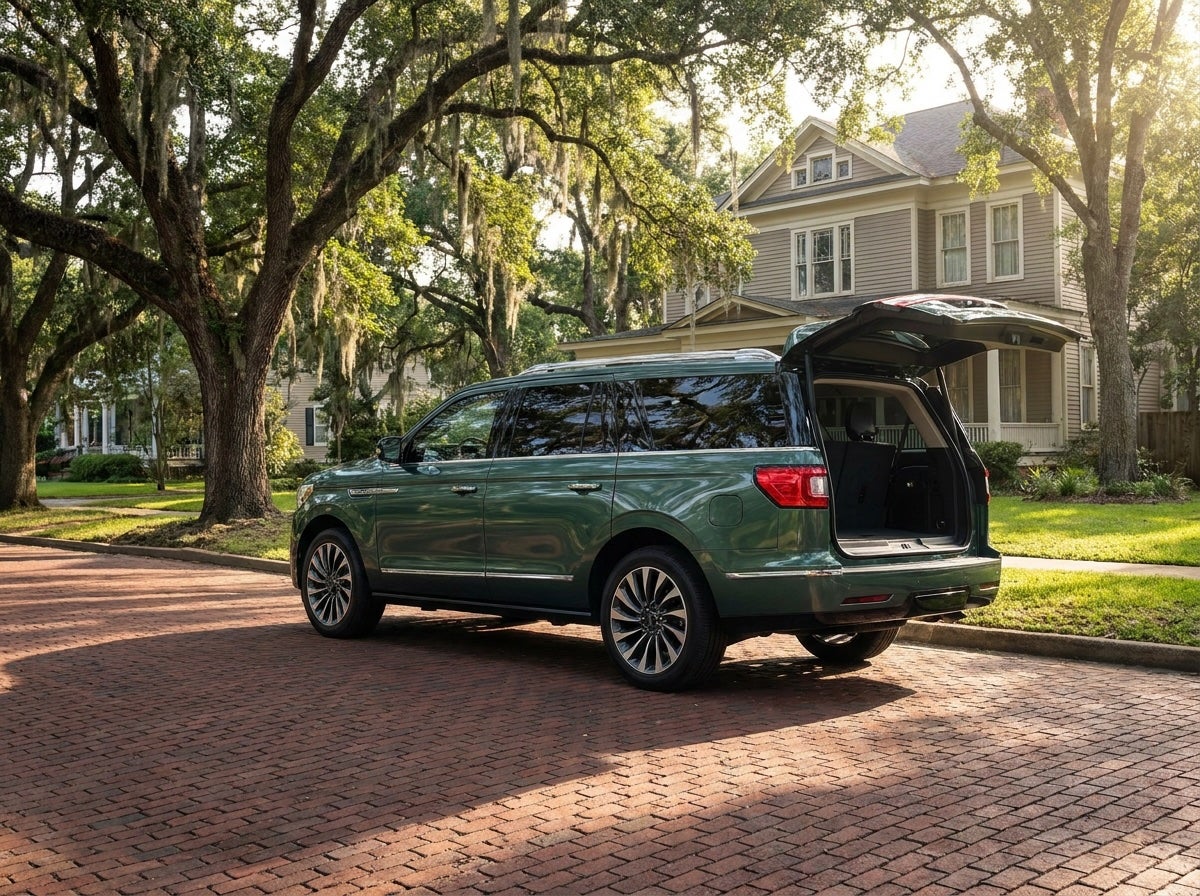
2026 Lincoln Navigator L with Split Gate open on a shaded east Montgomery street

Lincoln Navigator vs. Navigator L: Which Has the Space Your Family Needs?

In this article What's the Real Difference Between the Navigator and Navigator L? Does the Navigator L Change How the Vehicle Drives Day to Day? Passenger Space: Where the Two Models Are Honestly Identical Trim Parity and the Black Label Question So Which Should You Pick? Already set on a 2026 Lincoln Navigator? Then the next question is the one that actually matters, and it's a short one. Standard wheelbase, or long. The answer comes down to a single distinction worth naming plainly. Both cabins feel nearly identical to every passenger on board, and the cargo hold doesn't. The short version Both the Navigator and Navigator L share the same 440-horsepower twin-turbo V-6, the same EPA-estimated fuel economy ratings, the same towing capacity, and similar three-row seating capabilities. The real difference is cargo: the Navigator L adds 14.5 cubic feet of space behind the third row, jumping from 22.9 to 37.4 cubic feet, a 63-percent increase. The Navigator L measures in at 221.9 inches long versus the standard model's 210 inches. That's 11.9 inches of additional length to account for in your garage and on tight parking decks. If your family regularly travels with seven passengers and luggage at the same time, the L earns its keep immediately. If your household is smaller or your commute involves tighter spaces, the standard Navigator is the more practical daily driver. Both are available here at Stivers Lincoln of Montgomery in multiple trims, including the returning Premiere trim for 2026. What's the Real Difference Between the Navigator and Navigator L? Length - specifically, how long the body is after the third row. The Navigator L grows by just under a foot aft of the Navigator's last seat, allowing its cargo volume to increase tremendously. Lincoln builds the Navigator L on a longer wheelbase, 131.5 inches against the standard 122.5 inches, and that additional real estate flows straight into cargo rather than into the room your passengers use. Dimension / Spec 2026 Navigator 2026 Navigator L Overall Length 210.0 in 221.9 in Wheelbase 122.5 in 131.5 in Cargo Volume Behind Row 3 22.9 cu ft 37.4 cu ft Cargo Volume Behind Row 2 69.9 cu ft 84.5 cu ft Max Cargo Volume (Behind Row 1) 107.0 cu ft 121.6 cu ft Engine 3.5L Twin-Turbo V-6 3.5L Twin-Turbo V-6 Horsepower 440 horsepower 440 horsepower Torque 510 lb-ft 510 lb-ft EPA Fuel Economy (city/hwy/combined) 15/22/17 MPG (est.) 15/22/17 MPG (est.) Max Towing (when properly equipped) 8,700 lbs 8,700 lbs Standard Drivetrain 4WD 4WD Lincoln's published figures confirm that passenger volume, shoulder room of 65.3 inches in row one, 65.1 in row two, 64.2 in row three, plus the seat configuration options, are identical between both body styles. A third-row passenger in the L gains no legroom over the standard Navigator. What is gained, however, is room for their belongings to be stashed behind the seat. The Navigator L's 14.5 cubic feet of additional cargo space lives entirely behind the third row. If your family fills all three rows, that's where you'll feel it on every trip. Does the Navigator L Change How the Vehicle Drives Day to Day? Not really. Both vehicles make use of the same 440-horsepower, twin-turbocharged 3.5-liter V-6, and both tip the scales within roughly 100 pounds of each other. You may, however, feel a difference when maneuvering in close quarters, given the Navigator L is nearly 18.5 feet long... Standard residential garages across east Montgomery tend to run generous, yet the multi-deck parking structures downtown or over at Blount Cultural Park can feel snug with that much vehicle. The standard Navigator at 210 inches is hardly small. It simply asks for a little less mental arithmetic when you thread it into a space, and for a daily driver that counts. Towing comes out identical across both models. Lincoln rates both Navigators at up to 8,700 pounds when properly equipped with the available Heavy-Duty Trailer Tow Package, and base capacity without it lands at 6,200 pounds. Put your trailer behind the standard car or the L and the tow spec reads the same either way. "BlueCruise is standard on all 2026 Navigator trim levels, providing hands-free highway driving on more than 130,000 miles of mapped divided highways." (Lincoln) *Driver-assist features are supplemental and require an attentive driver at all times.* Feel free to Explore financing options for either body style before you visit, and our team will walk through the configuration that actually fits your household. Trim Parity and the Black Label Question Both the Navigator and Navigator L come in the same three trims, Premiere, Reserve, and Black Label, and that parity matters more for 2026 than it sounds, because Black Label now reaches the standard-wheelbase model for the first time rather than living on the longer body alone. Previously, Black Label buyers had to step up to the L if they wanted the flagship experience. Now they don't. A household that wants the 30-way adjustable front seats, the heated third-row seats, and the full Black Label interior can pick the standard wheelbase and give up nothing. Space and luxury have become two separate questions. The returning Premiere trim shows up on both bodies as well. Think of it as the way back into the Navigator lineup after a year away, and it arrives standard with the 48-inch panoramic display, a 5G Wi-Fi hotspot, climate-controlled front seats, and the Revel audio system. So Which Should You Pick? Choose the standard Navigator if your household usually rolls with four to six people, if garage depth is a genuine constraint, or if you'd rather have the easier daily driver than the last measure of hauling flexibility, because in town and around the suburbs it threads through space with less fuss. With Black Label now offered in this body style, there's nothing in the luxury stack you have to surrender to get the shorter, handier package. Choose the Navigator L if you regularly carry seven or eight passengers and still need cargo behind all of them. When Lake Martin weekends mean a full SUV with luggage, or when your household travels with adult children and their gear, the 37.4 cubic feet behind row three stops reading as a spec-sheet number and starts being the reason nobody had to hold a bag on their lap. Neither choice is a compromise. They share every meaningful powertrain and technology spec, and the difference lives entirely in the cargo hold. Spatial questions are the ones only you can answer about how your family actually lives. Explore Financing Options We're glad to keep both configurations on hand for a side-by-side look in our showroom at 4000 Eastern Blvd. Reading the numbers and opening both tailgates yourself are two very different things. Frequently Asked Questions Is the third row bigger in the Navigator L than in the standard Navigator? No. The seating dimensions of the third row are essentially the same in both models. What the Navigator L provides is far more cargo space behind that third row: 37.4 cubic feet versus 22.9 cubic feet in the standard Navigator. The length difference lives in the cargo hold, not in the passenger cell. Do the Navigator and Navigator L have different engines or towing capacities? No. Both models share the same 3.5-liter twin-turbocharged V-6 producing 440 horsepower and 510 lb-ft of torque, the same 10-speed SelectShift automatic, and the same 4WD standard drivetrain. Lincoln rates both at up to 8,700 pounds of towing capacity when properly equipped with the available Heavy-Duty Trailer Tow Package. Actual towing capacity varies with configuration, cargo, and the number of passengers. Value Your Current Vehicle Stivers Lincoln of Montgomery 4000 Eastern Blvd, Montgomery, AL 36116 (334) 647-6905
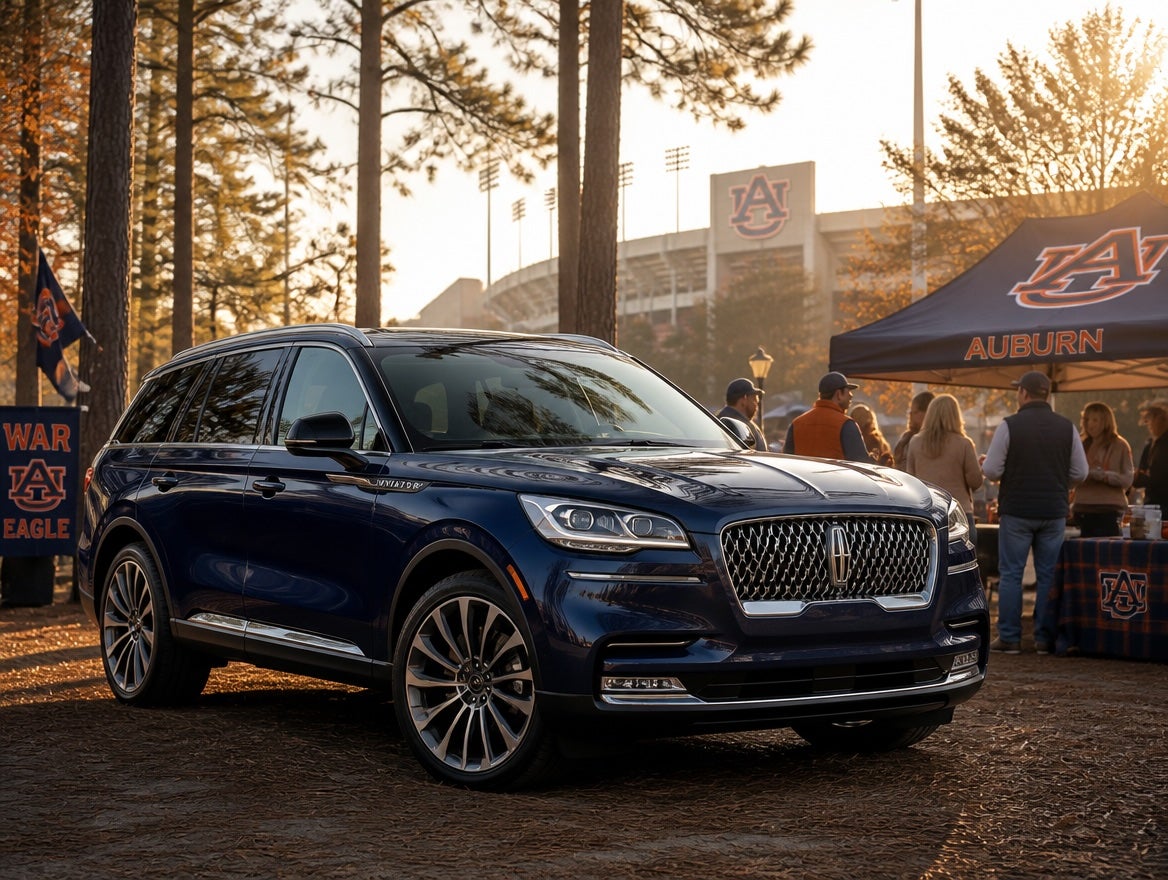
2026 Lincoln Nautilus parked under live oaks in east Montgomery Alabama, representing Lincoln oil change service care

When Does Your Lincoln Need an Oil Change? A Montgomery Owner’s Guide

In this article What's the Plan at a Glance? What the Intelligent Oil-Life Monitor Is Actually Measuring Montgomery's Climate Does Change the Calculation The Right Oil Matters as Much as the Interval The monitor handles the countdown. What it can't do is explain what it's actually saying when the message changes, and in Montgomery's climate, that distinction matters more than the number on the sticker. A 2026 Lincoln Nautilus running routine east-side errands and a Nautilus doing a lot of short stops in July heat will get different oil-change requests from the same system, on the same calendar. That gap is the whole point of the Intelligent Oil-Life Monitor. The system watches how you actually drive and sets the interval from there. Our service team sees it prompt service anywhere from six months to a full year depending on how the vehicle has been used. Both are correct. Neither surprises us. What's the Plan at a Glance? The table below maps the four signals your Lincoln can show you, running from a healthy reading through a past-due alert, and it tells you what each one actually calls for so you're never guessing at the wheel. We'd walk you through this same rundown standing on the service drive. It won't take long to read. What Your Lincoln Shows What It Means What to Do Time Frame Oil life 15% or above Comfortable margin remaining Monitor normally No action needed "Change Engine Oil Soon" Approximately 5% of oil life left Schedule service Within the next week or two "Oil Change Required" Calculated oil life at 0% Bring it in now Promptly Lincoln app past-due alert 0% for 3 or more days or 500 or more miles Book immediately Do not delay Lincoln's published guidance sets one hard ceiling regardless of what the monitor shows. No more than one year or 10,000 miles between oil changes, whichever arrives first. Drive fewer than 10,000 miles in a year and the calendar still wins. Schedule Your Lincoln Oil Change What the Intelligent Oil-Life Monitor Is Actually Measuring The Intelligent Oil-Life Monitor calculates oil change service intervals based on your vehicle's use, operating conditions, and time since the last oil service rather than counting miles, which is exactly why two identical Lincolns on the same block can ask for an oil change weeks apart. More specifically, it calculates a percentage of oil life remaining, from 100% to 0%, and it weighs factors like engine temperatures, idling, towing, and your other driving habits. That's why a Navigator towing a trailer through a run of hot afternoons and a Navigator doing mostly airport runs will split on what the system asks for, even when they share a model year and the same oil. The two messages on the display mean two different things. "Change Engine Oil Soon" means the vehicle has approximately 5% of its oil life remaining, and the oil and filter should be replaced soon. Think of it as a planning message. "Oil Change Required" means the calculated oil life has reached 0%. One hands you a comfortable window to schedule. The other is asking you not to wait. Owners using the Lincoln app get a third threshold on top of those two. A Time to Plan notice appears within 30 days of the estimated service date, and a past-due alert fires once the vehicle has sat at 0% for three or more days or 500 or more miles. Check the app now and then, and you'll generally have good warning long before the cluster message ever appears. Insider note: The monitor resets on the steering wheel, not at the pump. After any oil service here, press the setup button and scroll to "oil-life percentage reset." Your Lincoln has to confirm the service before the estimate recalibrates. Miss that step and the app and cluster both keep counting from the old baseline. Montgomery's Climate Does Change the Calculation Montgomery's climate does shift what the monitor calculates, because the IOLM's algorithm accounts for operating temperature and driving pattern, and our summers press on both of those at once in a way the generic maintenance guides never bother to address. Our summers are genuinely demanding on both counts. Sustained high ambient temperatures sit on the manufacturer's own list of severe-service conditions, and our summers qualify with no argument. Summers in Montgomery regularly push past 95 degrees, and underhood temperatures climb considerably higher than that. At those numbers, oxidation speeds up, and it doesn't do it gently. As a rough rule, oil breaks down about twice as fast for every 18-degree rise in operating temperature, so a July commute isn't the same chemical environment as a January one. Short trips compound all of it. Frequent runs under 10 miles keep the oil from reaching full operating temperature, so moisture and fuel dilution never get the chance to burn off. Humidity pairs with those short trips, and moisture condenses inside the crankcase (Montgomery air gives it plenty to work with in the warm months). When the engine never runs long enough to boil that water off, it stays in the oil and helps form sludge. Aviator owners who mostly drive short east-side routes, the school run, the office, the grocery trip and back, will see the IOLM prompt service well before the 10,000-mile ceiling. That's the system working exactly as it should. For instance, when a vehicle idles a great deal, the Intelligent Oil-Life Monitor may alert you to change the oil at 7 months or 4,000 miles. After that service, the estimate recalibrates to reflect your actual pattern going forward. Next step: If your Lincoln's oil life has dropped below 15% and you haven't booked service yet, call our team at (334) 647-6905 or use the link below. We'll confirm the right oil spec for your model and get you back on the road without the appointment eating your morning. The Right Oil Matters as Much as the Interval The viscosity your Lincoln calls for is a hard requirement, and it varies by model, so matching the exact spec matters as much as hitting the interval if you want the engine protected through a long Alabama summer the way it was engineered to be. A fair question from Navigator L owners is whether any SAE 5W-30 full synthetic will do, and for current Navigators the answer is yes, provided it meets Ford specification WSS-M2C962-A1. The 2026 Nautilus takes SAE 5W-30 as well, with a capacity of 6.1 quarts including the filter, and it meets specification WSS-M2C971-A1. The current Aviator's 3.0-liter twin-turbocharged engine also calls for SAE 5W-30 full synthetic, with a 6.0-quart capacity. Full synthetic is the right call for all three. Synthetic holds up longer because it doesn't thicken into sludge as fast when it's cooking under extreme heat. In central Alabama, that property isn't a luxury line item on the spec sheet; it's what keeps the engine protected through six months of heat before the monitor ever asks for service. A detail worth flagging is that the 2026 Nautilus doesn't take 5W-20, despite what some third-party references show. The owner's manual is the governing document, and a service record showing the correct specification protects your vehicle's history. When our team handles the service here, the invoice reflects that spec. That matters at trade or resale. Book a Service Appointment at Stivers Lincoln Stivers Lincoln of Montgomery 4000 Eastern Blvd, Montgomery, AL 36116 (334) 647-6905
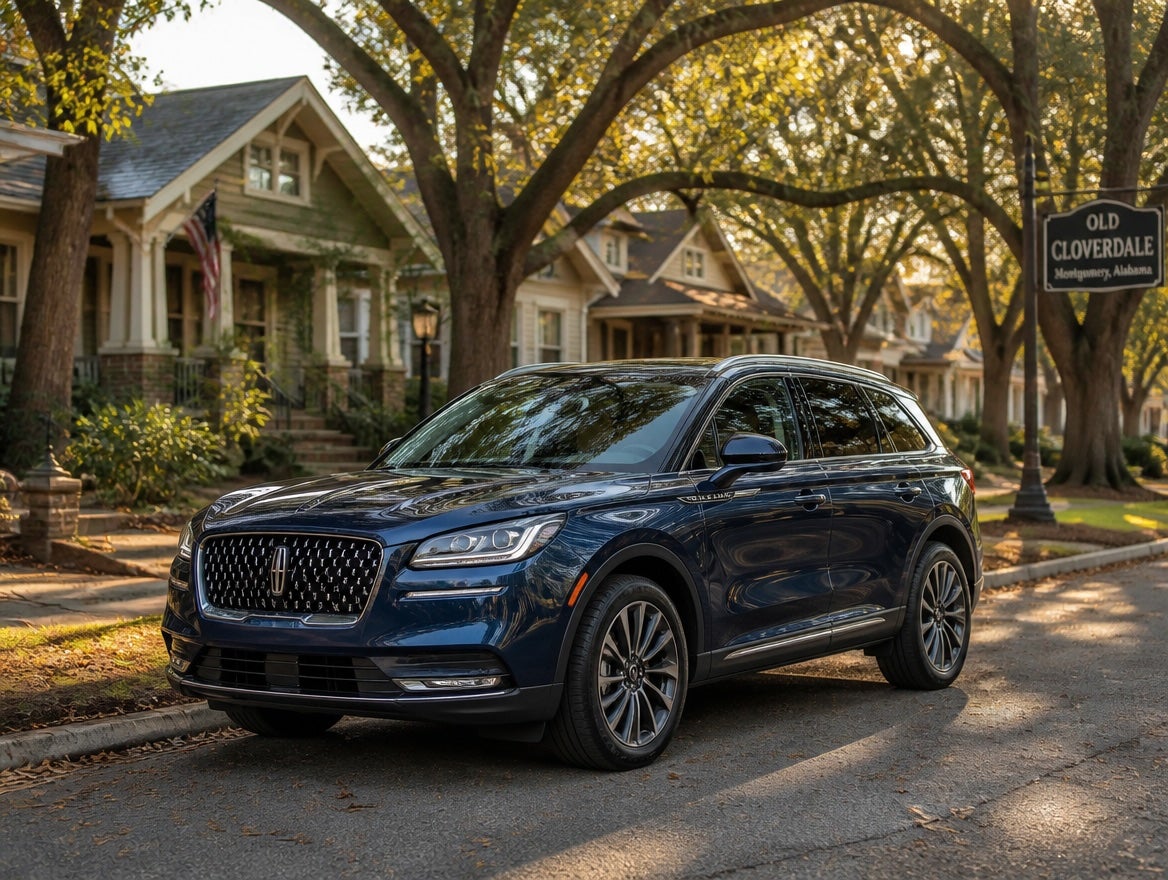
2026 Lincoln Nautilus on the Road

2026 Lincoln Nautilus Hybrid Review

Lincoln advertising occasionally references “The Power of Sanctuary,” but how does that apply to a new crossover or SUV? The editors at Green Cars recently discovered that for themselves after spending time behind the wheel of the 2026 Lincoln Nautilus. Lincoln designers and engineers alike strive to create a vehicle as refined and comforting as possible. Delivering a tranquil environment is a big piece of that formula, and adding the hybrid driveline to the 2026 Nautilus certainly helps. The quieter drive comes from a hybrid system that combines a turbocharged 2.0-liter four-cylinder engine with an electric motor. This driveline is rated at 285 net combined horsepower. All-wheel drive is standard, providing optimal traction through any weather. While powerful, the 2026 Nautilus Hybrid is also efficient according to the EPA, which rates the Nautilus Hybrid at 29/ 31/ 30 MPG city/ highway/ combined. For more of an optimized drive, it is equipped with Lincoln BlueCruise standard. You can drive your 2026 Nautilus Hybrid without outing your hands on the steering wheel over thousands of compatible highway miles, while maintaining your focus on the road. Nautilus designers created an interior that is both relaxing and focused. Drivers are presented with a massive 48-inch panoramic display positioned against the base of the windshield, ensuring it’s naturally within the driver’s field of vision without serving as a distraction. This display also includes a view for each side of the vehicle, activated whenever the turn signals are used and providing additional safety during lane changes. Front passengers can tailor their side of the display to their preferences, whether it’s keeping tabs on live weather information or monitoring audio controls. It is all customizable from the 11.1-inch Lincoln Digital Experience screen on top of the center console. Users can also take advantage of additional connectivity thanks to the new Lincoln Connectivity Package. Provided complimentary for four years, this allows the 2026 Nautilus to serve as a wi-fi hotspot with access to streaming platforms and premium services, such as Hulu, HBO Max, games, and additional apps. When it comes time to truly relax, the available Lincoln Rejuvenate themes can provide a tranquil space, with all screens providing a soothing atmosphere for you and your passengers when parked. What Green Cars editors love most about the 2026 Nautilus Hybrid is the level of luxury it offers to consumers looking for efficiency and sustainability in a SUV. They confirm that it is “smooth and nearly silent,” while applauding the interior and its design, noting that inside and out, the Nautilus Hybrid is “what luxury feels like.” As Green Cars found, the best way to experience the 2026 Nautilus Hybrid is to see one at Stivers Lincoln in Montgomery. Contact us to experience what quiet sanctuary is all about.

Contact Us

Fill out this form below and we'll contact you shortly
*Required Fields