

Your trade-in value in Montgomery comes down to six interconnected factors: mileage relative to vehicle age, mechanical and cosmetic condition, accident and service history, the trim and options your vehicle carries, local market demand for that specific model, and the Alabama tax credit that makes trading at a licensed dealer worth more than selling privately. Get those six right, and an appraisal reflects the equity you've built. Get one wrong and you'll feel it.
Start with our online trade appraisal tool to see where you're starting before you come in.
How Does an Appraiser Actually Calculate Your Number?
An appraiser's number isn't a hunch or a feeling; it's a working answer to one practical question, which is what this vehicle could realistically sell for on our lot after reconditioning and in what timeframe, and every factor on the sheet traces back to that.
| Factor | What Appraisers Look At | What Moves the Number |
|---|---|---|
| Mileage | Miles driven vs. age of vehicle | 12,000-15,000 miles per year is the market baseline; consistently below that rate reads as low-use |
| Mechanical condition | Engine, transmission, brakes, warning lights | An active warning light typically reduces the offer more than cosmetic damage |
| Cosmetic condition | Paint, glass, leather, trim panels | Surface damage implies deferred care; it widens the reconditioning estimate |
| Service history | Records of scheduled maintenance | Documented oil changes and service intervals reduce perceived risk for the next buyer |
| Accident history | Vehicle history report | A reported accident reduces value even after correct repairs; undisclosed damage is a separate problem |
| Trim and options | Luxury packages, technology suites, reserved trim levels | Higher original specification retains more absolute value |
| Local demand | What similar vehicles are selling for in the Montgomery market right now | A model in low regional supply commands a stronger offer regardless of its age |
All seven of those run at once. A vehicle that scores excellent on six and weak on one still takes the hit on that one, which is why a single deferred item can move the final number more than owners expect, whether it's a cracked dashboard, an unresolved recall, or a missing service record. Owners rarely expect that.
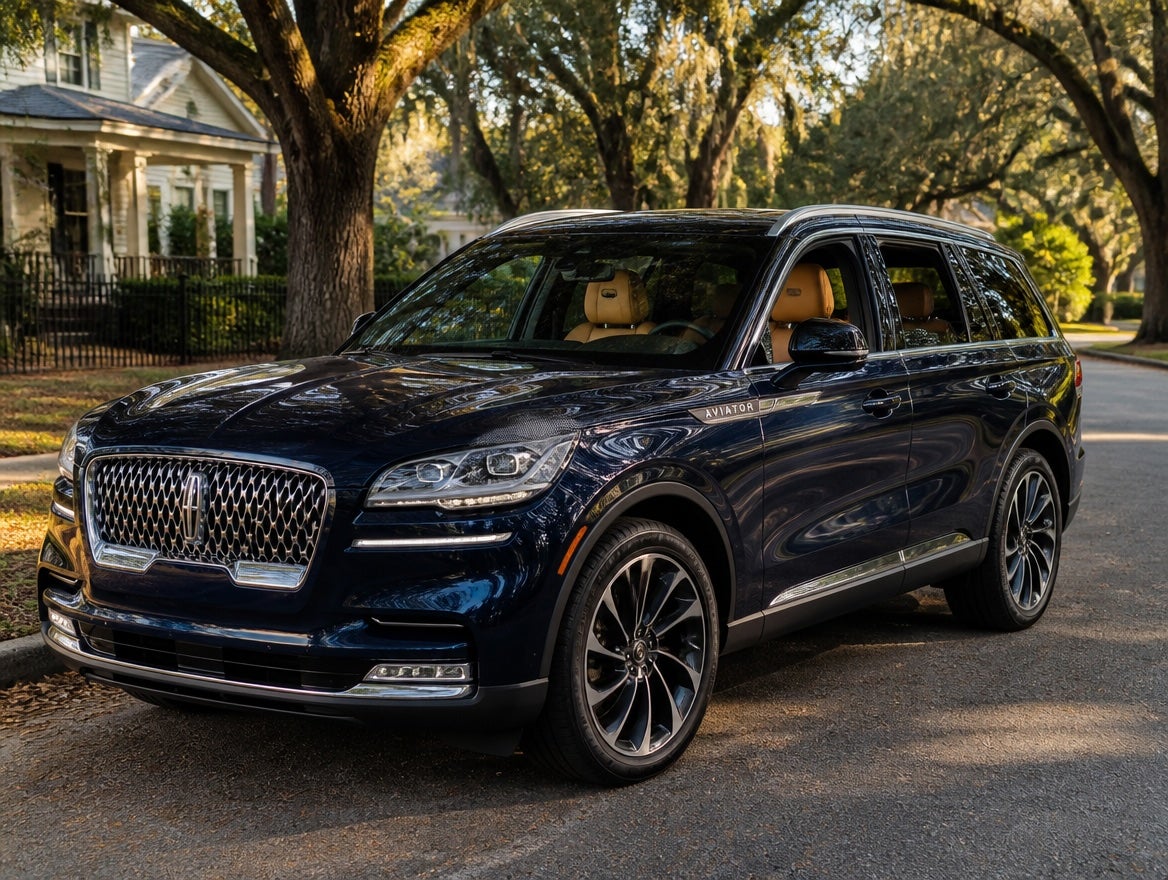
The Lincoln Aviator carries a well-documented ownership community, which means service records are verifiable, and appraisers do notice when the file is complete, which you'll want working in your favor.
Does the Alabama Tax Credit Change How Much a Trade-In Is Worth Here?
Yes, the Alabama tax credit genuinely changes what a trade-in is worth here, and it's the piece plenty of Montgomery sellers leave out of the math when they weigh a dealer trade-in offer against a private sale, because the credit only applies to one of those two paths.
Alabama taxes vehicle purchases at the state automotive rate of 2%, applied to the net difference between your new vehicle's purchase price and your trade-in allowance, per the Alabama Department of Revenue. County and municipal rates add to that figure depending on where you register. When you trade at a licensed dealer in the same transaction, the trade-in credit gets applied before tax is calculated. When you sell privately and come back later to buy, it doesn't.
On luxury vehicles, the gap matters most, because both the trade allowance and the new purchase carry higher values. The tax credit adds to the practical value of a dealer trade-in without touching the sticker, which is why we'll always encourage our clients to weigh the full transaction instead of the trade-in figure on its own.
A Lincoln Navigator or Navigator L trade-in, applied toward a new purchase in the same transaction, can represent meaningful tax savings that wouldn't exist if you'd separated the two transactions.
What Does Southern Heat and Humidity Actually Do to Your Appraisal?
Montgomery's climate is a genuine variable in the appraisal, and the combination the River Region deals with, relative humidity averaging around 70 percent plus summer temperatures that consistently exceed 90 degrees, works on the exact materials an appraiser inspects, and you'll feel that in the final number.
Leather interiors dry progressively under heat and UV exposure, and the visible results are surface cracking, faded color, and worn protective coatings. Those are reconditioning line items an appraiser subtracts from the offer, because they represent cost between acquisition and resale. A Lincoln interior that's been protected with UV conditioner on the recommended schedule shows less wear at appraisal time than one that hasn't.
Paint and clear coat break down when humidity and UV radiation work on them over time, which shows up as oxidation and surface etching. Pollen, industrial fallout, and mineral deposits from water spotting bond to paint in humid air (the faint rings you notice after a Montgomery summer storm). An appraiser looking at oxidized or heavily water-spotted paint factors in a paint correction cost. Addressing it before you bring the vehicle in won't cost much, and the difference in the appraisal can be meaningful.
Warning lights tied to heat stress matter at appraisal, because extreme heat accelerates wear on rubber seals, hoses, and sensor components. A vehicle showing a warning light at appraisal, whatever the underlying cause, shifts the offer downward, because the appraiser can't assume what the resolution will cost. We see this pattern in older vehicles that have spent most of their life in Alabama summers without scheduled service. Scheduled service prevents most of it.
A humid climate here isn't a reason to accept a lower number. Deliberate maintenance intervals and interior care across ownership keep a vehicle presenting well at appraisal.
What Can You Do Before an Appraisal to Protect Your Number?
Before an appraisal, protecting your number is simpler than most guides suggest, and the approach rests on one plain idea, that you're not staging a vehicle for sale so much as showing an appraiser it was cared for across the years you owned it.
- Bring the records. A complete service file, oil changes logged on schedule, any dealer-performed maintenance, is the single most credible document you've got. It converts the appraiser's estimate of what might need attention into a confirmed picture of what was actually done.
- Resolve active warning lights before you arrive. An active code needs a diagnosis before the appraiser can close the number, so resolving it beforehand takes that uncertainty off the table. A service appointment before your appraisal visit is the most direct path, and it's worth booking early.
- Detail the interior. Leather conditioning, clean carpets, and an odor-free cabin won't add a lot to an appraisal, but visible neglect can pull it down. The question appraisers are answering is whether this vehicle was treated well, and the interior is the first evidence they see.
- Know your trim level. A Reserve or Black Label Lincoln carries a different baseline value than a standard trim, and appraisers verify that through the VIN. If you don't know exactly which packages your vehicle carries, our team can pull that detail before the appraisal begins.
- Consider the timing. Full-size SUV demand in the River Region typically holds through the fall and into the first quarter, when buyers are cross-shopping utility before year-end. Trading a Lincoln Nautilus at a point of active local demand means the appraiser's market comparables support a stronger number, and that's timing you can use.
Frequently Asked Questions
Does an accident on my vehicle's history always reduce my trade-in value?
A reported accident reduces trade-in value even when the repairs were done correctly, because the vehicle history report surfaces the incident and appraisers account for the market reality that some future buyers will pass regardless of repair quality, and there's no getting around that. How much it drops depends on the severity of the re