Blog / Lincoln Nautilus

Lincoln Black Label is More Than a Trim Level

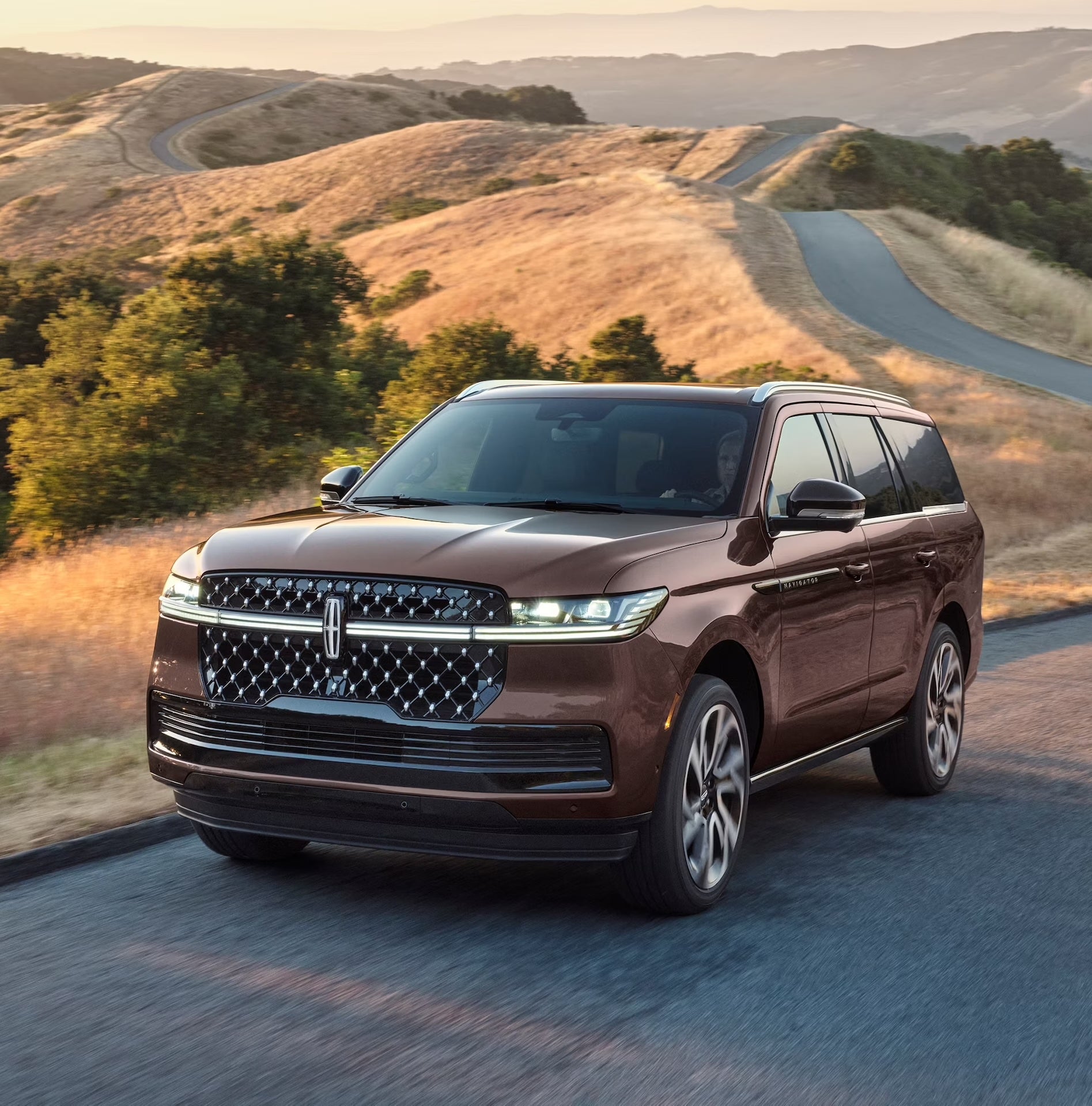
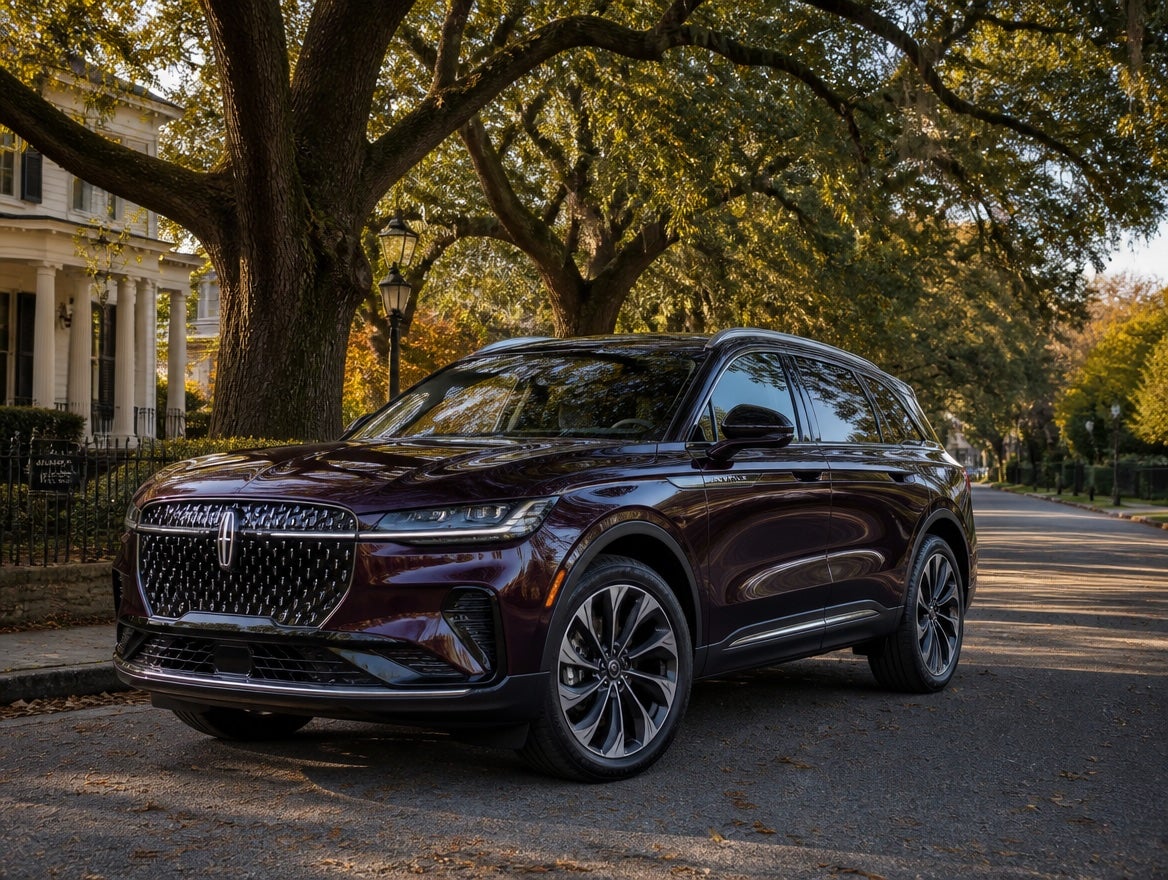
Front Side View of the 2027 Lincoln Black Label Model
66 years ago, Lincoln redefined what an American luxury car was. After a decade of tailfins, jet-age details, excessive chrome and incoherently complex styling across the industry, the 1961 Lincoln Continental was refreshingly understated and elegant. Upon debut, its competition immediately looked hopelessly baroque, and their manufacturers quickly regrouped to follow Lincoln’s lead as quickly as they could.
Today’s Lincoln SUV models have been quietly doing the same with an elegantly understated design, a sophisticated application of technology, and, above all, a return to distinctly American luxury, with a focus on quiet, comfort, effortless operation, and long-term ownership satisfaction. These qualities are hallmarks of any modern Lincoln, but are elevated further on Black Label models, which offer a whole new level of Lincoln ownership. Stivers Lincoln explains.  

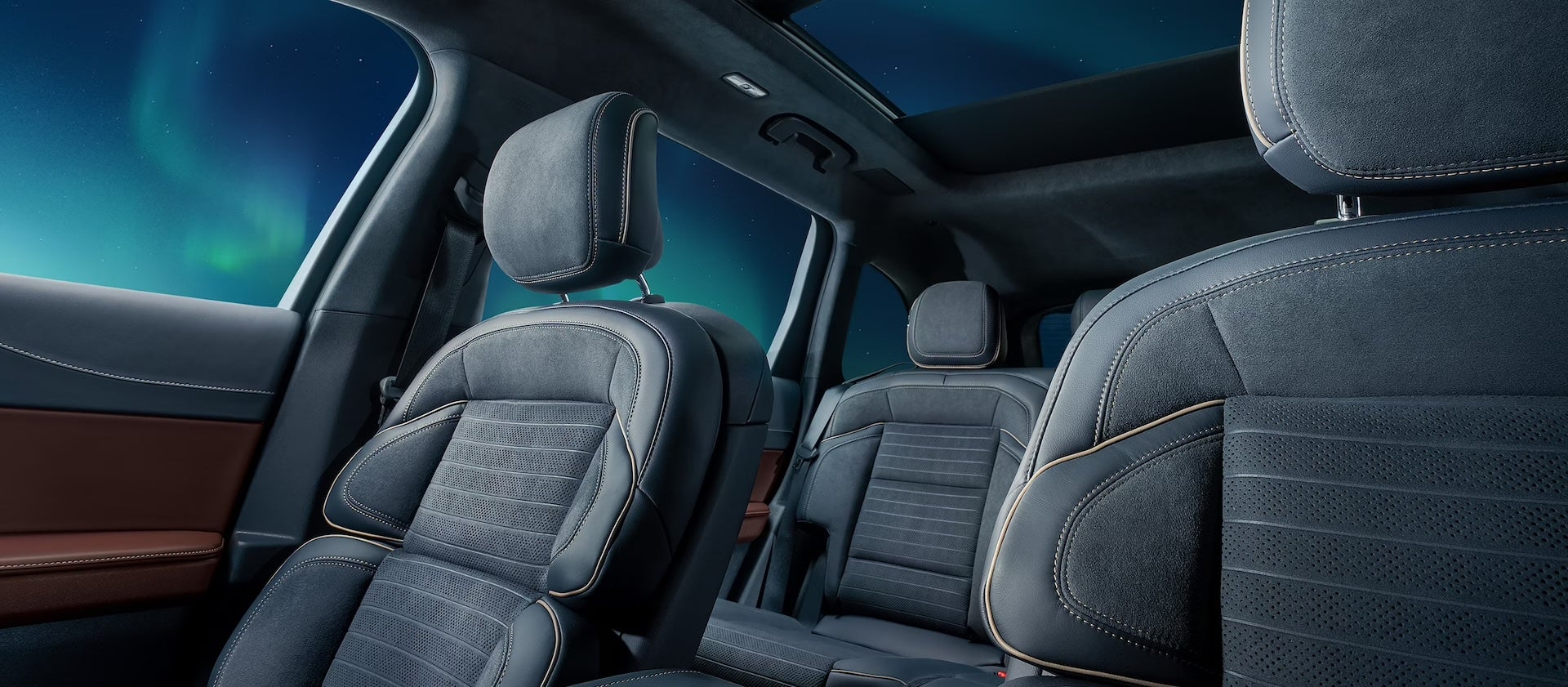
Black Label Seat Detail in the Nautilus

At first, Black Label may appear to be simply the top trim level of the Navigator, Aviator, and Nautilus (there is not yet a Black Label for the Corsair Hybrid). Indeed, Black Label trims include features not found on the Premier and Reserve trims, such as:
  • Perfect position front seats (30-way power adjustment on Navigator and Aviator, 24-power adjustment on Nautilus)
  • Active Motion Massage front seats with power thigh extenders
  • Heated and ventilated second-row captain’s chairs
  • Heated third-row seats with premium leather surfaces
  • Higher-level leather, Alcantara suede and authentic wood trim

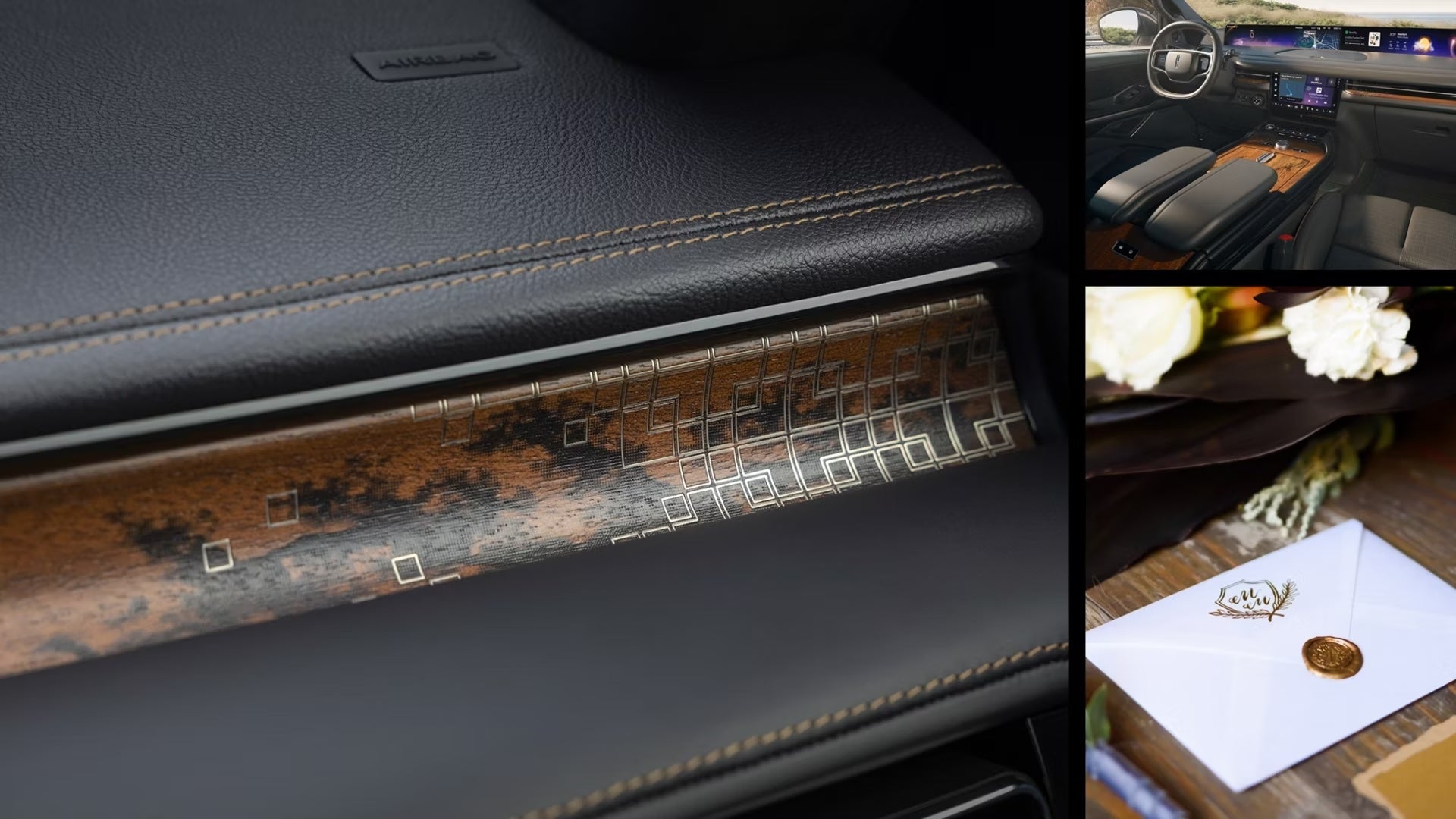
But Black Label interiors go a step further with bespoke, designer-curated design themes. For example, the Atmospheric interior theme on the Navigator Black Label includes Opulance Leather on the first- and second-row seats with Diamond Drizzle perforation that mimics the random drops on pavement at the start of a light rain. Atmospheric Ash wood trim, a Salt Crystal Gray Dinamica sueded headliner, and Dinamica sueded floor mats complete the look. The Enlighten and Invitation interior themes each feature uniquely designed surface and material combinations, and the Aviator and Nautilus have their own distinct interior themes.

Interior Details in the Aviator Black Label Model

The Black Label experience goes beyond vehicle features and extends into vehicle ownership. It starts with a dedicated Lincoln Black Label Experience Liaison who serves as your single point of contact from first inquiry through vehicle delivery, which can be at your home, place of business, or wherever you are. There is also Premium Maintenance, including home pickup and delivery with a loaner Lincoln, and complimentary anytime car washes from Stivers or other Lincoln dealerships.

A Black Label purchase also immediately earns you 70,000 Lincoln access points (compared with 50,000 for Reserve and 40,000 for Premiere trims), plus additional points for Maintenance visits. You can redeem these points for products and experiences themed around culinary, health and wellness, travel, and more. Black Label owners also receive an annual curated gift from Lincoln.

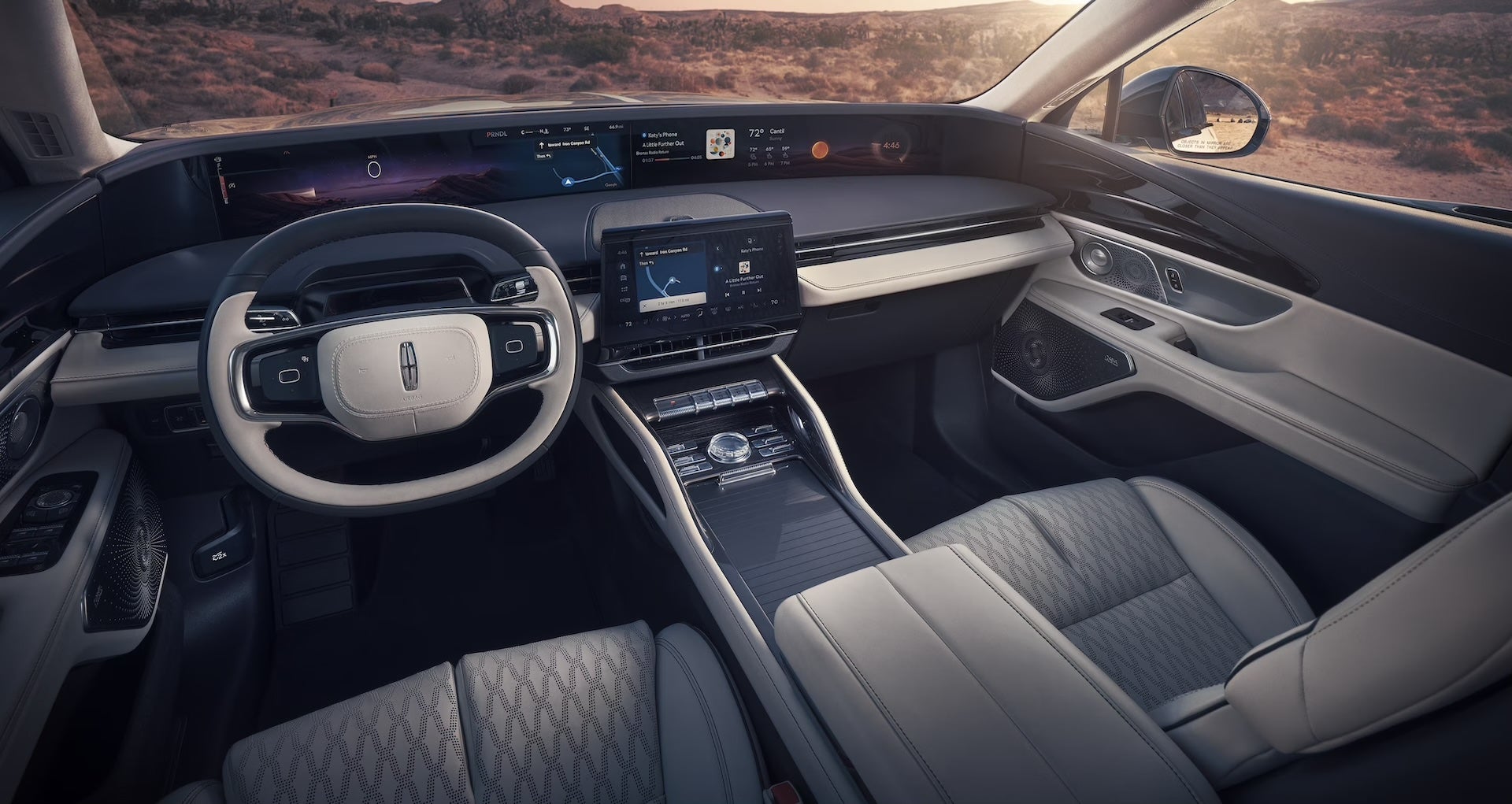
Detail in the Drivers Seat and Cabin Area in a Lincoln Black Label Model

Again, this is not reserved only for owners of the flagship Navigator Black Label, but also for owners of the Aviator and Nautilus Black Label models. In short, it is more than just getting a fancier Lincoln; it is an elevated ownership experience, a concept nearly as game-changing as that 1961 Continental.

If you are considering bringing a new luxury SUV home, you owe it to yourself to sample Lincoln's award-winning luxury SUVs, which embody an understated, elegant approach to American luxury, and to learn more about the Black Label program and models. Stivers Lincoln in Montgomery, AL, is the place for your Lincoln experience. 
Posted in:

Related Posts

2026 Lincoln Nautilus parked on a shaded east Montgomery street in fall afternoon light

What to know about the Lincoln Nautilus Hybrid for Montgomery Driving

Eastern Boulevard moves to a certain rhythm. Signal to signal, a run of commercial stops, a long flat stretch out toward I-85, then back into the grid of east Montgomery's residential streets. Drive that corridor daily and you already know what a gas engine does out there. It idles, it restarts, and it works hardest right where the road asks the least of it. Built for that pattern, the 2026 Lincoln Nautilus Hybrid earns its place through engineering, not marketing. The hybrid system recaptures energy through braking and coasting in stop-and-go conditions, which is exactly what a corridor like Eastern Boulevard produces. EPA numbers put a figure on it. The EPA rates it at 29 city and 31 highway mpg combined to 30, compared to 21 city and 24 combined for the standard gas Nautilus. That six-mpg combined difference has a direct address, and it's this city, this kind of driving. The Nautilus Hybrid's efficiency advantage is largest in stop-and-go driving, where the electric motor supplements the turbocharged engine and regenerative braking recaptures energy that a gas-only engine simply burns away. We carry the 2026 Lincoln Nautilus here at Stivers Lincoln on Eastern Boulevard, and the question we hear from established east-side buyers isn't "is it a hybrid." It's "does it actually make sense for the way I drive." Fair question. Here's our straight answer. Why Does the Nautilus Hybrid Fit Montgomery Driving? Montgomery's daily reality breaks into three distinct conditions, and the Nautilus Hybrid's powertrain handles all three, though not identically, covering the stop-and-go corridor traffic on Eastern Boulevard and Taylor Road, the sustained highway cruising on I-85, and the long summer season where the air conditioning runs continuously. That summer stretch runs June through September, with July averaging a high of 93 degrees Fahrenheit and humidity hovering near 73 percent, and the compressor barely rests. Montgomery Driving Condition Feature That Handles It Why It Matters Here Stop-and-go on Eastern Blvd / Taylor Rd Electric motor + regenerative braking Recaptures braking energy instead of burning it; most efficient exactly where gas engines idle longest I-85 highway stretches 285-hp combined system, eCVT Smooth, confident power without the efficiency penalty of a conventional automatic; EPA rates highway at 31 mpg Summer AC load (93 F avg July high) Standard AWD + full hybrid system power buffer Electric motor offsets engine workload when AC compressor adds load; more consistent than gas-only under thermal stress Afternoon thunderstorm visibility Standard BlueCruise 1.5 with lane centering Adaptive cruise and lane centering reduce driver fatigue on slick interstates Long River Region weekend drives 20-gallon tank, approx 600-mile highway range Fewer fill-ups on the Lake Martin run or the drive to Birmingham; gas Nautilus range is approx 480 miles highway One condition narrows the hybrid advantage, and it's sustained 75-plus mph interstate cruising with the AC on full in July. The electric motor contributes less at high steady speeds than in city cycling. It still returns better numbers than the gas Nautilus, though the city and stop-and-go delta is where the hybrid earns its clearest advantage. A Powertrain Designed Around Comfort First, Then Efficiency Comfort leads the engineering on this powertrain and efficiency rides along behind it, which is the part the spec sheet quietly underplays for the buyers we meet on our lot, where the standing worry is always whether a hybrid surrenders something to save fuel. In the Nautilus, the answer leans the other way. The turbocharged 2.0-liter engine pairs with an electronically controlled continuously variable transmission (eCVT) and standard all-wheel drive. Total system output, as Lincoln lists it, is 285 horsepower and 295 pound-feet of torque. That's 35 more horsepower than the gas-only Nautilus. The hybrid doesn't feel like a compromise powertrain. Smoothness is the first thing you notice, because the electric motor fills in the low-end torque that a turbocharged four-cylinder takes a moment to build. Around town, that gives you an effortless, almost seamless pull from a stop. It matters on Eastern Boulevard not because you're in a hurry, but because a powertrain that responds cleanly keeps the cabin composed. Lincoln tuned the Nautilus for ride comfort over handling sharpness, with a suspension calibrated to absorb the uneven pavement on older sections of the east-side grid. Browse our current Nautilus inventory to see which trim configurations are on the lot now. On the highway, BlueCruise 1.5 becomes the conversation. The 2026 model year adds automatic lane changes on designated divided highways to its hands-free driving. Practically, that means a cleaner I-85 or I-65 experience, with the system managing following distance and lane centering while you monitor. BlueCruise requires an attentive driver and works on prequalified mapped highways. The system isn't autonomous. For the professional who drives an hour to Birmingham with some regularity, it makes the drive noticeably less fatiguing. BlueCruise maps cover the major interstates around the River Region. The feature won't engage on roads outside that network. One thing we point out at the showroom is the fuel question. Lincoln recommends 91-octane premium fuel for maximum performance, in sustained heat, and when towing. The EPA ran its fuel economy tests on regular 87-octane, which the engine accepts. For Montgomery's summers, our team's straightforward read is that buyers who commute mostly in town can use regular without issue, while those who're regularly on the interstate in July heat will get cleaner performance with premium. Worth knowing rather than assuming. Standard across every trim: The 48-inch panoramic display is available on Premiere through Black Label, as is BlueCruise 1.5. You get the full technology story without reaching for the top of the range. The financing options our team works through can help you land on the trim that fits your priorities. A word on the east-side commute: The signal density on Eastern Boulevard between the dealership and the Taylor Road intersection runs deep into stop-and-go territory during morning and afternoon peaks. Our service team works this corridor every day. A hybrid powertrain recaptures the most energy in exactly this pattern, which is one reason the mileage you actually see on this route tends to track the EPA city estimate closely rather than running below it. The hybrid powertrain is available on all three Nautilus trims: Premiere, Reserve, and Black Label Standard features on every trim include the 48-inch panoramic display, BlueCruise 1.5, standard AWD, and heated front seats Available Perfect Position seats offer 24-way adjustment with Active Motion massage, available on Reserve and Black Label The rear cabin slides and reclines, with 36.4 cubic feet of cargo space behind the second row and 71.3 with it folded The 2026 Nautilus (the most recently crash-tested model) earned a Top Safety Pick+ from the IIHS and five stars overall from NHTSA The Honest Tradeoff: What the Nautilus Hybrid Is Not The Nautilus Hybrid is a conventional hybrid rather than a plug-in, which means no charging port, no electric-only range to manage, and no home charger to install, and for most east-side buyers that arrangement is the appeal instead of a drawback. The Lincoln Corsair Grand Touring is Lincoln's plug-in hybrid option. The Nautilus Hybrid works like a conventional vehicle from the driver's perspective. You fill the 20-gallon tank, the hybrid system manages itself, and you'll see the benefit at the pump over time. For buyers who want the efficiency gain without changing their routine, the fit is clean. For someone who wants a meaningful electric-only daily commute, the Nautilus Hybrid is the wrong tool. No getting around that. At its core, the Nautilus Hybrid is a quiet, well-appointed midsize SUV that returns meaningfully better fuel economy than its gas-only sibling in the specific driving pattern east Montgomery produces, does so without any infrastructure requirement, and wraps the experience in a cabin that makes the Eastern Boulevard stop-and-go genuinely comfortable rather than just tolerable. We're at 4000 Eastern Blvd, which means we see the same roads you do. The Lincoln Aviator is worth a look if three rows matter to you. But for a two-row household that prioritizes ride comfort, cabin technology, and a powertrain that works with Montgomery's rhythms, the 2026 Nautilus Hybrid makes a coherent case. Explore Financing Options If you'd like to get a sense of how the cabin feels and how the powertrain performs on our local roads, our team's here. Schedule a Visit With Our Team Stivers Lincoln of Montgomery 4000 Eastern Blvd, Montgomery, AL 36116 (334) 647-6905

2026 Lincoln Nautilus parked under live oaks in east Montgomery Alabama, representing Lincoln oil change service care

When Does Your Lincoln Need an Oil Change? A Montgomery Owner’s Guide

In this article What's the Plan at a Glance? What the Intelligent Oil-Life Monitor Is Actually Measuring Montgomery's Climate Does Change the Calculation The Right Oil Matters as Much as the Interval The monitor handles the countdown. What it can't do is explain what it's actually saying when the message changes, and in Montgomery's climate, that distinction matters more than the number on the sticker. A 2026 Lincoln Nautilus running routine east-side errands and a Nautilus doing a lot of short stops in July heat will get different oil-change requests from the same system, on the same calendar. That gap is the whole point of the Intelligent Oil-Life Monitor. The system watches how you actually drive and sets the interval from there. Our service team sees it prompt service anywhere from six months to a full year depending on how the vehicle has been used. Both are correct. Neither surprises us. What's the Plan at a Glance? The table below maps the four signals your Lincoln can show you, running from a healthy reading through a past-due alert, and it tells you what each one actually calls for so you're never guessing at the wheel. We'd walk you through this same rundown standing on the service drive. It won't take long to read. What Your Lincoln Shows What It Means What to Do Time Frame Oil life 15% or above Comfortable margin remaining Monitor normally No action needed "Change Engine Oil Soon" Approximately 5% of oil life left Schedule service Within the next week or two "Oil Change Required" Calculated oil life at 0% Bring it in now Promptly Lincoln app past-due alert 0% for 3 or more days or 500 or more miles Book immediately Do not delay Lincoln's published guidance sets one hard ceiling regardless of what the monitor shows. No more than one year or 10,000 miles between oil changes, whichever arrives first. Drive fewer than 10,000 miles in a year and the calendar still wins. Schedule Your Lincoln Oil Change What the Intelligent Oil-Life Monitor Is Actually Measuring The Intelligent Oil-Life Monitor calculates oil change service intervals based on your vehicle's use, operating conditions, and time since the last oil service rather than counting miles, which is exactly why two identical Lincolns on the same block can ask for an oil change weeks apart. More specifically, it calculates a percentage of oil life remaining, from 100% to 0%, and it weighs factors like engine temperatures, idling, towing, and your other driving habits. That's why a Navigator towing a trailer through a run of hot afternoons and a Navigator doing mostly airport runs will split on what the system asks for, even when they share a model year and the same oil. The two messages on the display mean two different things. "Change Engine Oil Soon" means the vehicle has approximately 5% of its oil life remaining, and the oil and filter should be replaced soon. Think of it as a planning message. "Oil Change Required" means the calculated oil life has reached 0%. One hands you a comfortable window to schedule. The other is asking you not to wait. Owners using the Lincoln app get a third threshold on top of those two. A Time to Plan notice appears within 30 days of the estimated service date, and a past-due alert fires once the vehicle has sat at 0% for three or more days or 500 or more miles. Check the app now and then, and you'll generally have good warning long before the cluster message ever appears. Insider note: The monitor resets on the steering wheel, not at the pump. After any oil service here, press the setup button and scroll to "oil-life percentage reset." Your Lincoln has to confirm the service before the estimate recalibrates. Miss that step and the app and cluster both keep counting from the old baseline. Montgomery's Climate Does Change the Calculation Montgomery's climate does shift what the monitor calculates, because the IOLM's algorithm accounts for operating temperature and driving pattern, and our summers press on both of those at once in a way the generic maintenance guides never bother to address. Our summers are genuinely demanding on both counts. Sustained high ambient temperatures sit on the manufacturer's own list of severe-service conditions, and our summers qualify with no argument. Summers in Montgomery regularly push past 95 degrees, and underhood temperatures climb considerably higher than that. At those numbers, oxidation speeds up, and it doesn't do it gently. As a rough rule, oil breaks down about twice as fast for every 18-degree rise in operating temperature, so a July commute isn't the same chemical environment as a January one. Short trips compound all of it. Frequent runs under 10 miles keep the oil from reaching full operating temperature, so moisture and fuel dilution never get the chance to burn off. Humidity pairs with those short trips, and moisture condenses inside the crankcase (Montgomery air gives it plenty to work with in the warm months). When the engine never runs long enough to boil that water off, it stays in the oil and helps form sludge. Aviator owners who mostly drive short east-side routes, the school run, the office, the grocery trip and back, will see the IOLM prompt service well before the 10,000-mile ceiling. That's the system working exactly as it should. For instance, when a vehicle idles a great deal, the Intelligent Oil-Life Monitor may alert you to change the oil at 7 months or 4,000 miles. After that service, the estimate recalibrates to reflect your actual pattern going forward. Next step: If your Lincoln's oil life has dropped below 15% and you haven't booked service yet, call our team at (334) 647-6905 or use the link below. We'll confirm the right oil spec for your model and get you back on the road without the appointment eating your morning. The Right Oil Matters as Much as the Interval The viscosity your Lincoln calls for is a hard requirement, and it varies by model, so matching the exact spec matters as much as hitting the interval if you want the engine protected through a long Alabama summer the way it was engineered to be. A fair question from Navigator L owners is whether any SAE 5W-30 full synthetic will do, and for current Navigators the answer is yes, provided it meets Ford specification WSS-M2C962-A1. The 2026 Nautilus takes SAE 5W-30 as well, with a capacity of 6.1 quarts including the filter, and it meets specification WSS-M2C971-A1. The current Aviator's 3.0-liter twin-turbocharged engine also calls for SAE 5W-30 full synthetic, with a 6.0-quart capacity. Full synthetic is the right call for all three. Synthetic holds up longer because it doesn't thicken into sludge as fast when it's cooking under extreme heat. In central Alabama, that property isn't a luxury line item on the spec sheet; it's what keeps the engine protected through six months of heat before the monitor ever asks for service. A detail worth flagging is that the 2026 Nautilus doesn't take 5W-20, despite what some third-party references show. The owner's manual is the governing document, and a service record showing the correct specification protects your vehicle's history. When our team handles the service here, the invoice reflects that spec. That matters at trade or resale. Book a Service Appointment at Stivers Lincoln Stivers Lincoln of Montgomery 4000 Eastern Blvd, Montgomery, AL 36116 (334) 647-6905

2026 Lincoln Nautilus on an Alabama highway at dusk heading to a football game

Lincoln Nautilus Weekend Football-Trip Guide

Game day in Alabama is a road trip. Whether you're pointing up I-85 toward Auburn or making the longer run toward Tuscaloosa, the September question on our lot isn't "which Lincoln do you prefer?" It's "which Lincoln will actually be comfortable three hours from now, with four adults and a cooler and everyone's opinions about the route?" We've watched that question sort itself out in a pattern our team recognizes. Your answer rides almost entirely on headcount, on cargo reality, and on whether you're doing this twice a month or twice a season. Here is how the 2026 Nautilus, Aviator, and Navigator each handle it. The 2026 Lincoln Nautilus earns the pick for two couples traveling together. It's a specific fit, not a universal win. The short version Two adults or two couples, no towing: the Nautilus is the quietest, most fuel-efficient option and the easiest to park near the stadium Family of five or six who wants real third-row seating: the Aviator carries the people, but its third row is a genuine limitation for adults on a three-hour run Six or more adults, or a trailer for the tailgate: the Navigator handles it; choose the Navigator L when you need maximum luggage space behind all three occupied rows Highway fuel economy: Nautilus Hybrid leads at an EPA-estimated 31 MPG; standard Nautilus follows at 29 MPG; Aviator returns 25 MPG (RWD); Navigator is rated at 22 MPG BlueCruise hands-free highway driving: standard on all three, which earns its keep on a long, straight I-85 run How Do the Three Compare for a Game-Day Run? The differences here are real and measurable, and they sort less by trim than by trip profile, so the honest starting point is your group and your cargo rather than a badge or an options list, which is where these three separate cleanly. We'd rather talk about the trip than the badge. Nautilus Aviator Navigator Seating 5 (two rows) 7 (three rows) 8 (three rows) Cargo behind 3rd row No third row 19.2 cu ft 22.9 cu ft Cargo behind 2nd row 36.4 cu ft 78.6 cu ft (max) 69.9 cu ft Highway MPG 29 MPG (std) / 31 MPG (hybrid) 25 MPG (RWD) 22 MPG Engine output 250 hp, 2.0L turbo 400 hp, 3.0L twin-turbo V6 440 hp, 3.5L twin-turbo V6 Max towing (when properly equipped) Not rated 5,000 lbs 8,700 lbs (with HD Tow Package) BlueCruise standard Yes Yes Yes Best for Two couples, efficiency, easy parking Families of 5-6, balanced space and drive feel Large groups, tailgate trailers, full-group comfort EPA fuel economy figures are estimates; actual mileage varies with conditions and load. Towing figures are maximums when properly equipped; actual capacity varies with configuration and passenger load. The 2026 Lincoln Aviator and the 2026 Lincoln Navigator both carry seven or eight passengers, while the Nautilus carries five. The first cut is clean. Everything else follows from that. What Does Your Trip Actually Look Like? Where most comparisons stall is the assumption that describing the vehicles answers the question, when what actually decides it is the shape of your trip, so we'd rather start with the drive itself and let the three Lincolns fall where the miles and the seats put them. The two-couple scenario. Four adults, four bags, a cooler, and the Nautilus takes it without strain. Lincoln lists cargo volume at 36.4 cubic feet behind the second row with seats up, which is enough for four overnight bags with room to spare. Acoustic laminated glass and Active Noise Control keep the highway stretch quiet, the kind of quiet you'll notice around hour two. At an EPA-estimated 29 MPG highway on the standard powertrain, a Montgomery-to-Tuscaloosa round trip of roughly 220 miles asks less of the fuel gauge than anything else in this lineup. The Hybrid pushes that to an EPA-estimated 31 MPG highway. The tradeoff is plain. Five passengers and it gets tight, because the Nautilus has no third row, and you cannot force it into a six-person role. Don't try. The family-of-six scenario. The Aviator is the natural reach here, and reasonably so. Lincoln publishes 400 horsepower and 415 lb-ft of torque from the 3.0L twin-turbo V6, which makes the highway pull feel effortless even fully loaded. Cargo behind the third row comes in at 19.2 cubic feet. That fits four bags for a weekend. It does not fit six adults' luggage. You'll make a choice between people and gear, and that's worth knowing before you pack the driveway. The third row is where we'd level with you. On a three-hour drive, adults back there won't be comfortable for the whole run. A workable row for shorter distances, and a proper row for younger passengers on longer ones. We'd call it a genuine limitation, and we'd tell you the same thing on the showroom floor. The 2026 Aviator's 3.0L twin-turbo V6 produces 400 horsepower and 415 lb-ft of torque per Lincoln's published specifications, meaning the highway pull never feels like work even with a full cabin. The large-group or tailgate-trailer scenario. For a large group or a tailgate trailer, the Navigator is the one that fits, and we won't pretend otherwise. It seats eight, returns an EPA-estimated 22 MPG highway (Lincoln's published figure for the 4WD configuration), and tows up to 6,200 pounds in base configuration or 8,700 pounds with the available Heavy-Duty Trailer Tow Package when properly equipped. It covers a loaded utility trailer, a pop-up camper, or a pontoon on a short hitch. Max towing varies with configuration and passenger load. A note on the road: BlueCruise hands-free highway driving comes standard on all three 2026 Lincoln models. On a familiar, long stretch of I-85 with light traffic, it moves from a line on a spec sheet to something you actually lean on. Lincoln describes it as a driver-assist system that requires an attentive driver at all times, which is the correct framing. It earns its keep on exactly this kind of trip. Match the Vehicle to Your Group The matrix hands you the numbers, and translating them into a pick comes down to who is riding along and what you're hauling, so read each recommendation below against your own driveway rather than against a spec you liked in isolation. Choose the Nautilus when you're traveling as a couple or with one other couple, you value cabin quiet and highway efficiency over headcount, and you want a vehicle that parks like a midsize SUV in a full stadium lot. Call it the right instrument for that particular job, not a consolation prize. The available 48-inch panoramic display, available massage seats, and Lincoln Rejuvenate sensory coordination make a three-hour drive feel shorter than it is. Choose the Aviator when your group includes children or younger adults in a third row, you need real cargo volume behind the second row (78.6 cubic feet is a meaningful number when you're loading sporting gear), and the occasional tow of up to 5,000 pounds when properly equipped fits your lifestyle. It's also the most athletic of the three on a winding road. The distinction matters to some buyers and not at all to others. Choose the Navigator when your group is six or more adults who all expect to be comfortable for the full trip, or when you're pulling a trailer regularly. The Navigator L is the specific answer when you need those three rows occupied and usable luggage space behind them. Lincoln lists 22.9 cubic feet behind the standard Navigator's third row and 36.1 cubic feet behind the Navigator L's, and that difference shows when you're loading up. The Navigator L earns its keep on exactly this kind of full-group trip, when the standard wheelbase's 22.9 cubic feet behind the third row simply isn't enough. Schedule a Pre-Trip Service Check There's no substitute for sitting in all three rows before a four-hour commitment. Come in when it suits you, and we'll set the right one alongside your group and let the geometry settle the question. By the Stivers Lincoln of Montgomery Team | November 2026 Frequently Asked Questions Which Lincoln SUV is most fuel-efficient for a long highway drive? The 2026 Lincoln Nautilus Hybrid leads the lineup for highway fuel economy, with an EPA-estimated 31 MPG highway. The standard Nautilus follows at an EPA-estimated 29 MPG highway. The 2026 Aviator returns 25 MPG highway on rear-wheel-drive models per Lincoln's published figures. The 2026 Navigator is EPA-estimated at 22 MPG highway in its standard 4WD configuration. All figures are estimates; actual mileage varies with load, driving conditions, and style. Can the Lincoln Aviator's third row comfortably seat adults on a long road trip? The Aviator's third row seats adults on shorter drives without much complaint. On a three-hour-plus highway trip, most adults find it workable but not the most comfortable place to spend an afternoon. If your group regularly travels with adults occupying all three rows, the Navigator's third row is meaningfully more spacious, and the Navigator L adds over 13 cubic feet of additional luggage room behind those seats compared to the standard Navigator. Explore Your Financing Options Stivers Lincoln of Montgomery 4000 Eastern Blvd, Montgomery, AL 36116 (334) 647-6905