

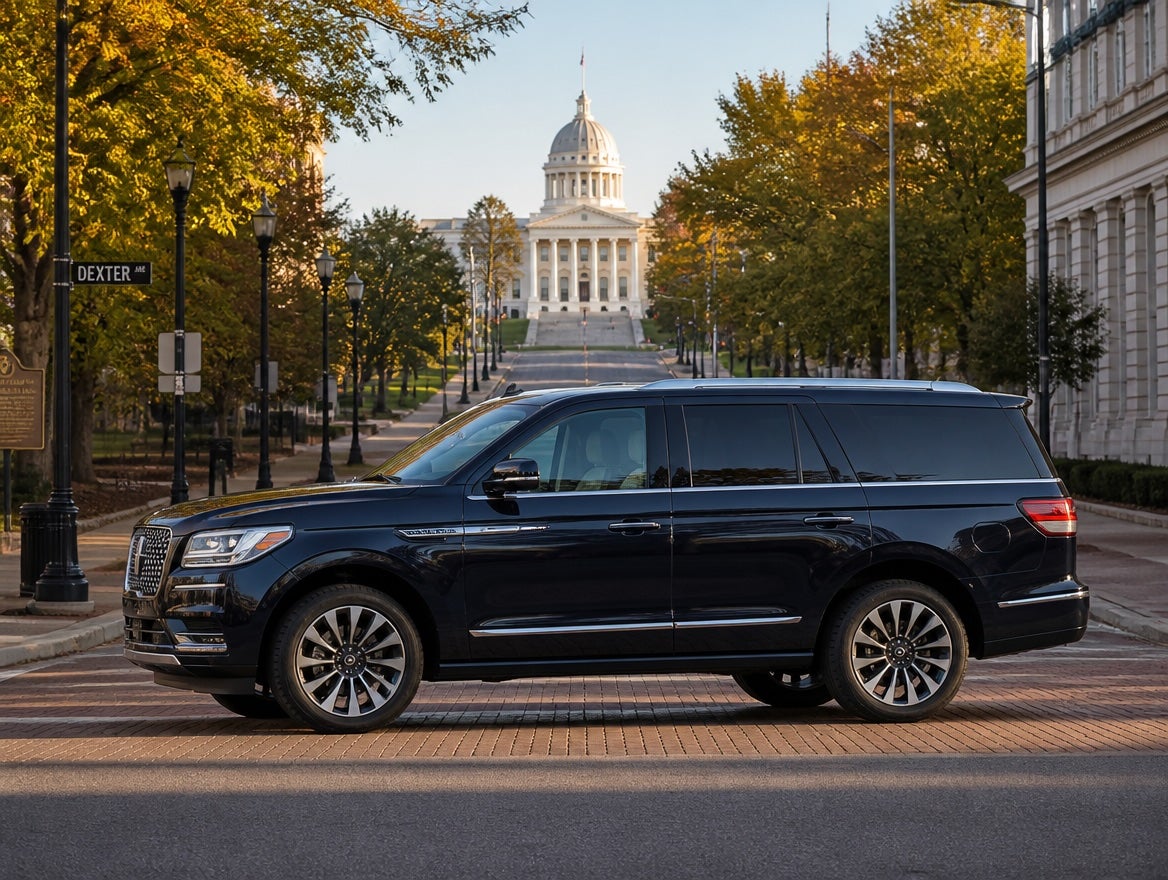
Dexter Avenue runs just half a mile. From Court Square at the bottom to the steps of the Alabama State Capitol at the top, it packs in as much history as any half-mile in the country. People who know Montgomery understand you don't rush it. You park with some thought, you give it time, and the vehicle you arrive in ought to feel as composed as the morning around it.
Which makes a used Lincoln Navigator a quiet fit. Not because it's showy. Because it isn't.
If you're shopping a used fourth-generation Navigator (2018-present), the year you choose matters more than most luxury buyers realize. Our team has watched buyers walk in set on a specific year, and we'll level with you. Some of those years are fine. Some carry a recall history that deserves a real conversation before any money changes hands. We'd tell a friend the same thing.
- The fourth-generation Navigator launched in 2018 with a full redesign. First-year "teething" problems make 2018 the year to approach most carefully.
- NHTSA data shows 2019 drew the most owner complaints of any fourth-generation year (68 complaints). Verify any 2019 VIN before buying.
- A June 2026 NHTSA recall (26V344) covers seat belt pretensioners on all 2018-2022 Navigators. Check whether the recall has been completed on any vehicle you're considering.
- The 2021-2024 model years represent the sweet spot: the 10-speed transmission issues were sorted, complaint volume dropped sharply, and the cabin refinements landed intact.
- Every fourth-generation Navigator shares the same twin-turbo 3.5-liter V6 (440 horsepower, 510 lb-ft of torque), so the powertrain itself isn't what changes year to year. The reliability record is.
Browse our pre-owned Lincoln inventory to see what's currently available, then come back to this guide for the year-by-year context that makes a used purchase a confident one.
Which Navigator Years Are the Sweet Spot?
The honest answer is 2021 through 2024, because those four years carry meaningfully fewer NHTSA owner complaints than the first two years of the fourth generation, the 10-speed SelectShift automatic had found its stride, and none of them carry the recall exposure that defines 2018-2022 as a group. The rest of the field needs more homework.
The fourth generation breaks down year by year below.
| Model Year | Generation Status | NHTSA Complaint Profile | Sweet Spot? | Key Notes |
|---|---|---|---|---|
| 2018 | First year of 4th gen redesign | 48 complaints; 141 Technical Service Bulletins | Watch closely | First-year issues typical of a full redesign; seat belt pretensioner recall (26V344) applies |
| 2019 | Early 4th gen | 68 complaints (highest in generation) | Approach carefully | Most owner complaints of any 4th-gen year per NHTSA; recall 26V344 applies |
| 2020 | Mid 4th gen | 28 complaints | Acceptable with VIN check | Recall 26V344 applies; windshield wiper arm recall also involved this year |
| 2021 | Refined 4th gen | 29 complaints | Sweet spot begins | Sorted powertrain; recall 26V344 applies through this year |
| 2022 | Refined 4th gen | 20 complaints | Strong choice | Highest recall count by campaign number (14), but complaint volume fell to 20; recall 26V344 covers through Oct. 2022 production |
| 2023 | Refined 4th gen | Low complaint volume | Top pick | Outside the seat belt pretensioner recall window; fifth gen architecture |
| 2024 | Refined 4th gen | Low complaint volume | Top pick | Clearest reliability record of recent used inventory |
A few things to hold in mind as you read this table. NHTSA complaint counts reflect what owners chose to report; they're a directional signal, not a perfect grade. And recall coverage is the more important variable in 2026, for reasons we're about to explain.
Does much change inside across these years? Not dramatically. Lincoln's EPA-estimated 15 city / 22 highway fuel economy is consistent across the fourth generation, and the twin-turbo 3.5-liter V6 makes 440 horsepower and 510 lb-ft of torque, the same numbers whether you're looking at a 2021 or a 2024. What you're choosing when you pick a year is reliability history. Pick 2021 or later and you're in much cleaner water.
See new Navigator inventory at Stivers Lincoln of Montgomery if a current 2026 is on the table alongside your used search.
Which Years Should You Watch Out For?
Start with the June 2026 recall, since it shapes how you should read every 2018 through 2022 Navigator on the market; NHTSA campaign 26V344 covers approximately 77,684 Lincoln Navigator SUVs from the 2018 through 2022 model years. The problem is the front seat belt retractor pretensioner, which may inadvertently deploy and lock in place, preventing the belt from retracting or extending normally. Per NHTSA, the propellant inside the pretensioner can degrade when exposed to high-heat environments. Alabama summers run long and hot, and vehicles parked outdoors here see sustained heat that makes this degradation mechanism relevant to the cars we actually see in Montgomery, not a line on a spec sheet.
The remedy is free under federal law. But whether the work has been completed on any specific used vehicle is something you verify against the VIN at nhtsa.gov before you agree to anything.
Beyond the recall, here is what our team would flag year by year.
2018 had 141 Technical Service Bulletins in its first year on sale, a typical but genuine cost of buying the first model year of any full redesign. TSBs aren't recalls; they're documented fix procedures issued to dealerships. Still, 141 of them in one year tells you something. The seat belt pretensioner recall applies. We'd want a thorough pre-purchase inspection on any 2018.
2019 is the year NHTSA data flags most clearly. Among fourth-generation Navigators from 2017 through 2026, 2019 drew 68 owner complaints, more than any other year in that span per NHTSA records. Powertrain was the most commonly flagged area. The recall applies here too. A 2019 with a clean VIN history and documented recall completion can still make sense, though it asks more due diligence of you than a 2022 or 2023.
2020 is a middle case. Complaint volume dropped to 28. A windshield wiper arm recall (separate from the pretensioner campaign) was associated with this year. The seat belt recall still applies. Verify both.
Explore the Navigator L if maximum cargo volume behind the third row is part of what you're solving for. The long-wheelbase body adds 37.4 cubic feet behind the third row compared to the standard model's 22.9, and the same year-by-year framework in this guide applies to the L as well.
Get a Trade-In Value on Your Current Vehicle
Which Year Fits Which Buyer?
We like to be direct here, because the right year depends on what you're optimizing for, and the choices split fairly cleanly between a value-minded buy in the 2021 to 2022 range and the cleanest records sitting on the 2023 and 2024 cars. Let's take them in order.
If value relative to condition is the priority, a 2021 or 2022 hits a reasonable middle ground. Complaint volume is low, the powertrain runs smoothly, and you'll still find examples with the full suite of refinements Lincoln brought to the interior. Confirm recall 26V344 status on any 2022 built before October 2022. A 2022 built after that date falls outside the pretensioner recall window entirely.
If you want the cleanest used option available, a 2023 or 2024 is the straightforward answer. These years sit outside the seat belt pretensioner recall campaign, NHTSA complaint data is thin (which partly reflects newer cars with fewer miles, but also reflects a genuinely more sorted vehicle), and the cabin is the most current expression of the fourth generation before the 2026 redesign. The 2023 and 2024 deliver the same 440-horsepower twin-turbo V6, the same adaptive air suspension, and second-row seats that slide to offer up to 42 inches of legroom. The third row, at 43.5 inches of legroom, is usable by adults rather than a nominal gesture.
If you're considering the Navigator L specifically, the same year-by-year logic applies. The L's advantage is rear cargo. At 37.4 cubic feet behind the third row versus 22.9 on the standard wheelbase, the L is for buyers who need the space the family fills on long drives down I-65 to Gulf Shores, or who want the rear comfort for a group making the Dexter Avenue circuit before lunch.
One honest tradeoff is worth naming. A used Navigator is not a small vehicle, and its EPA-estimated fuel economy reflects that (15 city, 22 highway). If most of your driving is short city loops, a 2023 or 2024 Nautilus might serve your daily rhythm better, and we'd say so plainly. The Navigator earns its footprint when you're moving people or towing, or when cabin comfort over a long interstate stretch is the reason you're in a Lincoln. Dexter Avenue runs half a mile from Court Square to the Alabama State Capitol, and its 25-mile-per-hour pace is one of the better settings this SUV ever finds.
Explore financing options at Stivers Lincoln of Montgomery when you're ready to talk numbers on a used purchase.
Frequently Asked Questions
What is the best used Lincoln Navigator year to buy?
Based on NHTSA complaint data and recall history, the 2021 through 2024 model years are the strongest used options from the fourth generation. The 2023 and 2024 sit outside the seat belt pretensioner recall (NHTSA 26V344) that covers 2018-2022 models, and they carry the lowest complaint volume in the generation. If a 2021 or 2022 fits your budget better, they're solid choices once you've verified recall status on the specific VIN.
What is NHTSA recall 26V344, and does it affect all used Navigators?
NHTSA recall 26V344, issued in June 2026, covers approximately 77,684 Lincoln Navigator SUVs from the 2018 through 2022 model years. The issue involves the front seat belt retractor pretensioner, which may inadvertently lock in place and prevent the belt from retracting or extending normally. You can verify whether the recall has been completed on a specific vehicle by entering its VIN at nhtsa.gov.
Is the Lincoln Navigator L worth buying used over the standard wheelbase?
The Navigator L adds cargo space behind the third row from 22.9 cubic feet to 37.4 cubic feet. If you regularly need that additional cargo room or want the extended rear passenger space for a larger household or long highway trips, the L justifies its footprint. The same year-by-year reliability framework applies to both body styles.