Blog / Lincoln dealership

Lincoln Corsair Game-Day Travel Guide

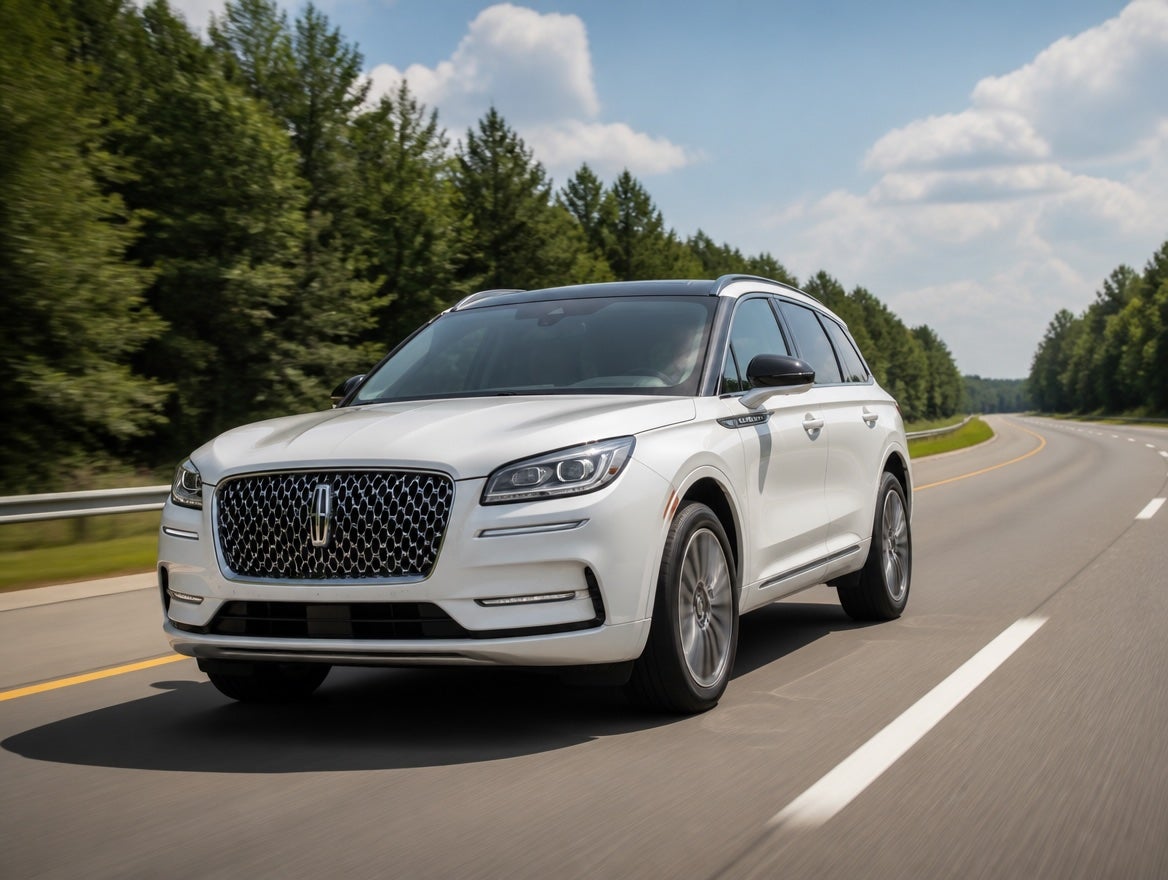
2026 Lincoln Corsair on I-85 in Alabama heading toward Auburn on game day

The 54 miles from Montgomery to Auburn along I-85 North take under an hour on a normal Saturday. On a game day, and before a noon kickoff in particular, that corridor behaves like a completely different road. We'll walk you through how to approach it so the Corsair does what it was built to do, which is make the trip feel composed.

The short version is simple. The 2026 Lincoln Corsair is well-suited for this run, but a few deliberate calls before you leave Eastern Boulevard are what separate arriving relaxed from arriving late. They're worth making.

In our Montgomery service bays, summer and early fall is the stretch when the A/C works hardest, and a Corsair left buttoned up in direct sun on Eastern Boulevard can take a few minutes to pull the cabin down before it feels right. Get the fans going before you load up.

The Game-Day I-85 Corridor: What to Do and What to Skip

November in Alabama brings football weather that starts warm and could stay there, and the 2026 Corsair handles it well, but only if you set the cabin up before you leave the driveway instead of fighting the heat later on the highway. Work with the vehicle and the run stays easy.

SituationDo ThisSkip This
Cabin before departureRun the A/C 3-5 minutes before you load the vehicleStarting cold with doors open in direct sun; the cabin takes longer to stabilize
Ventilated seatsSwitch them on in the driveway, before you get warmWaiting until you're already uncomfortable on the highway
Adaptive cruise on I-85Use Intelligent Adaptive Cruise Control in stop-and-go traffic for steady spacingRiding the brake manually through construction slowdowns near Tuskegee
Cargo packingLoad flat, below the rear headrests; 27.6 cubic feet behind the rear seats handles a full cooler and tailgate chairs comfortablyStacking above sight line; rearward visibility matters when you're threading into packed parking areas
Grand Touring PHEV chargeCharge fully the night before; on a 54-mile round trip the EPA-estimated 27-mile electric range covers a meaningful portion in EV modeDeparting with a half-depleted battery and expecting the same efficiency
Departure time for a noon kickoffLeave no later than 9:00 a.m.; I-85 congestion compounds quickly after 9:30Leaving at 10:30 and expecting the normal 51-55 minute run
Parking at Jordan-HareArrive with a confirmed, pre-purchased pass; campus reserved spots fill before walk-up windows openCounting on day-of availability in the lots closest to the stadium

Adaptive Cruise and Lane Assist Are the Technique That Actually Matters

The tech that matters most on this run is Lincoln's Co-Pilot360 suite, because game-day I-85 between Shorter and the Auburn exits is long stretches of compressed, accordion-style traffic where a plain cruise-control plan works fine right up until about mile 30. After that, the driver aids start doing quiet work. Past that point, the Co-Pilot360 suite earns its place.

Lincoln's Co-Pilot360 2.0 comes standard on every 2026 Corsair trim. It includes Intelligent Adaptive Cruise Control, which reads the vehicle ahead and modulates speed automatically. There's also Pre-Collision Assist with Automatic Emergency Braking, plus a Lane-Keeping System that keeps the Corsair centered in a lane. It matters during the slow, distracted merging you get when 80,000 people are all routing to the same exit. These are driver aids that require your full attention at the wheel. They don't drive the car for you. What they'll do is reduce the cumulative fatigue of a stop-and-go run so you arrive at Jordan-Hare in the same condition you left home.

Our team at Stivers Lincoln watches how the Co-Pilot360 suite performs in Alabama driving conditions. You'll find the I-85 corridor to Auburn is the kind of sustained moderate-speed traffic where adaptive cruise earns its keep.

Lincoln's Co-Pilot360 2.0, standard on all 2026 Corsair trims, includes Intelligent Adaptive Cruise Control, Automatic Emergency Braking, and a Lane-Keeping System that require an attentive driver at all times.
Before you leave: Check that your 13.2-inch SYNC 4 screen has the navigation set to Jordan-Hare Stadium with traffic enabled. Game-day routing suggestions from the live map can save 15-20 minutes versus running the same exit everyone else takes on autopilot.

The Return Trip Deserves the Same Preparation

The return trip earns the same preparation as the outbound leg, because after a win (and occasionally after a long one) you'll find I-85 South back to Montgomery fills quickly, and the EPA rates the 2026 Corsair FWD at 22 city / 30 highway for the standard 2.0L engine. Plan the drive home the way you planned the drive out.

The Grand Touring's 76 MPGe combined rating means the return leg, run on residual charge and highway gasoline mode, stays efficient regardless of how long you idled in post-game traffic. By the time you point south the battery is spent, so you're on gasoline for most of the way home. Fuel up before you leave the east side of Montgomery, not after you're on the approach ramp.

Is the plug-in worth it for a run like this? For a predictable, sub-60-mile round trip, the 27-mile EV range genuinely earns its keep, so browse our current Corsair inventory if you've been considering the move to the Grand Touring's plug-in powertrain. And if your trade is sitting in the driveway while you think it over, a trade appraisal takes three minutes online.

Value Your Current Vehicle

The game-day run to Auburn and back tells you a lot about a vehicle, and the Corsair handles I-85 with the composure the drive deserves. Prepare the cabin, use the tech the way Lincoln designed it, and give yourself plenty of time. Do that, and you'll make an easy morning of it.
Stivers Lincoln of Montgomery

4000 Eastern Blvd, Montgomery, AL 36116

(334) 647-6905

Posted in:

Related Posts

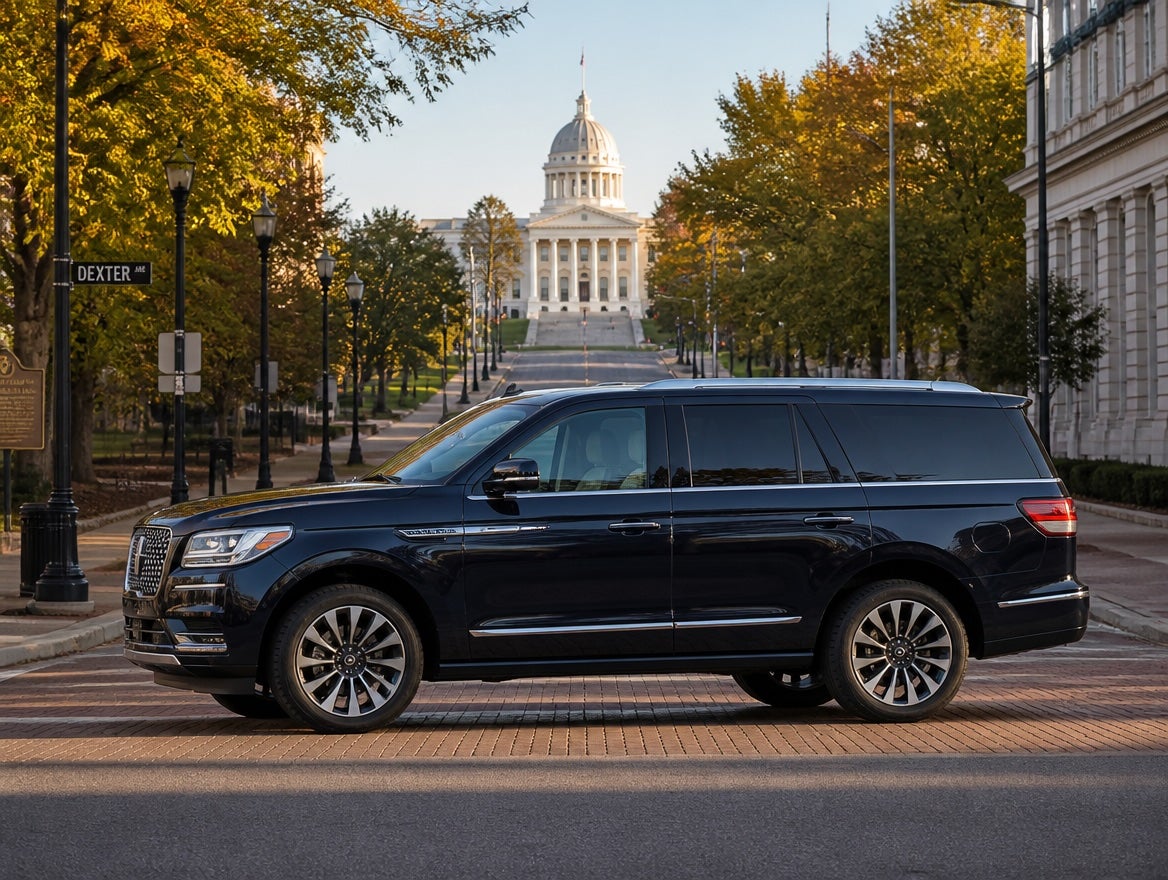
2023 Lincoln Navigator parked on Dexter Avenue in Montgomery Alabama with the Alabama State Capitol in the background

Lincoln Navigator by Model Year: Which Used Years Are Worth It in Montgomery

Dexter Avenue runs just half a mile. From Court Square at the bottom to the steps of the Alabama State Capitol at the top, it packs in as much history as any half-mile in the country. People who know Montgomery understand you don't rush it. You park with some thought, you give it time, and the vehicle you arrive in ought to feel as composed as the morning around it. Which makes a used Lincoln Navigator a quiet fit. Not because it's showy. Because it isn't. If you're shopping a used fourth-generation Navigator (2018-present), the year you choose matters more than most luxury buyers realize. Our team has watched buyers walk in set on a specific year, and we'll level with you. Some of those years are fine. Some carry a recall history that deserves a real conversation before any money changes hands. We'd tell a friend the same thing. The short version The fourth-generation Navigator launched in 2018 with a full redesign. First-year "teething" problems make 2018 the year to approach most carefully. NHTSA data shows 2019 drew the most owner complaints of any fourth-generation year (68 complaints). Verify any 2019 VIN before buying. A June 2026 NHTSA recall (26V344) covers seat belt pretensioners on all 2018-2022 Navigators. Check whether the recall has been completed on any vehicle you're considering. The 2021-2024 model years represent the sweet spot: the 10-speed transmission issues were sorted, complaint volume dropped sharply, and the cabin refinements landed intact. Every fourth-generation Navigator shares the same twin-turbo 3.5-liter V6 (440 horsepower, 510 lb-ft of torque), so the powertrain itself isn't what changes year to year. The reliability record is. Browse our pre-owned Lincoln inventory to see what's currently available, then come back to this guide for the year-by-year context that makes a used purchase a confident one. Which Navigator Years Are the Sweet Spot? The honest answer is 2021 through 2024, because those four years carry meaningfully fewer NHTSA owner complaints than the first two years of the fourth generation, the 10-speed SelectShift automatic had found its stride, and none of them carry the recall exposure that defines 2018-2022 as a group. The rest of the field needs more homework. The fourth generation breaks down year by year below. Model Year Generation Status NHTSA Complaint Profile Sweet Spot? Key Notes 2018 First year of 4th gen redesign 48 complaints; 141 Technical Service Bulletins Watch closely First-year issues typical of a full redesign; seat belt pretensioner recall (26V344) applies 2019 Early 4th gen 68 complaints (highest in generation) Approach carefully Most owner complaints of any 4th-gen year per NHTSA; recall 26V344 applies 2020 Mid 4th gen 28 complaints Acceptable with VIN check Recall 26V344 applies; windshield wiper arm recall also involved this year 2021 Refined 4th gen 29 complaints Sweet spot begins Sorted powertrain; recall 26V344 applies through this year 2022 Refined 4th gen 20 complaints Strong choice Highest recall count by campaign number (14), but complaint volume fell to 20; recall 26V344 covers through Oct. 2022 production 2023 Refined 4th gen Low complaint volume Top pick Outside the seat belt pretensioner recall window; fifth gen architecture 2024 Refined 4th gen Low complaint volume Top pick Clearest reliability record of recent used inventory A few things to hold in mind as you read this table. NHTSA complaint counts reflect what owners chose to report; they're a directional signal, not a perfect grade. And recall coverage is the more important variable in 2026, for reasons we're about to explain. Does much change inside across these years? Not dramatically. Lincoln's EPA-estimated 15 city / 22 highway fuel economy is consistent across the fourth generation, and the twin-turbo 3.5-liter V6 makes 440 horsepower and 510 lb-ft of torque, the same numbers whether you're looking at a 2021 or a 2024. What you're choosing when you pick a year is reliability history. Pick 2021 or later and you're in much cleaner water. See new Navigator inventory at Stivers Lincoln of Montgomery if a current 2026 is on the table alongside your used search. Which Years Should You Watch Out For? Start with the June 2026 recall, since it shapes how you should read every 2018 through 2022 Navigator on the market; NHTSA campaign 26V344 covers approximately 77,684 Lincoln Navigator SUVs from the 2018 through 2022 model years. The problem is the front seat belt retractor pretensioner, which may inadvertently deploy and lock in place, preventing the belt from retracting or extending normally. Per NHTSA, the propellant inside the pretensioner can degrade when exposed to high-heat environments. Alabama summers run long and hot, and vehicles parked outdoors here see sustained heat that makes this degradation mechanism relevant to the cars we actually see in Montgomery, not a line on a spec sheet. The remedy is free under federal law. But whether the work has been completed on any specific used vehicle is something you verify against the VIN at nhtsa.gov before you agree to anything. Beyond the recall, here is what our team would flag year by year. 2018 had 141 Technical Service Bulletins in its first year on sale, a typical but genuine cost of buying the first model year of any full redesign. TSBs aren't recalls; they're documented fix procedures issued to dealerships. Still, 141 of them in one year tells you something. The seat belt pretensioner recall applies. We'd want a thorough pre-purchase inspection on any 2018. 2019 is the year NHTSA data flags most clearly. Among fourth-generation Navigators from 2017 through 2026, 2019 drew 68 owner complaints, more than any other year in that span per NHTSA records. Powertrain was the most commonly flagged area. The recall applies here too. A 2019 with a clean VIN history and documented recall completion can still make sense, though it asks more due diligence of you than a 2022 or 2023. 2020 is a middle case. Complaint volume dropped to 28. A windshield wiper arm recall (separate from the pretensioner campaign) was associated with this year. The seat belt recall still applies. Verify both. Explore the Navigator L if maximum cargo volume behind the third row is part of what you're solving for. The long-wheelbase body adds 37.4 cubic feet behind the third row compared to the standard model's 22.9, and the same year-by-year framework in this guide applies to the L as well. Before you make an offer: Pull the VIN on any 2018-2022 Navigator at nhtsa.gov and confirm that recall 26V344 (seat belt pretensioner) shows "remedy available" or "completed." Parts and the full remedy under this expanded recall were expected to be available by late 2026. Our service team can complete open recalls; that's worth factoring into any used negotiation. Get a Trade-In Value on Your Current Vehicle Which Year Fits Which Buyer? We like to be direct here, because the right year depends on what you're optimizing for, and the choices split fairly cleanly between a value-minded buy in the 2021 to 2022 range and the cleanest records sitting on the 2023 and 2024 cars. Let's take them in order. If value relative to condition is the priority, a 2021 or 2022 hits a reasonable middle ground. Complaint volume is low, the powertrain runs smoothly, and you'll still find examples with the full suite of refinements Lincoln brought to the interior. Confirm recall 26V344 status on any 2022 built before October 2022. A 2022 built after that date falls outside the pretensioner recall window entirely. If you want the cleanest used option available, a 2023 or 2024 is the straightforward answer. These years sit outside the seat belt pretensioner recall campaign, NHTSA complaint data is thin (which partly reflects newer cars with fewer miles, but also reflects a genuinely more sorted vehicle), and the cabin is the most current expression of the fourth generation before the 2026 redesign. The 2023 and 2024 deliver the same 440-horsepower twin-turbo V6, the same adaptive air suspension, and second-row seats that slide to offer up to 42 inches of legroom. The third row, at 43.5 inches of legroom, is usable by adults rather than a nominal gesture. If you're considering the Navigator L specifically, the same year-by-year logic applies. The L's advantage is rear cargo. At 37.4 cubic feet behind the third row versus 22.9 on the standard wheelbase, the L is for buyers who need the space the family fills on long drives down I-65 to Gulf Shores, or who want the rear comfort for a group making the Dexter Avenue circuit before lunch. One honest tradeoff is worth naming. A used Navigator is not a small vehicle, and its EPA-estimated fuel economy reflects that (15 city, 22 highway). If most of your driving is short city loops, a 2023 or 2024 Nautilus might serve your daily rhythm better, and we'd say so plainly. The Navigator earns its footprint when you're moving people or towing, or when cabin comfort over a long interstate stretch is the reason you're in a Lincoln. Dexter Avenue runs half a mile from Court Square to the Alabama State Capitol, and its 25-mile-per-hour pace is one of the better settings this SUV ever finds. Explore financing options at Stivers Lincoln of Montgomery when you're ready to talk numbers on a used purchase. Frequently Asked Questions What is the best used Lincoln Navigator year to buy? Based on NHTSA complaint data and recall history, the 2021 through 2024 model years are the strongest used options from the fourth generation. The 2023 and 2024 sit outside the seat belt pretensioner recall (NHTSA 26V344) that covers 2018-2022 models, and they carry the lowest complaint volume in the generation. If a 2021 or 2022 fits your budget better, they're solid choices once you've verified recall status on the specific VIN. What is NHTSA recall 26V344, and does it affect all used Navigators? NHTSA recall 26V344, issued in June 2026, covers approximately 77,684 Lincoln Navigator SUVs from the 2018 through 2022 model years. The issue involves the front seat belt retractor pretensioner, which may inadvertently lock in place and prevent the belt from retracting or extending normally. You can verify whether the recall has been completed on a specific vehicle by entering its VIN at nhtsa.gov. Is the Lincoln Navigator L worth buying used over the standard wheelbase? The Navigator L adds cargo space behind the third row from 22.9 cubic feet to 37.4 cubic feet. If you regularly need that additional cargo room or want the extended rear passenger space for a larger household or long highway trips, the L justifies its footprint. The same year-by-year reliability framework applies to both body styles. Have Our Service Team Check Open Recalls Before You Buy Stivers Lincoln of Montgomery 4000 Eastern Blvd, Montgomery, AL 36116 (334) 647-6905

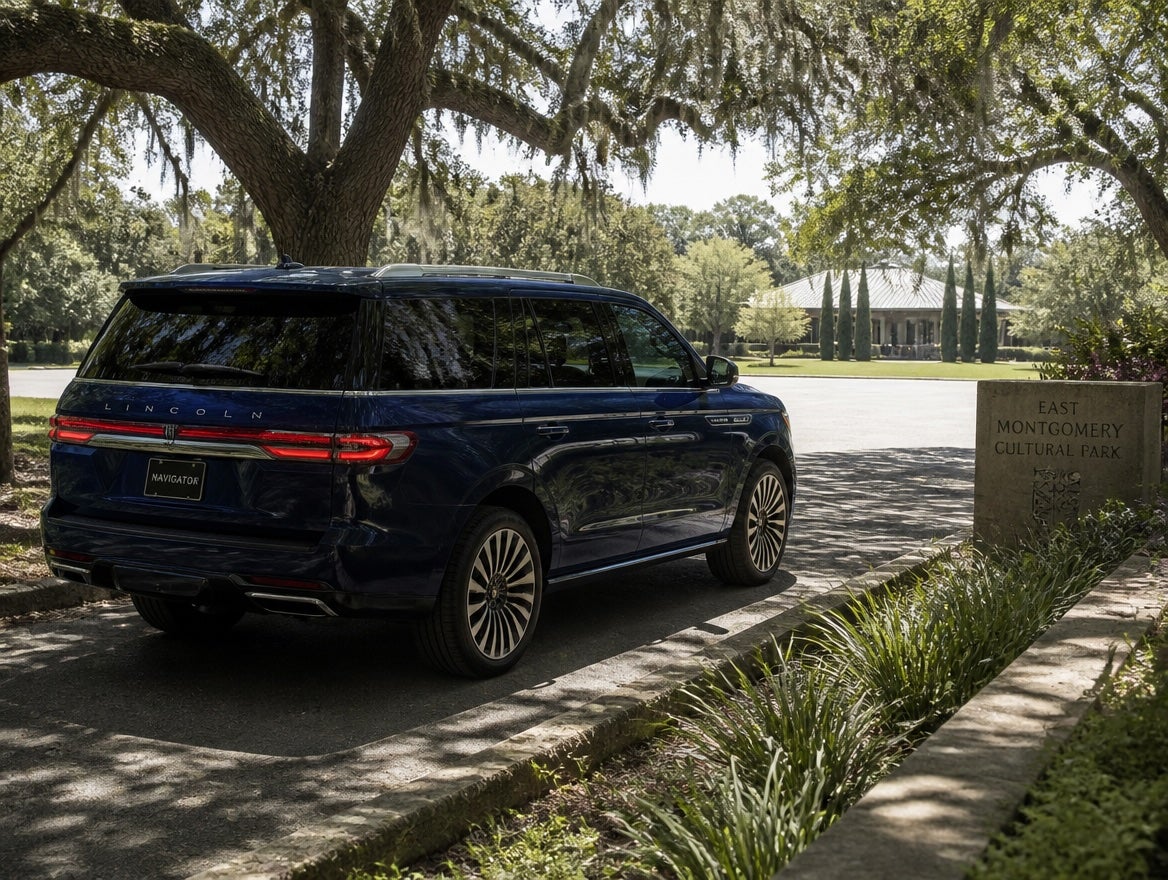
2026 Lincoln Navigator parked at Blount Cultural Park in Montgomery, Alabama, shaded by mature live oaks on a late-afternoon visit

Taking a Lincoln Navigator to Blount Cultural Park

An evening at the Alabama Shakespeare Festival sounds effortless right up until GPS drops you at a locked gate on Eastern Boulevard with curtain twenty minutes out. The 2026 Lincoln Navigator stays composed on any road, but Blount Cultural Park rewards the driver who's settled the route before backing out of the driveway. The play below runs from arrival time to curtain call. Where Do You Park, and When? Arrive early and the park makes sense; arrive late and a full-size SUV turns the interior lanes into a chore. For an evening ASF show, plan to be in the large adjacent lot off Festival Drive about 45 minutes before curtain, enter from Woodmere Boulevard, and the 210-inch Navigator slots into an open pull-through row without drama. The table sorts out the timing and where to put all of it. Arrive by Lot to use Fit / space note Practical tip 45 min before curtain (evening ASF) ASF's large adjacent lot off Festival Drive Open rows, full-size-friendly, free Enter via Woodmere Boulevard, not Eastern Blvd GPS shortcut 30 min before curtain Same lot, but rows begin filling from the theatre end Navigator's 210-inch length fits; pull-through spaces preferred Vaughn Road entrance is an alternate if Woodmere backs up Under 20 min before curtain Overflow along internal park drive Narrower lanes; more maneuvering at 80 inches wide Consider the Vaughn Road entrance, which feeds the interior lot directly MMFA daytime visit MMFA's own lot off Festival Drive Relaxed, rarely congested outside weekend events Admission and parking are free; arrive any time the museum is open Tip (insider parking): The ASF website is blunt about something our team passes along to anyone headed this way. GPS sometimes routes drivers to a gated service road off Eastern Boulevard near the Arbor Station apartments, and that gate doesn't open for patrons. The only working entrances to Wynton M. Blount Cultural Park sit on Woodmere Boulevard and Vaughn Road. Set your destination as "1 Festival Drive" and confirm your directions actually show one of those two street names before you leave east Montgomery. Tip (lot etiquette): The Navigator's standard hands-free power liftgate earns its keep in a shared lot. You can pull a wrap, a program, or a dog leash from the cargo area without swinging a door into the space next to you. Use it. The folks parked beside you will notice. The Maneuvering and Fit Play At 210 inches bumper to bumper, the Navigator is a full-size body, and it fits the park's main lot comfortably when you use pull-through rows or end spaces. What it won't forgive is a hasty turn into a tight interior lane while the park runs concurrent events at both ASF and the MMFA. Under twenty minutes out, you'll be in the overflow lanes along the internal drive, and those are tight for an 80-inch-wide body. There's no graceful way to thread it. The practical move is straightforward enough. For an ASF evening, enter at Woodmere Boulevard, bear right toward the theatre following the brown wooden signs, and aim for the far end of the large adjacent lot where pull-through rows hand you a clean exit after the show. If you're visiting the museum on a weekend afternoon while ASF has something running at the same time, the Vaughn Road entrance feeds a separate section of the park and keeps you clear of the theatre-lot crush. They're different parts of the same 175-acre grounds, not the same parking field. The 2026 Navigator's adaptive suspension and standard 4WD take the park's internal drives and any soft shoulder in stride. Length is what you manage here, not clearance. The Navigator's standard hands-free liftgate and three-zone climate control make event-day loading and cabin comfort genuinely effortless, but the Woodmere Boulevard entrance is the logistical detail that decides whether the evening starts well. Schedule a Pre-Event Service Check A Go-Enjoy-It Checklist Check the route one more time before you leave the driveway. Five minutes now saves twenty minutes of aggravation in the lot. Navigation Set destination to "1 Festival Drive, Montgomery, AL 36117" Confirm your route shows Woodmere Boulevard or Vaughn Road, not Eastern Boulevard as a final turn Note your intended entrance: Woodmere for ASF evening; either for MMFA daytime Cabin comfort (the Navigator handles this itself, but confirm it) Ventilated front seats on for Alabama's fall humidity, which lingers into early evening Three-zone climate set before you park so the cabin is settled when you return Rear climate confirmed for any passengers in rows two or three Cargo and loading Hands-free liftgate working (wave under the rear bumper to test it in the garage) If you're carrying anything for an outdoor portion of the visit, coats or blankets in the cargo area rather than on seats 21.6 cubic feet behind the third row handles a small cooler, stadium seats, and jackets without touching the passenger rows Timing ASF evening curtains: plan to be in the lot 40 to 45 minutes before showtime MMFA: open Tuesday through Saturday, 10 AM to 5 PM, and Sunday noon to 5 PM, closed Mondays The park itself closes at sundown; evening ASF events are the exception, not the standard After the show The main ASF lot exits toward Festival Drive; give it five minutes before joining the queue The Navigator's 5G Wi-Fi hotspot, standard on all 2026 trims, means passengers can settle in while you wait for the lot to clear The Navigator L carries 36 cubic feet behind the third row if you're bringing a larger group with luggage or gear for a full afternoon in the park. Worth noting if you're weighing body styles for this kind of regular east-side use. See What Your Current Vehicle Is Worth Stivers Lincoln of Montgomery 4000 Eastern Blvd, Montgomery, AL 36116 (334) 647-6905

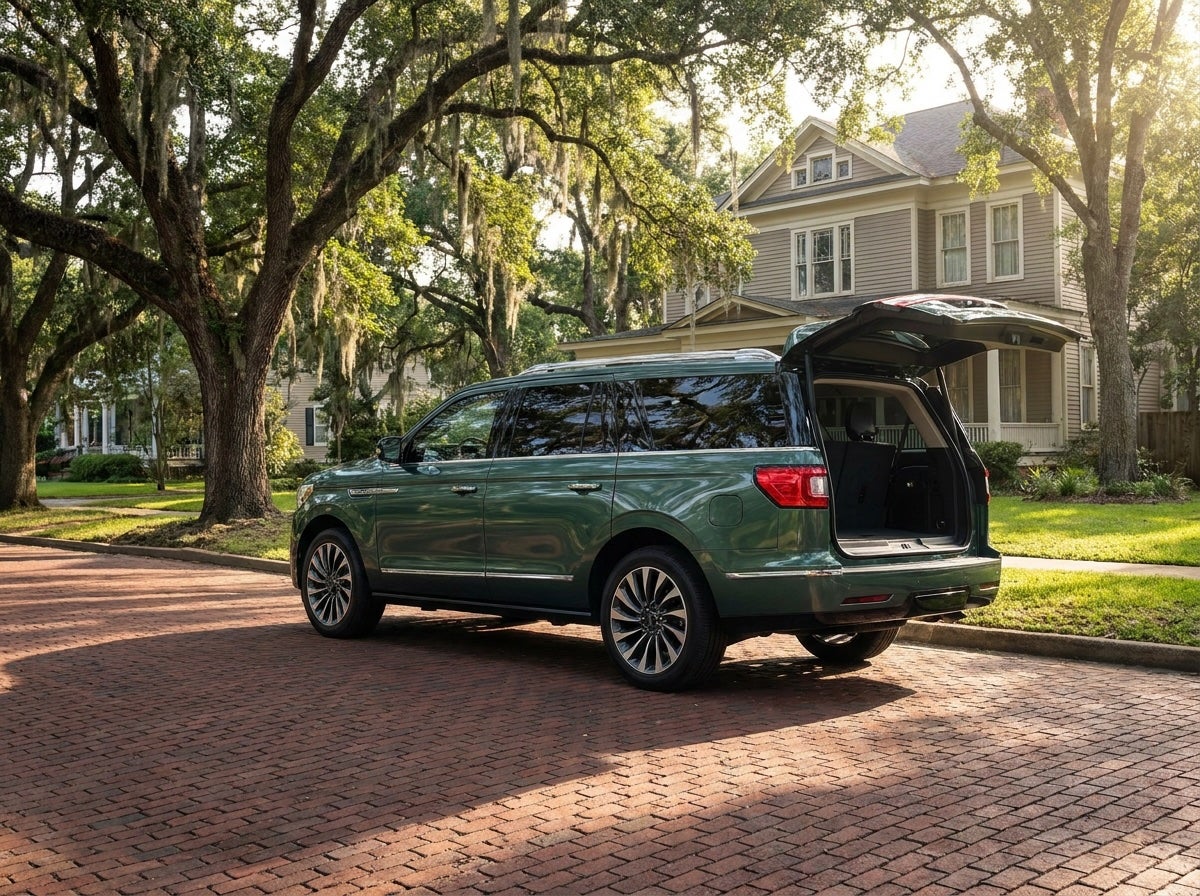
2026 Lincoln Navigator L with Split Gate open on a shaded east Montgomery street

Lincoln Navigator vs. Navigator L: Which Has the Space Your Family Needs?

In this article What's the Real Difference Between the Navigator and Navigator L? Does the Navigator L Change How the Vehicle Drives Day to Day? Passenger Space: Where the Two Models Are Honestly Identical Trim Parity and the Black Label Question So Which Should You Pick? Already set on a 2026 Lincoln Navigator? Then the next question is the one that actually matters, and it's a short one. Standard wheelbase, or long. The answer comes down to a single distinction worth naming plainly. Both cabins feel nearly identical to every passenger on board, and the cargo hold doesn't. The short version Both the Navigator and Navigator L share the same 440-horsepower twin-turbo V-6, the same EPA-estimated fuel economy ratings, the same towing capacity, and similar three-row seating capabilities. The real difference is cargo: the Navigator L adds 14.5 cubic feet of space behind the third row, jumping from 22.9 to 37.4 cubic feet, a 63-percent increase. The Navigator L measures in at 221.9 inches long versus the standard model's 210 inches. That's 11.9 inches of additional length to account for in your garage and on tight parking decks. If your family regularly travels with seven passengers and luggage at the same time, the L earns its keep immediately. If your household is smaller or your commute involves tighter spaces, the standard Navigator is the more practical daily driver. Both are available here at Stivers Lincoln of Montgomery in multiple trims, including the returning Premiere trim for 2026. What's the Real Difference Between the Navigator and Navigator L? Length - specifically, how long the body is after the third row. The Navigator L grows by just under a foot aft of the Navigator's last seat, allowing its cargo volume to increase tremendously. Lincoln builds the Navigator L on a longer wheelbase, 131.5 inches against the standard 122.5 inches, and that additional real estate flows straight into cargo rather than into the room your passengers use. Dimension / Spec 2026 Navigator 2026 Navigator L Overall Length 210.0 in 221.9 in Wheelbase 122.5 in 131.5 in Cargo Volume Behind Row 3 22.9 cu ft 37.4 cu ft Cargo Volume Behind Row 2 69.9 cu ft 84.5 cu ft Max Cargo Volume (Behind Row 1) 107.0 cu ft 121.6 cu ft Engine 3.5L Twin-Turbo V-6 3.5L Twin-Turbo V-6 Horsepower 440 horsepower 440 horsepower Torque 510 lb-ft 510 lb-ft EPA Fuel Economy (city/hwy/combined) 15/22/17 MPG (est.) 15/22/17 MPG (est.) Max Towing (when properly equipped) 8,700 lbs 8,700 lbs Standard Drivetrain 4WD 4WD Lincoln's published figures confirm that passenger volume, shoulder room of 65.3 inches in row one, 65.1 in row two, 64.2 in row three, plus the seat configuration options, are identical between both body styles. A third-row passenger in the L gains no legroom over the standard Navigator. What is gained, however, is room for their belongings to be stashed behind the seat. The Navigator L's 14.5 cubic feet of additional cargo space lives entirely behind the third row. If your family fills all three rows, that's where you'll feel it on every trip. Does the Navigator L Change How the Vehicle Drives Day to Day? Not really. Both vehicles make use of the same 440-horsepower, twin-turbocharged 3.5-liter V-6, and both tip the scales within roughly 100 pounds of each other. You may, however, feel a difference when maneuvering in close quarters, given the Navigator L is nearly 18.5 feet long... Standard residential garages across east Montgomery tend to run generous, yet the multi-deck parking structures downtown or over at Blount Cultural Park can feel snug with that much vehicle. The standard Navigator at 210 inches is hardly small. It simply asks for a little less mental arithmetic when you thread it into a space, and for a daily driver that counts. Towing comes out identical across both models. Lincoln rates both Navigators at up to 8,700 pounds when properly equipped with the available Heavy-Duty Trailer Tow Package, and base capacity without it lands at 6,200 pounds. Put your trailer behind the standard car or the L and the tow spec reads the same either way. "BlueCruise is standard on all 2026 Navigator trim levels, providing hands-free highway driving on more than 130,000 miles of mapped divided highways." (Lincoln) *Driver-assist features are supplemental and require an attentive driver at all times.* Feel free to Explore financing options for either body style before you visit, and our team will walk through the configuration that actually fits your household. Trim Parity and the Black Label Question Both the Navigator and Navigator L come in the same three trims, Premiere, Reserve, and Black Label, and that parity matters more for 2026 than it sounds, because Black Label now reaches the standard-wheelbase model for the first time rather than living on the longer body alone. Previously, Black Label buyers had to step up to the L if they wanted the flagship experience. Now they don't. A household that wants the 30-way adjustable front seats, the heated third-row seats, and the full Black Label interior can pick the standard wheelbase and give up nothing. Space and luxury have become two separate questions. The returning Premiere trim shows up on both bodies as well. Think of it as the way back into the Navigator lineup after a year away, and it arrives standard with the 48-inch panoramic display, a 5G Wi-Fi hotspot, climate-controlled front seats, and the Revel audio system. So Which Should You Pick? Choose the standard Navigator if your household usually rolls with four to six people, if garage depth is a genuine constraint, or if you'd rather have the easier daily driver than the last measure of hauling flexibility, because in town and around the suburbs it threads through space with less fuss. With Black Label now offered in this body style, there's nothing in the luxury stack you have to surrender to get the shorter, handier package. Choose the Navigator L if you regularly carry seven or eight passengers and still need cargo behind all of them. When Lake Martin weekends mean a full SUV with luggage, or when your household travels with adult children and their gear, the 37.4 cubic feet behind row three stops reading as a spec-sheet number and starts being the reason nobody had to hold a bag on their lap. Neither choice is a compromise. They share every meaningful powertrain and technology spec, and the difference lives entirely in the cargo hold. Spatial questions are the ones only you can answer about how your family actually lives. Explore Financing Options We're glad to keep both configurations on hand for a side-by-side look in our showroom at 4000 Eastern Blvd. Reading the numbers and opening both tailgates yourself are two very different things. Frequently Asked Questions Is the third row bigger in the Navigator L than in the standard Navigator? No. The seating dimensions of the third row are essentially the same in both models. What the Navigator L provides is far more cargo space behind that third row: 37.4 cubic feet versus 22.9 cubic feet in the standard Navigator. The length difference lives in the cargo hold, not in the passenger cell. Do the Navigator and Navigator L have different engines or towing capacities? No. Both models share the same 3.5-liter twin-turbocharged V-6 producing 440 horsepower and 510 lb-ft of torque, the same 10-speed SelectShift automatic, and the same 4WD standard drivetrain. Lincoln rates both at up to 8,700 pounds of towing capacity when properly equipped with the available Heavy-Duty Trailer Tow Package. Actual towing capacity varies with configuration, cargo, and the number of passengers. Value Your Current Vehicle Stivers Lincoln of Montgomery 4000 Eastern Blvd, Montgomery, AL 36116 (334) 647-6905