

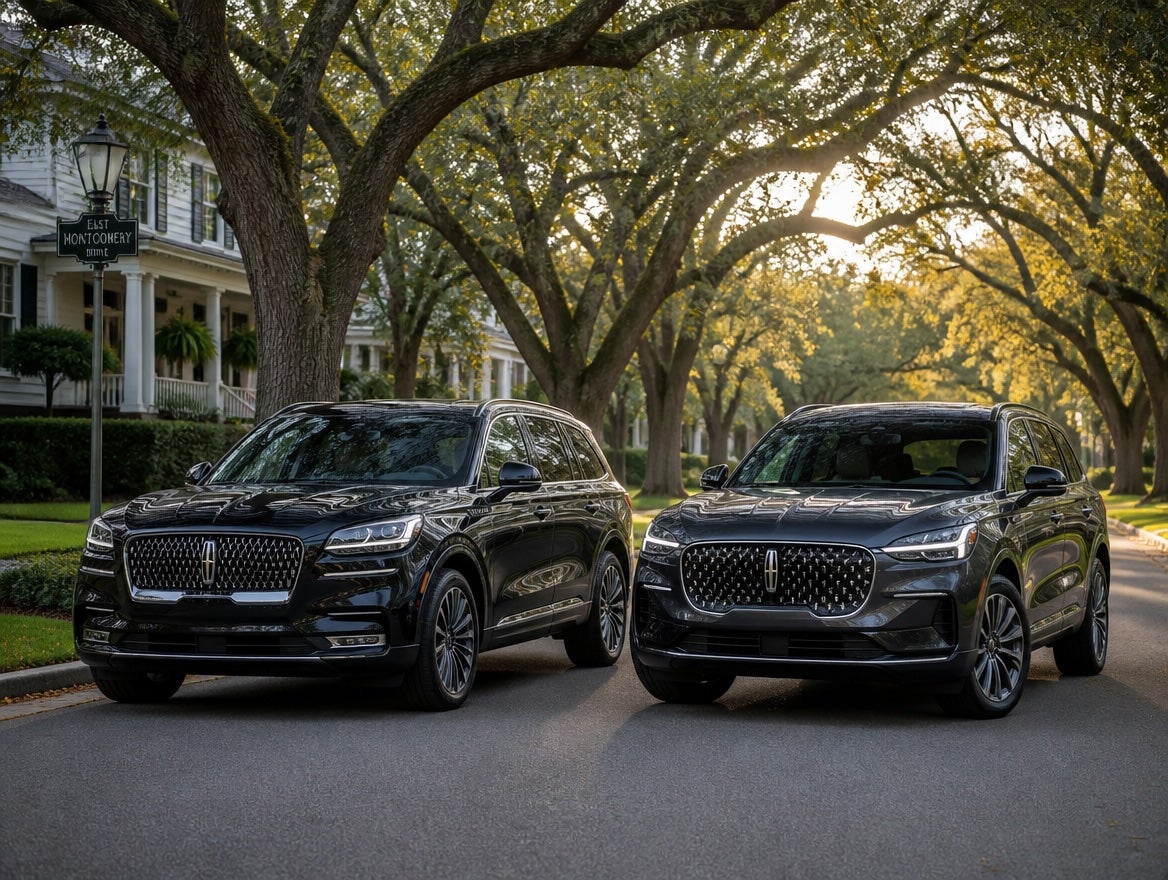
The same three trim names show up on both, Premiere, Reserve, and Black Label, and that's exactly where the confusion starts. The 2026 Lincoln Nautilus and the 2026 Lincoln Aviator are fundamentally different vehicles, and the right one depends less on how far up the ladder you climb than on which ladder you should be on in the first place.
From our team at Stivers Lincoln of Montgomery, the bottom line runs like this. If your household has five seats and no trailer, the Nautilus Reserve is probably the most complete vehicle on this lot. Need a third row, or the confidence to pull a boat to Lake Martin on a Saturday morning? The Aviator Reserve changes the conversation entirely, and it's not close.
- Both models share the Premiere, Reserve, and Black Label structure, but they are built on entirely different engineering platforms with different powertrains, seat counts, and towing numbers.
- The Nautilus seats five with a 2.0L turbo four-cylinder (250 hp) and returns an EPA-estimated 24 mpg combined. The Aviator seats six or seven with a 3.0L twin-turbo V6 (400 hp) rated at 21 mpg combined with RWD.
- The Reserve tier is where the experience meaningfully separates from Premiere on both models: genuine leather, a Revel audio system, and the Panoramic Vista Roof arrive at Reserve on each.
- Black Label is a lifestyle tier, not just a feature tier. It adds the ownership experience (concierge, exclusive interior themes) alongside the hardware.
- Your household's seat count and Saturday plans are the two fastest ways to land on the right model.
What Is the Real Difference Between These Two Lincolns?
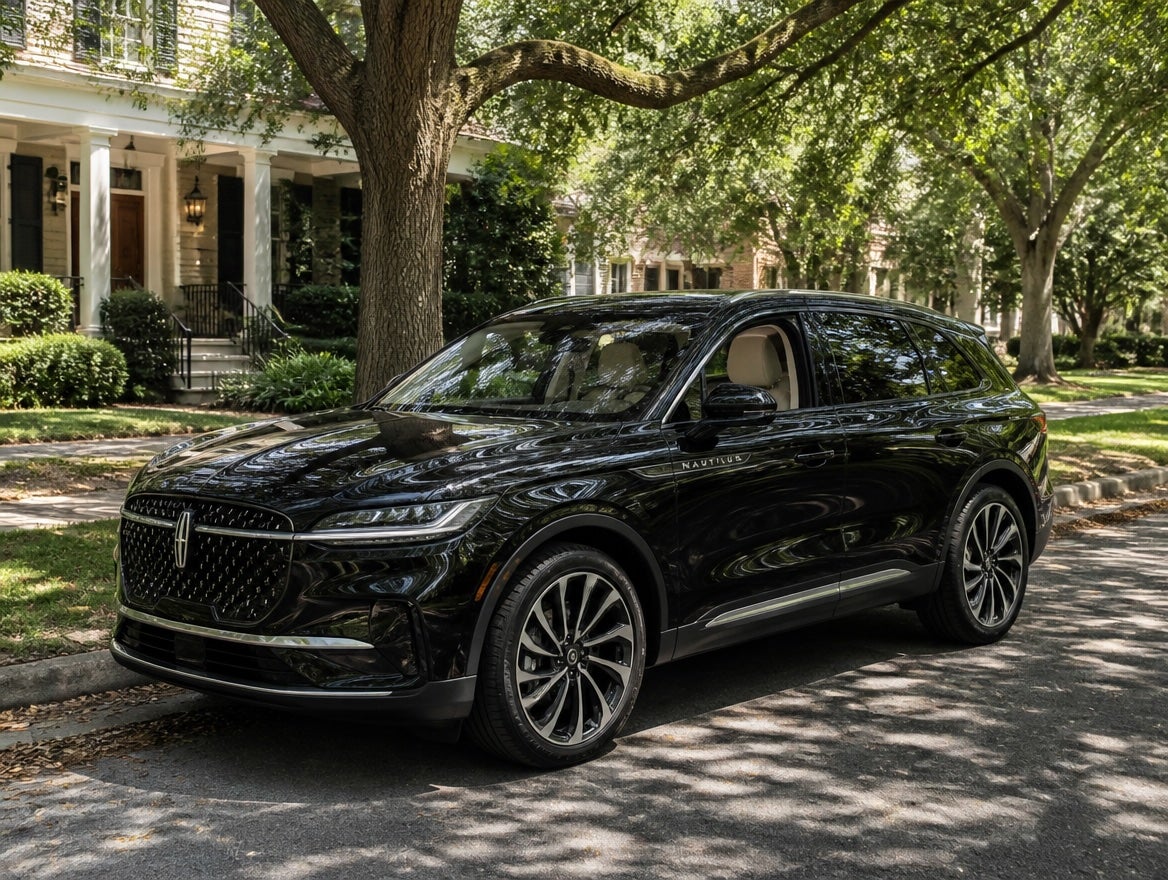
The genuine difference is that these are two different vehicles sharing one trim ladder, and the Aviator is a three-row midsize SUV in Premiere, Reserve, and Black Label while the Nautilus is a two-row five-passenger SUV wearing those same names on a separate platform, and that's where every comparison has to start.
Powertrain is where the gap turns sharp. The Nautilus runs a 2.0-liter turbocharged inline-four rated at 250 horsepower and 275 lb-ft of torque, paired with an 8-speed automatic, and all-wheel drive comes standard. Step to the Aviator and you're in a different category of engine. Every Aviator trim shares a turbocharged 3.0-liter V6 producing 400 horsepower and 415 lb-ft of torque, connected to a 10-speed automatic transmission. On the Aviator, RWD is standard on Premiere and Reserve; AWD is standard on Black Label and available on the two lower trims.
The table below sorts the decisive specs by use case, and it's the same one we lean on out on the showroom floor because it cuts through the feature lists fast.
| Factor | Nautilus (all trims) | Aviator (all trims) | Who it favors |
|---|---|---|---|
| Seating | 5 (two rows) | 6 or 7 (three rows) | Aviator for families or regular rear passengers |
| Engine | 2.0L turbo I-4, 250 hp | 3.0L twin-turbo V6, 400 hp | Aviator for effortless highway pull |
| EPA combined MPG (RWD/AWD) | 24 combined (AWD std) | 21 RWD / 20 AWD | Nautilus for efficiency |
| Towing capacity (properly equipped) | 1,750 lbs | 5,000 lbs | Aviator for boats, trailers |
| Cargo (seats up / folded) | 36.4 / 71.3 cu ft | 19.2 cu ft (3rd row up) | Nautilus for cargo-only use |
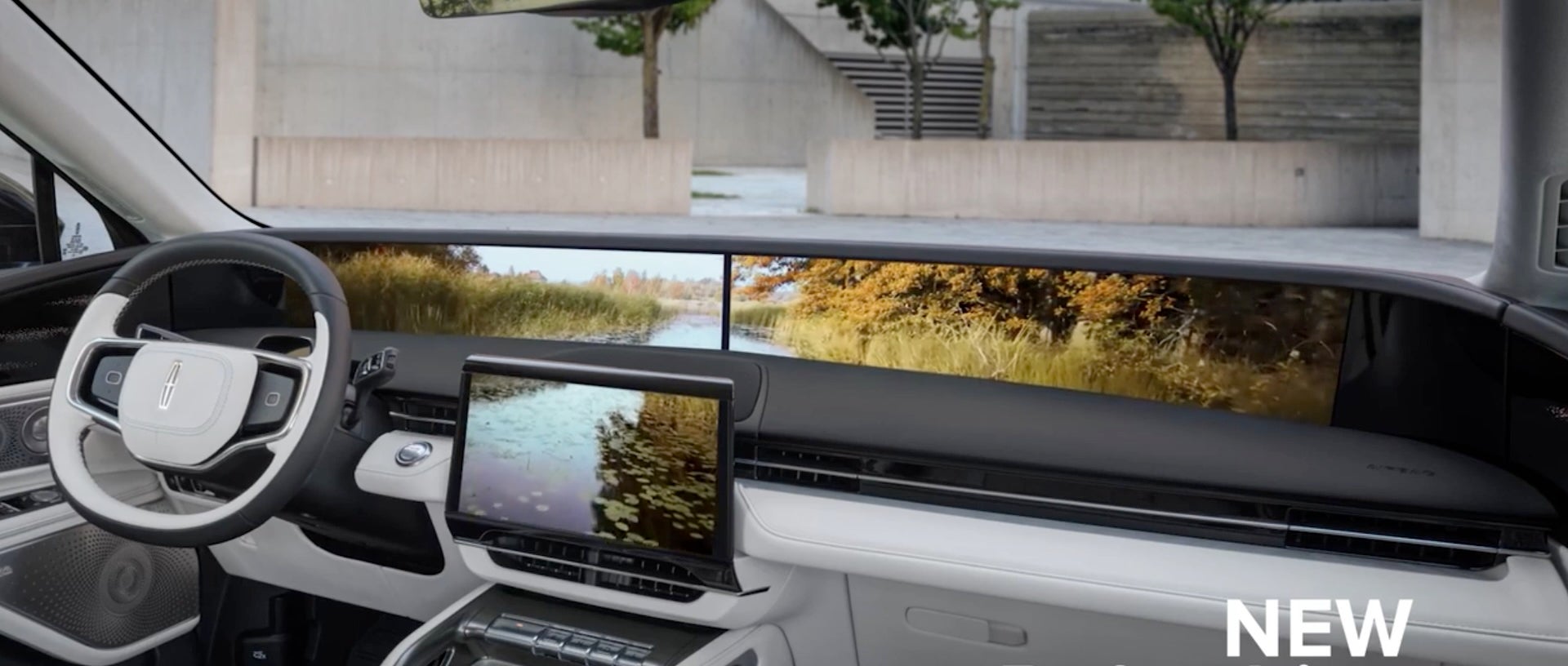
| Signature tech | 48-inch panoramic display | 13.2-inch touchscreen | Nautilus for screen-first experience |
| AWD | Standard on all trims | Optional on Premiere and Reserve | Nautilus for all-weather simplicity |
| Starting trim | Premiere | Premiere | Even |
What Does Each Trim Actually Add, and Is Reserve Worth It?
Yes, Reserve earns the step up on both SUVs, and it's the tier where each one stops feeling like a capable premium crossover and starts feeling the way a Lincoln should, with the materials, the sound, and the glass all arriving together rather than trickling in one option at a time.
On the Nautilus, Reserve is where materials and comfort make their jump. Genuine leather, real wood trim, and a standard 14-speaker Revel audio system separate Reserve from Premiere by more than the price gap alone would suggest. Our team feels it most on longer I-85 trips, where the seat quality and cabin quiet that arrive at Reserve make a two-hour drive to Atlanta feel like a different car altogether. Reserve also adds heated and ventilated front seats, the Panoramic Vista Roof, and a 48-inch panoramic display that spans nearly the full length of the dashboard alongside a vibrant 11.1-inch center stack touchscreen. (The 48-inch display, worth noting, is standard across all three Nautilus trims and isn't available on the Aviator at any tier.)
Browse our 2026 Nautilus inventory to see which Reserve configurations we've got on the lot right now.
On the Aviator, Reserve brings a different set of hardware, and it's a meaningful jump. It elevates the cabin with genuine premium leather seating in the first two rows, the panoramic Vista Roof as standard equipment, 21-inch premium wheels, Adaptive Pixel LED headlamps, and the Dynamic Handling Package featuring Air Glide suspension. Air Glide is the one that earns its keep on Central Alabama roads. It continuously levels the ride regardless of load, so a full three-row cabin on a chip-and-seal county road feels composed rather than choppy. The Aviator Reserve is also the only configuration that lets you choose between a six-seat captain's chair layout and a seven-seat bench arrangement; the Premiere and Black Label come exclusively with captain's chairs.
Take a look at the available 2026 Aviator Reserve models when you're comparing configuration options.
Fuel Economy and the Long Drive: Does the Difference Show Up on Alabama Roads?
Yes, the gap shows up, and it's wide enough to weigh honestly before you decide, since the Nautilus holds a clear efficiency edge over the bigger, stronger Aviator whether you're crawling down Eastern Boulevard or running the interstate.
The EPA rates the 2026 Nautilus at 21 city and 29 highway (24 combined) on its standard AWD powertrain. On the Aviator, the EPA figures come in at 18 city and 25 highway (21 combined) with RWD, and 17 city and 25 highway (20 combined) with AWD. For a household running Eastern Boulevard five days a week plus the occasional weekend run up US-280 toward Alexander City, the Nautilus's fuel economy is a material advantage. Load the Aviator for a Lake Martin weekend with three kids in the back and a ski boat on the hitch, and those numbers are simply the cost of the size and the muscle, and you'll make peace with them.
The Aviator's 5,000-pound towing capacity (when properly equipped) is the number that justifies that trade for the right buyer, and the Nautilus is rated at 1,750 pounds with the Trailer Tow package. Both figures come from Lincoln, and both carry the caveat that actual capacity varies with cargo load, passengers, and configuration, so don't treat either as a guarantee.
The Practicality Question: Cargo, Third Rows, and Daily Life
On flat cargo the Nautilus simply wins, and it isn't close, offering 36.4 cubic feet of space with the rear seats upright and expanding to 71.3 cubic feet when you fold them, a usable floor running from the liftgate straight to the seatback. No third row means nothing to fold and no floor intrusion. Rear legroom measures 43.1 inches, enough for three adults to stretch out on a long trip.
The Aviator's cargo story reads with more nuance. With all three rows occupied, Lincoln lists 19.2 cubic feet behind the third row. That space grows a good deal once the rows fold, but the Aviator is a passenger vehicle first, and that's the point. If the third row sits empty most weeks and the rear cargo floor is what you actually use, the Nautilus serves that household more cleanly.
The Aviator carries one thing no Nautilus can replicate, a highly functional third row that lets the SUV comfortably seat up to seven passengers depending on second-row configuration. For a multi-generational household, a carpool, or any family that regularly moves more than four people, that third row isn't an optional upgrade. It's the reason the vehicle exists.
| Nautilus Reserve | Aviator Reserve | |
|---|---|---|
| Pros | 48-inch panoramic display standard | 400 hp V6, effortless highway pace |
| 24 mpg combined (EPA) | Three rows, up to 7 seats | |
| AWD standard on every trim | 5,000 lbs towing when properly equipped | |
| 71.3 cu ft cargo with seats flat | Air Glide suspension standard | |
| More cabin-forward tech experience | Seating layout flexibility (6 or 7) | |
| Cons | 1,750 lbs max tow capacity | 20-21 mpg combined (EPA) |
| Five seats only | Smaller cargo floor when all rows occupied | |
| No third-row option | 48-inch display not available | |
| Less engine displacement for heavy loads | AWD adds cost on Premiere and Reserve |
So Which Lincoln Should You Pick?
If you're a professional couple, an empty-nester, or a single-vehicle household in east Montgomery, the Nautilus Reserve is where we'd spend our afternoon on this lot, because it delivers nearly everything the brand does best without asking you to carry a third row you'll rarely use. The cabin technology, a 48-inch panoramic display spanning the full width of the dashboard paired with an 11.1-inch center display, is unlike anything else at this tier. Credit the screen. BlueCruise 1.5 is standard across the range on the 2026 Nautilus (four years included), and that changes the character of an I-85 run to Birmingham in a meaningful way. Five seats, 24 mpg combined, AWD already standard. It's a complete vehicle.
If your household runs three rows most weeks, keeps a trailer in the driveway, or simply wants a 400-horsepower V6 and the confidence that the powertrain is never working hard, the Aviator Reserve is your answer. Air Glide suspension, the Revel audio system, and the seating flexibility make it the most livable version of a seriously capable three-row SUV. For anyone who makes a weekend run to Lake Martin and wants a vehicle that earns its footprint, the Aviator Reserve is the one we'd point to.
Black Label, on either model, is for the buyer who wants the ownership experience sitting alongside the hardware, so it layers in exclusive interior themes, the Lincoln Rejuvenate wellness feature, the 28-speaker Revel Ultima 3D audio, and concierge benefits that reach well beyond the vehicle itself. Think of it as a different tier of relationship with the brand, and it's the kind that follows you past the sale.
Explore financing options when you're ready to look at the numbers with our team.
Get the Value of Your Current Vehicle
Frequently Asked Questions
Does the Lincoln Aviator have a third row of seating?
Yes, the 2026 Lincoln Aviator is a three-row midsize SUV that seats up to seven people, with the exact count depending on the second-row configuration. Reserve is the only Aviator trim that lets you choose between six-seat captain's chairs and a seven-seat bench arrangement, while Premiere and Black Label come exclusively with captain's chairs. The Nautilus, by contrast, is a two-row five-passenger vehicle and doesn't offer a third row at any trim level.
Is BlueCruise standard on the Lincoln Nautilus, or is it an add-on?
BlueCruise 1.5 is standard on all three 2026 Nautilus trims, with a four-year subscription included. The Aviator also brings standard BlueCruise hands-free highway driving across its trim lineup. On both models, BlueCruise is a driver-assistance feature that requires an attentive driver and is designed for use on mapped divided highways. It isn't an autonomous system.