Blog / Lincoln Aviator

2025 Lincoln Aviator vs. Volvo XC90 - Battle of the Luxury SUVs

2025 Lincoln Aviator vs. Volvo XC90

There are many beautiful SUVs on the luxury market, making it difficult to sift through and find the right one for your family. The 2025 Lincoln Aviator SUV offers an exceptional blend of performance, comfort, technology, and safety, making it an ideal choice for a wide range of car buyers. It faces stiff competition from the Volvo XC90, another outstanding vehicle. Let's look at this comprehensive 2025 Lincoln Aviator vs. Volvo XC90 specs comparison to determine which model is right for you.

2025 Volvo XC90 vs. Lincoln Aviator Comparison

The 2025 Lincoln Aviator and the 2025 Volvo XC90 compete in the three-row, midsize luxury SUV segment. Designed to accommodate medium to large families, they come with a spacious, well-appointed cabin that provides exceptional comfort, convenience, and sophistication. They're also equipped with powerful engines that deliver a delightful driving experience.

Choosing between the Lincoln Aviator and the Volvo XC90 can be challenging, as both are outstanding vehicles with a lot to offer. Understanding how they differ in specifications and features will help you determine which one is right for you.

Performance and Efficiency

Let's start by comparing Lincoln Aviator vs. Volvo XC90 specs for performance. The sole engine of the 2025 Aviator is a muscular 3.0-liter twin-turbo V-6 that cranks out 400 horsepower and 415 lb-ft of torque. Power is delivered to the rear wheels or all four wheels through a smooth and responsive 10-speed automatic transmission. According to Car and Driver, a rear-wheel-drive Aviator can accelerate from 0 to 60 mph in a mere 5.4 seconds, which is impressive for a family-oriented vehicle.

The Volvo XC90 gets its power from a 2.0-liter turbocharged four-cylinder engine, which is paired with a 48-volt mild hybrid system. The standard version of this powertrain is rated at 247 horsepower, whereas the upgraded variant generates 295 horsepower. Equipped with an eight-speed automatic transmission and all-wheel drive, the XC90 can sprint from 0 to 60 mph in 6.4 seconds. This puts it relatively far behind in the Volvo XC90 vs. Lincoln Aviator performance matchup.

The Lincoln Aviator's powerful engine takes its toll on gas mileage. It returns just 18 mpg in the city and 25 mpg on the highway with rear-wheel drive and 17 mpg in the city and 25 mpg on the highway with all-wheel drive. The XC90 is the clear winner in terms of fuel efficiency, achieving 23 mpg in the city and 30 mpg on the highway with the base engine and 20 mpg in the city and 26 mpg on the highway with the optional unit.
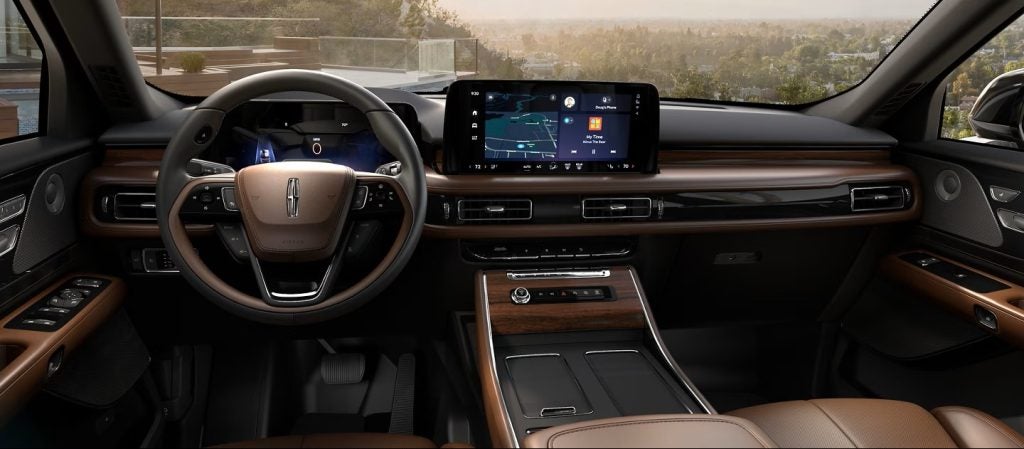
2025 Lincoln Aviator Interior Design

Design and Comfort

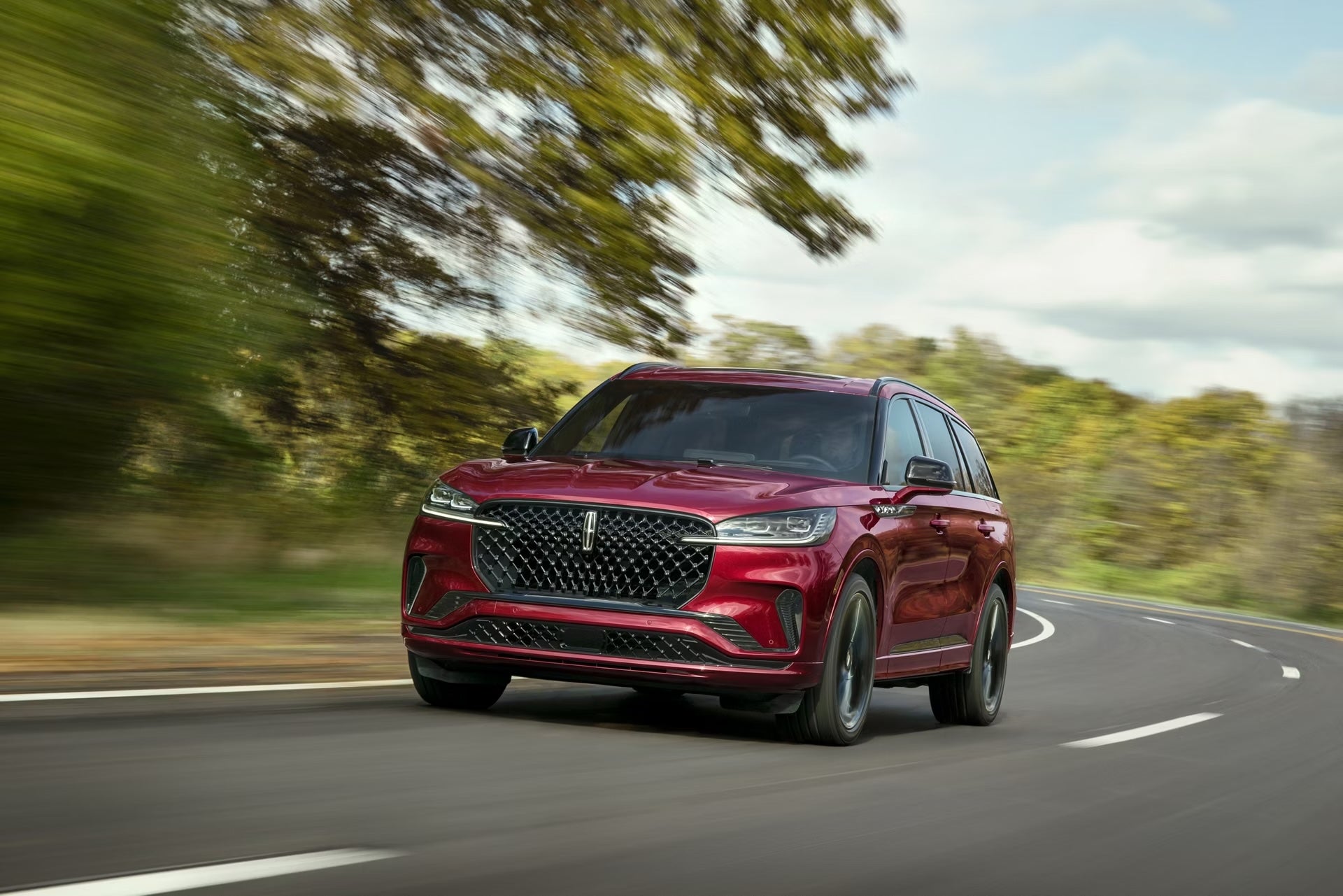
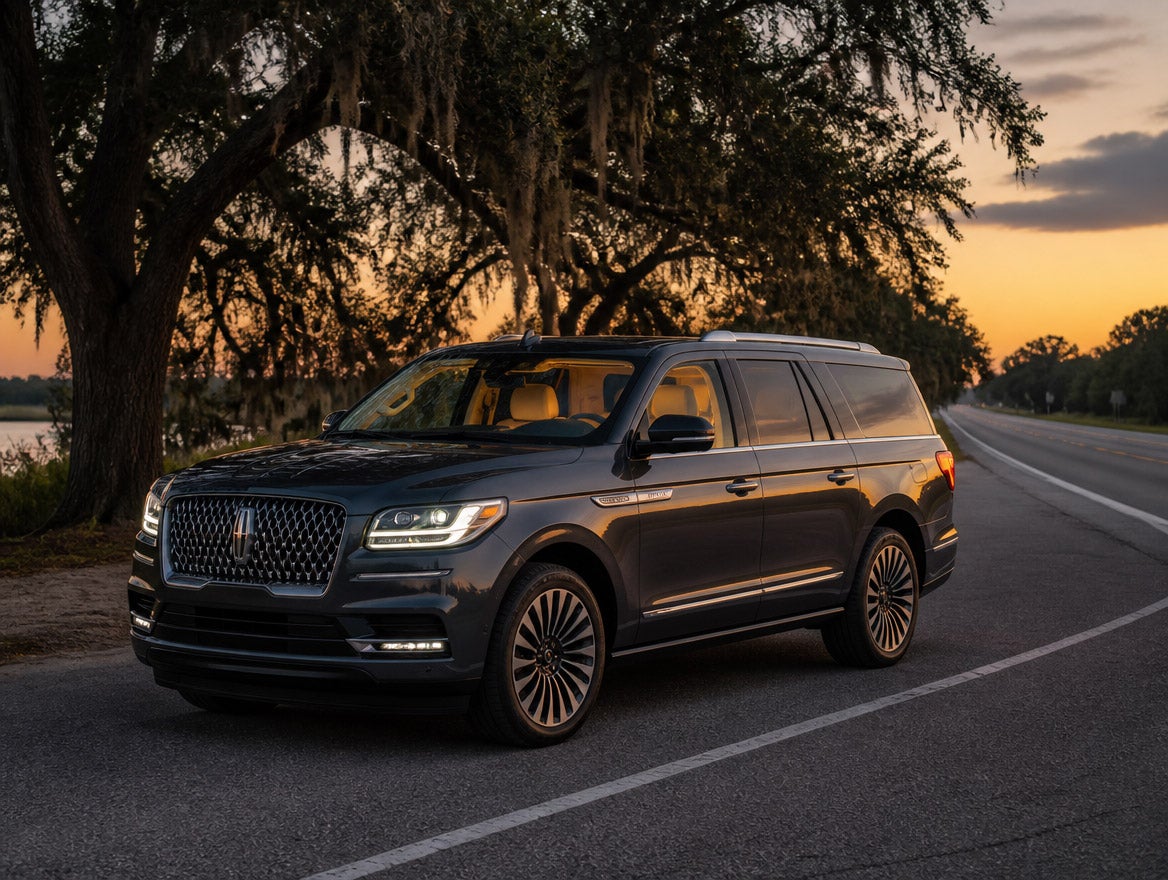
Both the 2025 Aviator and the 2025 XC90 feature a powerful stance and sophisticated styling that give them a serious presence on the road. The Lincoln looks more imposing and aggressive with its massive grille and muscular proportions, while the Volvo has smooth lines and a sleek grille that contribute to an elegant appearance.

The Aviator is the larger of the two when it comes to size. The Lincoln SUV measures 199.7 inches long, 79.6 inches wide, and 69.6 inches high, while the Volvo is 195 inches long, 79.1 inches wide, and 69.9 inches tall. The two SUVs come standard with 20-inch wheels and offer 21-inch wheels on higher trims.

Both the Lincoln Aviator and the Volvo XC90 boast immaculately crafted interiors with rich materials and plenty of luxury appointments. Entry-level models are equipped with synthetic leather upholstery, power front seats with heating, a memory driver's seat, an auto-dimming rearview mirror, and a power lift-gate. The Lincoln features several standard features that are optional in the Volvo, such as ventilated front seats, heated rear seats, and a heated steering wheel.

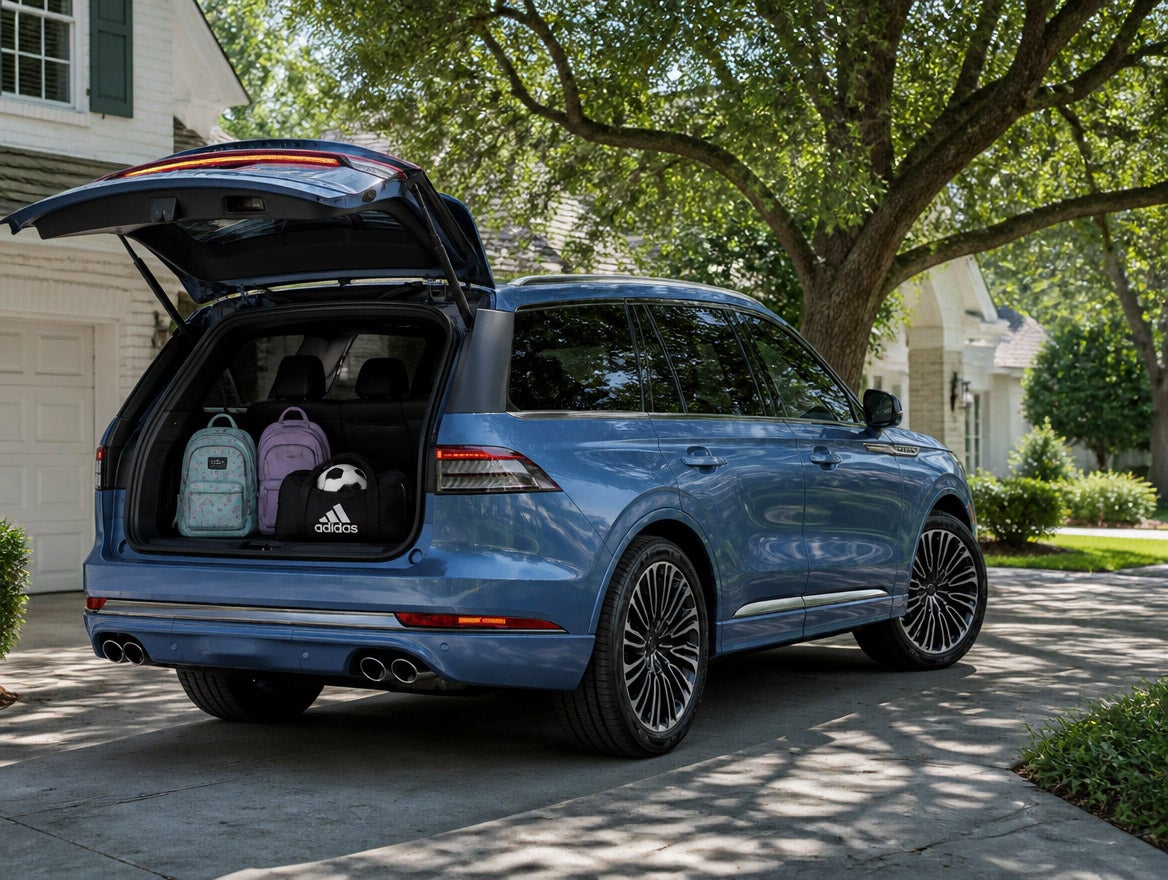
The Aviator has the upper hand in terms of overall passenger space. It offers an expansive 43 inches of legroom in the front row, 39 inches in the middle row, and 29.2 inches in the third row. The XC90 provides 40.9 inches of legroom in front, 37 inches in the second row, and 31.9 inches in the third row. The Volvo provides more cargo space, which maxes out at 85.7 cubic feet with the rear row folded, while the Lincoln offers only 77.7 cubic feet.

Safety and Technology

The Aviator triumphs in the infotainment comparison. This Lincoln model comes standard with a massive 13.2-inch LCD touch-screen display, a 12.4-inch digital gauge cluster, a 10-speaker audio system, a wireless device charger, a Wi-Fi hot spot, eight USB ports, wireless Android Auto and Apple CarPlay, and satellite radio. The base Volvo XC90 offers a nearly identical list of technology features to its Lincoln rival, but it features a smaller 11.2-inch touch screen and only four USB ports.

To provide added peace of mind on the road, the Aviator and XC90 both feature several advanced driver-assistance technologies. Standard features in the two SUVs include pedestrian monitoring, blind-spot detection, adaptive cruise control, forward automated emergency braking, lane-keep assist, rear cross-traffic warning, and parking sensors. The Lincoln offers several advanced features as standard equipment, including intersection assistance, evasive steering assistance, and a 360-degree camera system. These features are either optional or unavailable in the Volvo.

Pricing and Value

The base MSRP of the 2025 Lincoln Aviator is $59,295, while the 2025 Volvo XC90 starts at $59,745. Despite its lower price, the Aviator has many features that are either optional or unavailable on the XC90.

Get Behind the Wheel of the 2025 Lincoln Aviator Today

Visit Stivers Lincoln if you want to experience the 2025 Lincoln Aviator firsthand in Montgomery, Alabama. Our dealership has all the trims, packages, and colors of the latest Aviator, so we can provide you with a model that matches your taste and lifestyle. Contact us today to schedule a test drive.

Images by OEM
Posted in:

Related Posts

2026 Lincoln Navigator L on an Alabama highway ready for a Crimson Tide road trip from Montgomery

Best Lincoln SUVs for Alabama Football Road Trips From Montgomery

In this article How the Three Lincoln SUVs Rank for a Tide Road Trip Navigator L: Built for the Full Crew and the Full Cooler Aviator: The Three-Row Sweet Spot for Most Trips Nautilus: The Quietest Ride for a Couple's Game Day The right Lincoln for a Bryant-Denny game day isn't necessarily the largest one on the lot. The best fit is the one sized to your exact crew, your gear, and ninety-plus miles of I-65 at a steady cruise. While the impeccible Navigator L is the clear pick when you're moving a full group with tailgate supplies in tow, there's better options in the Lincoln lineup for smaller parties, and we'll show you where each model earns its spot on this particular trip. Navigator L: Built for the Full Crew and the Full Cooler Leaving Montgomery with seven people and their gear could be feasible in the standard-length Navigator, but the long-wheelbase Navigator L covers it with margin to spare. Lincoln rates total cargo volume at 107.0 cubic feet behind the first row, with 22.9 cubic feet still open behind the third row even with eight seats filled. That leaves plenty of room for the cooler, the folding chairs, the clear bags (yes, Bryant-Denny's policy requires them), and a little breathing space, if you pack with any sense. Park a Navigator L next to the standard Navigator in our lot, and the extra length behind the third row shows the moment you set a loaded cooler inside. The powertrain turns the I-65 run from effortful into easy. The twin-turbocharged 3.5-liter V-6 puts out 440 horsepower and 510 lb-ft of torque per Lincoln's published specs, and every 2026 Navigator comes standard with four-wheel drive and BlueCruise hands-free highway driving technology. That last piece earns its keep on a long, straight interstate stretch where fatigue sets in before you reach the stadium. BlueCruise works as a driver aid, which means it still asks for an attentive driver even on an open interstate, but the drop in active workload over a 90-minute cruise is real and noticeable. A fair question before this trip is how much room eight people really need on the return leg after a long game. Load the crew plus a weekend of gear, and that guess tends to run short of the actual figure. Aviator: The Three-Row Sweet Spot for Most Trips Most Alabama football road trips from Montgomery don't involve eight people; they involve four or five, plus the one person who insists on bringing a full-size grill, and the Aviator lives squarely in that lane, sized for the moderate-sized group. The 2026 Aviator carries up to seven passengers across three rows and offers 78.6 cubic feet of maximum cargo volume with the rear rows folded. Keep the third row up with everyone aboard, and you've still got 19.2 cubic feet behind it. The standard powertrain is a 3.0-liter twin-turbocharged V-6 producing 400 horsepower and 415 lb-ft of torque, and Lincoln rates towing at 5,000 pounds when properly equipped with the standard Class III Trailer Tow Package. If you're also looking to tow a small utility trailer or a pontoon boat to Lake Martin before swinging west to Tuscaloosa, the Aviator can handle it. The EPA estimates fuel economy at 20 MPG city and 25 MPG highway for AWD models. BlueCruise 1.5 comes standard on every 2026 Aviator trim. The same highway cruise assist the Navigator offers is included at purchase for four years, per Lincoln's published specifications. Check the third row for yourself before you write it off as a penalty box. The Aviator's rearmost seat may not offer quite as much comfort as the Navigator L's third row, but it is still a genuine spot for adults on a short-to-medium trip. On a there-and-back game day, it rides comfortably. On an overnight with luggage, you may start wishing for a little more breathing room. Buying Caution: On home-game Saturdays in Tuscaloosa, post-game parking lots can take 30-45 minutes to clear, and September heat in Alabama is no small thing. Think hard about whether ventilated seats and rear-zone climate control are boxes you want checked before you're idling in a staging lane. Confirm which trims carry these as standard or available equipment before you finalize your build. Explore Financing Options Nautilus: The Quietest Ride for a Couple's Game Day For two or three adults who want comfort, efficiency, and a genuinely quiet cabin over ninety miles of I-65, the Nautilus isn't the consolation prize in this lineup; it earns its spot on merit, even though it's the smallest of the three options. The 2026 Nautilus is a two-row, five-seat SUV, and holds up to 36.4 cubic feet of cargo with the rear seats up and 71.2 cubic feet with them folded. For a couples' trip or a group of three where nobody's hauling cornhole boards or lots of tailgating gear, that's more than sufficient. The standard gas-powered 2.0-liter turbocharged engine is EPA-estimated at 21 city and 29 highway, and the available Nautilus Hybrid is rated at 29 city and 31 highway. Over a 90-mile stretch of I-65, the highway number is the one that counts. Lincoln's own site confirms both figures. The Nautilus also earned an IIHS TOP SAFETY PICK+ rating, with "Good" scores across every crashworthiness category, including the updated side impact test. Worth naming plainly, because a long highway run on a packed game-day Saturday deserves a vehicle with a documented safety record. The tradeoff is real, and we won't gloss it. The Nautilus seats five. It tows 1,750 pounds when properly equipped, and there's no third row. If your group swells to six on the Friday before the game, you're renting a second vehicle or stepping up to an Aviator. Know your usual headcount before you buy. Stivers Lincoln of Montgomery keeps the full lineup in stock across all three models, so you can match the right trim to the right trip without guessing. Value Your Trade Before You Upgrade Stivers Lincoln of Montgomery 4000 Eastern Blvd, Montgomery, AL 36116 (334) 647-690

2026 Lincoln Aviator on the Road

Why Is the 2026 Lincoln Aviator Considered “Old School Luxury?”

Inside and out, from head to toe, the 2026 Lincoln Aviator is a thoroughly modern three-row luxury SUV, instilled with inspired design, advanced technologies, and immersive comfort. So why did the experts at Car and Driver call this the 2026 Aviator an example of “old school luxury?” Well, that’s the highest order of compliment, especially if you’re familiar with Lincoln’s comes to Lincoln’s heritage of leading the industry in distinctive yet restrained design and sophisticated interior designs that feel even better than they look. In an era where it feels as if we constantly pay more and get less, it’s nice to know the Aviator bucks that trend while pampering driver and passengers alike. The 2026 Aviator has been called “understated” in its design, which is also a compliment. Look at the exterior design, which is dictated by its large grille up front adorning the Lincoln Star. The rest of the lines flow with purpose and elegance all the way to the horizontal rear LED lighting signature – a modern touch among classic elements. However, it is a right-sized SUV for the family. Not too tall or imposing. Not too small and cramped. Just right. That is also why the 2026 Aviator is also called “traditional” in its approach to luxury. Being right sized does not mean it lacks accommodation and features. Quite the contrary. Yet, it offers the technology expected of a contemporary a luxury SUV. Car and Driver cited how the 360-degree camera that is featured inside the Lincoln Digital Experience screen can be enabled with a single button to make maneuverability a breeze. Getting comfortable should be no problem when choosing the right place with the Perfect Position front seats, which also includes seat heating, ventilation, and a massage function to keep you temperate and relaxed behind the wheel. Performance comes from the 383-horsepower 3.0-liter twin-turbocharged V6 engine. It is a modern powerplant that provides plenty of power when most needed while delivering both refinement and impressive efficiency.  Combine that with the traction of all-wheel drive and you have the confidence to tackle any excursion in any weather condition, especially when the Aviator’s drive mode selector is shifted to Slippery or Deep Conditions settings. Selecting the available Dynamic Handling Package adds adaptive and air suspension systems which not only improve handling but also ensures Aviator’s passengers are as physically comfortable as possible, even on some of the worst road surfaces imaginable.  Aviator also offers the driver BlueCruise hands-free driver assistance technology, which helps bring another level of driver comfort and ease on long highway trips. The takeaway that Car and Driver got from its time in the 2026 Aviator was its “effortless urge” and “magic-carpet ride” that make it a “chillax” experience. That last term may not be an “old school” vocabulary word, but both points still tie directly to that “old-school luxury” conclusion. The 2026 Aviator is now available at Stivers Lincoln in Montgomery. Contact us to see this wonderful mid-size luxury SUV soon.

2026 Lincoln Aviator rear liftgate open with school bags in an east Montgomery driveway under live oaks

Lincoln Aviator or Lincoln Nautilus: Which One Better Fits Back-to-School Traffic, Carpools, and Packed Family Schedules?

In this article What's the Real Difference Between These Two? Does the Aviator's Third Row Actually Work for School Runs? Fuel and the School-Run Math Maneuverability on the Eastern Boulevard School Run So Which One Should You Choose? The short answer hangs on one question: how many kids are you loading at once? If the number ever climbs past five, the 2026 Lincoln Aviator is your only choice between these two. If you rarely go beyond four or five, the Nautilus is smaller, lighter on its feet, and far easier to thread through the scrum of a pickup line. The short version The 2026 Aviator seats up to seven and tows up to 5,000 pounds when properly equipped. It's built for the household running three-plus kids or a steady rotation of other people's children. The 2026 Nautilus seats five across two rows, comes standard with all-wheel drive, and offers an EPA-estimated 29 city / 31 highway MPG in hybrid form. It's the pick for smaller households who want a cabin that feels serene rather than full. The trade-off nobody talks about: with all three Aviator rows occupied, cargo drops to just 16.5 cubic feet (Lincoln lists it). Consider that the plain constraint. You can carry six kids or a week of gear. Not always both. The Nautilus holds more behind its rear seats (up to 36.4 cubic feet in Premiere trim) than the Aviator does with row three up. Our best guidance: count the car seats and the duffel bags before you decide. What's the Real Difference Between These Two? Both SUVs share one Lincoln interior philosophy (composed, unhurried, materials that reward a second glance), and yet they answer different questions. The Aviator wants to know how many people you need to move. The Nautilus wants to know how refined you'd like the daily drive to feel. Same family, two very different jobs. Below is the comparison where it counts for an August in Montgomery. Category 2026 Lincoln Aviator 2026 Lincoln Nautilus Rows / Passengers 3 rows / up to 7 2 rows / up to 5 Cargo (all seats up) 16.5 cu ft (behind row 3) 36.4 cu ft (Premiere, behind row 2) Cargo (max, seats folded) 77.7 cu ft 71.3 cu ft Engine 3.0L twin-turbo V6, 400 hp 2.0L turbo I-4, 250 hp (gas) / 285 hp (hybrid) EPA City MPG 18 (RWD) / 17 (AWD) 21 (gas) / 29 (hybrid) EPA Highway MPG 25 (RWD or AWD) 29 (gas) / 31 (hybrid) Towing (properly equipped) Up to 5,000 lbs Up to 1,750 lbs Drivetrain options RWD or AWD AWD standard BlueCruise 1.5 Standard on all trims Standard on all trims The single deciding factor: if you ever need a sixth or seventh seat, the Aviator is the answer. If five seats is your real ceiling, the Nautilus gives you more usable cargo space when those seats are occupied. Does the Aviator's Third Row Actually Work for School Runs? The Aviator's third row works well for children, works acceptably for shorter adults on a quick hop, and it comes with a catch the spec page won't spell out. When that row is in use, Lincoln lists 16.5 cubic feet of cargo behind it. Enough for a stack of backpacks. Not enough for a week of soccer gear. That isn't a knock on the vehicle. It's a legitimate engineering trade-off, and worth understanding before you sign anything. The 2026 Lincoln Nautilus makes the opposite bargain. Two rows, five seats, and 36.4 cubic feet of cargo behind the rear bench in Premiere trim (35.2 in Reserve and Black Label). That's more than double what the Aviator offers with row three up. On the Monday morning when you've got three teammates and their gear after a tournament weekend, you feel that difference right away. For the household that truly needs a third row, the relevant Aviator trims also offer second-row captain's chairs, which drop the count to six but open a center console and give middle-row passengers a real sense of their own space. The bench brings capacity back to seven. Either way, Lincoln's PowerFold third row drops flat with a button, and that matters at 7:45 a.m. when you're managing the morning. Browse our current Aviator and Nautilus inventory to see which trims and configurations are on our lot right now. Fuel and the School-Run Math An August in Montgomery means the air conditioning works hard from the second you start the vehicle, and that's no small thing on a route you drive twice a day. The powertrain math shifts once you factor in that heat load and the crawl of morning traffic. So it's worth taking each engine on its own terms before you decide. The Aviator runs a 3.0-liter twin-turbocharged V6 that Lincoln rates at 400 horsepower and 415 pound-feet of torque. The EPA rates it at 18 city / 25 highway (RWD) and 17 city / 25 highway (AWD). Actual mileage varies by conditions and use. That's a genuinely capable engine for a three-row vehicle. The Aviator also runs on regular-grade fuel, which is worth noting given that the Nautilus gas model recommends premium. The Nautilus gas engine is a 2.0-liter turbocharged inline-four producing 250 horsepower. The EPA rates it at 21 city / 29 highway. The Nautilus hybrid pairs that same 2.0-liter block with an electric motor for a combined 285 horsepower, and the EPA rates it at 29 city / 31 highway. Actual mileage varies. On the lot this August: In Montgomery's stop-and-go school-traffic conditions (Eastern Boulevard at 7:30 a.m. is not a gentle drive), the Nautilus Hybrid's city rating earns more practical meaning. Hybrid powertrains recover energy during braking, and that's exactly the pattern of a school run. None of which is an argument to skip the Aviator. Call it a fair note about where each powertrain shines. Maneuverability on the Eastern Boulevard School Run The Nautilus measures 193.2 inches long and the Aviator stretches to 199.7 inches, so on paper you're looking at about half a foot. In practice, you notice it most in a parking lot rather than on the highway. The Aviator sits on a longer wheelbase footprint (119.1 inches), which means a wider turning circle in tighter drop-off zones. We're not calling the Aviator unwieldy. It isn't. But it is a longer vehicle, and anyone running a packed schedule at a campus with a narrow drive-through lane will feel the extra length. The Nautilus, with AWD standard across every trim, gives east-side Montgomery drivers peace of mind through Alabama's two genuine severe-weather seasons (spring storms March through May, and the secondary window in late autumn) without carrying the length of a three-row body. It's a real local consideration, and it ties back to capability rather than marketing language. Explore Financing Options So Which One Should You Choose? The buyer profile really does split between these two, and we'll be direct about the line. Headcount decides it, and everything else follows from there. Read the two cases below against your own week. Choose the Aviator if: You regularly carry six or seven passengers, you coach a team or frequently transport other families' kids, you tow a trailer, a small boat, or recreational gear (up to 5,000 pounds when properly equipped), or your household regularly needs third-row flexibility even if not every day. The Aviator is also the answer if your family is in a growth phase where seat count matters more than maximum cargo access. See 2026 Aviator inventory at Stivers Lincoln. Choose the Nautilus if: Five seats covers your real-world routine, you value a more nimble daily footprint, you want the available hybrid powertrain for efficiency on a repeat school commute, or you simply prefer a cabin that feels more intimate and less like an event vehicle. The Nautilus gives you more usable cargo room than the Aviator does with row three occupied, and the 48-inch panoramic display makes the interior feel like a different category of vehicle. One straight note on the Aviator: its cabin is refined and genuinely comfortable in rows one and two. Row three suits children best, or shorter adults on drives under an hour. If you expect adults to ride back there in comfort as a matter of routine, a full-size Lincoln Navigator is worth a conversation with our team. Neither of these is the compromise pick. They're different answers to different questions, and the right one comes down to headcount, not to which name sounds better. Frequently Asked Questions How much cargo space does the 2026 Lincoln Aviator have with all three rows in use? Lincoln lists the 2026 Aviator at 16.5 cubic feet of cargo space behind the third row when all seats are occupied. That accommodates several backpacks or a moderate grocery run. With the third row folded, cargo expands to approximately 39.9 cubic feet, and with both rear rows folded it reaches 77.7 cubic feet. Is the 2026 Lincoln Nautilus available with all-wheel drive for wet-road conditions in Montgomery? Yes. All-wheel drive is standard on every trim of the 2026 Lincoln Nautilus. There is no RWD Nautilus. The Aviator, by contrast, is offered in both rear-wheel drive and all-wheel drive configurations, so buyers need to confirm the drivetrain when specifying their order. Value Your Current Vehicle Stivers Lincoln of Montgomery 4000 Eastern Blvd, Montgomery, AL 36116 (334) 647-6905